Hirta the main island of St Kilda
St Kilda lies far out in the Atlantic Ocean, over 40 miles west of the Outer Hebrides. It is one of the most remote inhabited places ever to have existed in Scotland.
For thousands of years, a small community lived on the islands, surviving through a combination of farming, seabird harvesting, fishing, and remarkable self-sufficiency. Life on St Kilda was shaped by isolation, extreme weather, and a deep connection to the natural environment.
In 1930, facing hardship and declining population, the remaining residents requested evacuation. The island has been uninhabited ever since, apart from temporary residents such as conservation staff and researchers.
Today, St Kilda is a UNESCO World Heritage Site, recognised for both its cultural and natural significance. The stone cottages of Village Bay still stand, silent reminders of a way of life that has disappeared.
To weave tweed on St Kilda again is a small but meaningful act — reconnecting craft, place, and history, and acknowledging the skill and resilience of those who once lived and worked there.
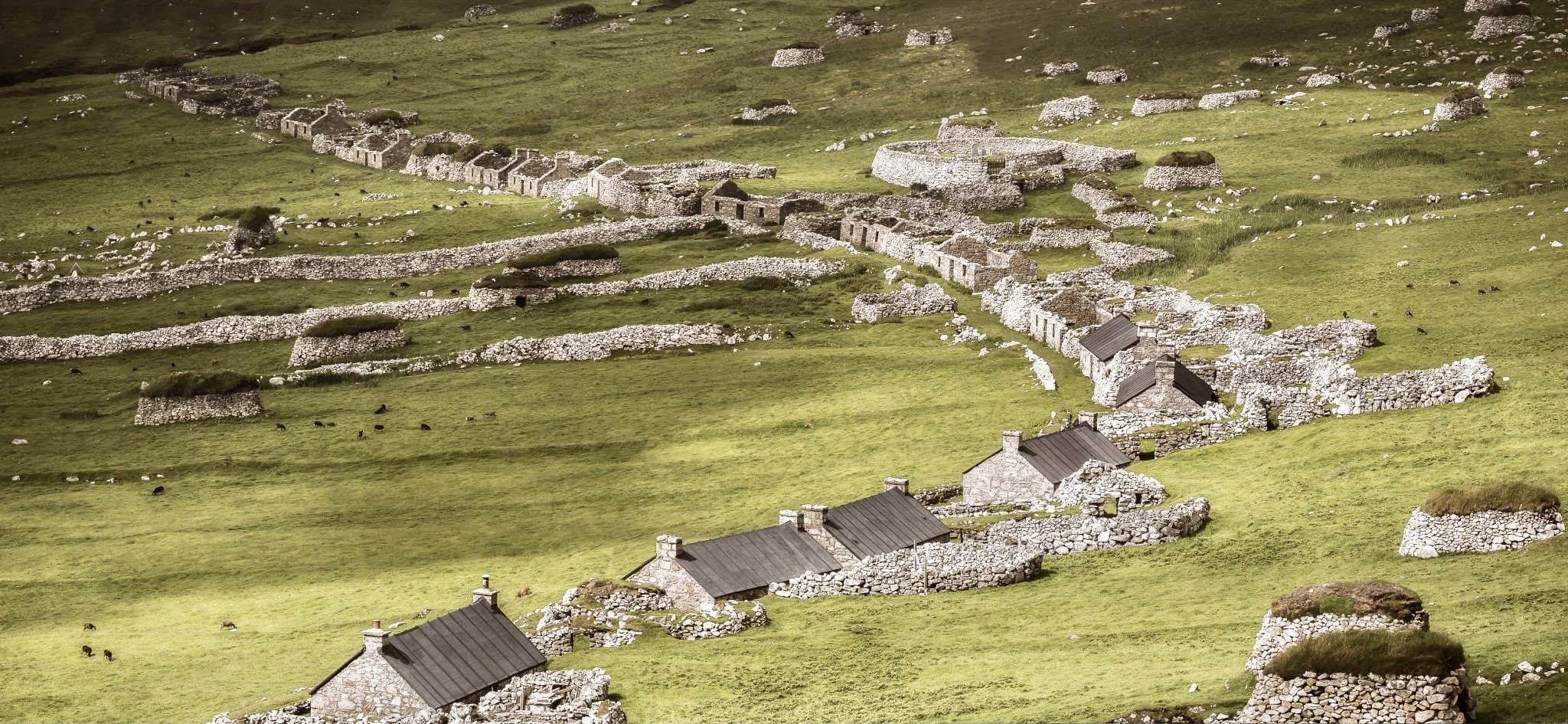
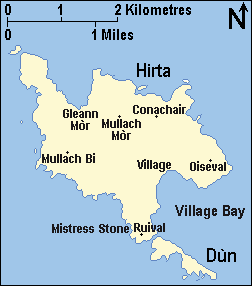
The village on the main Island of Hirta
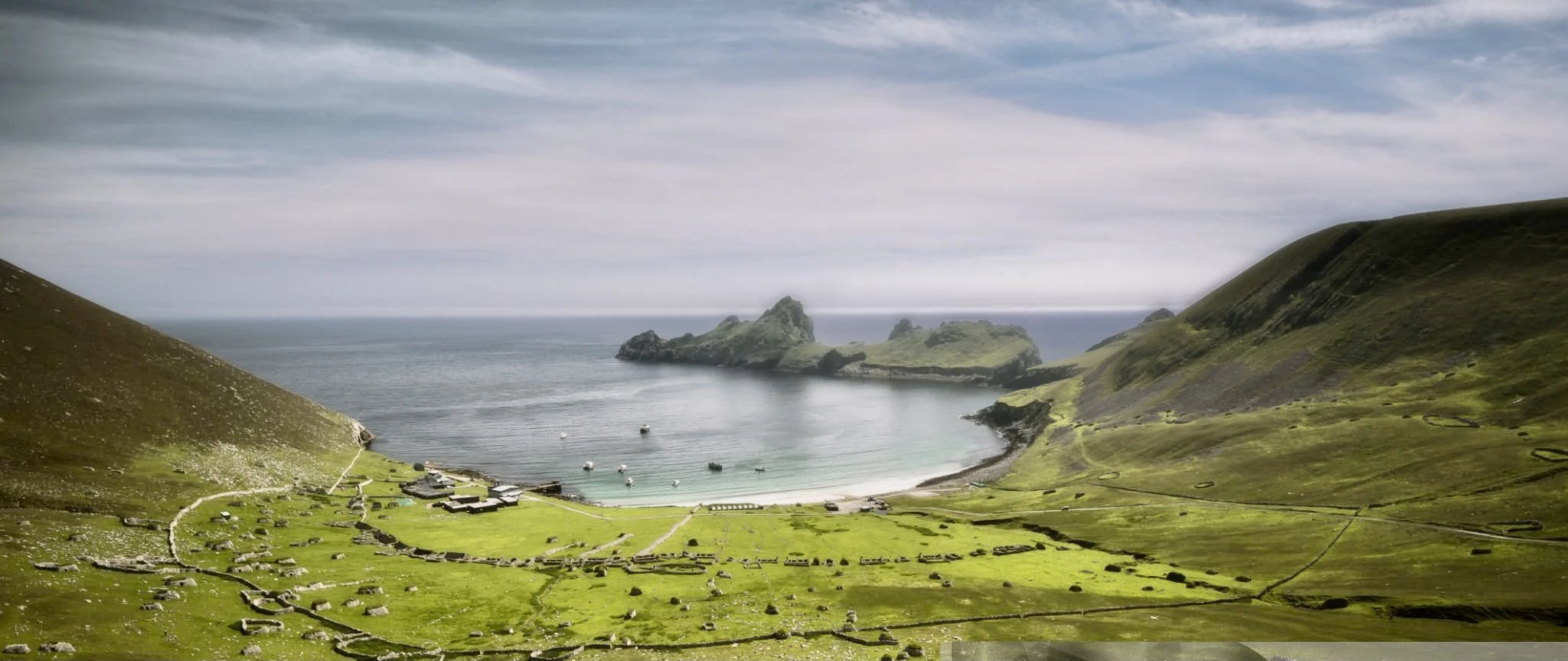
Looking down on the village and village bay from Conachair