The Synchronicities Just Keep on Deepening
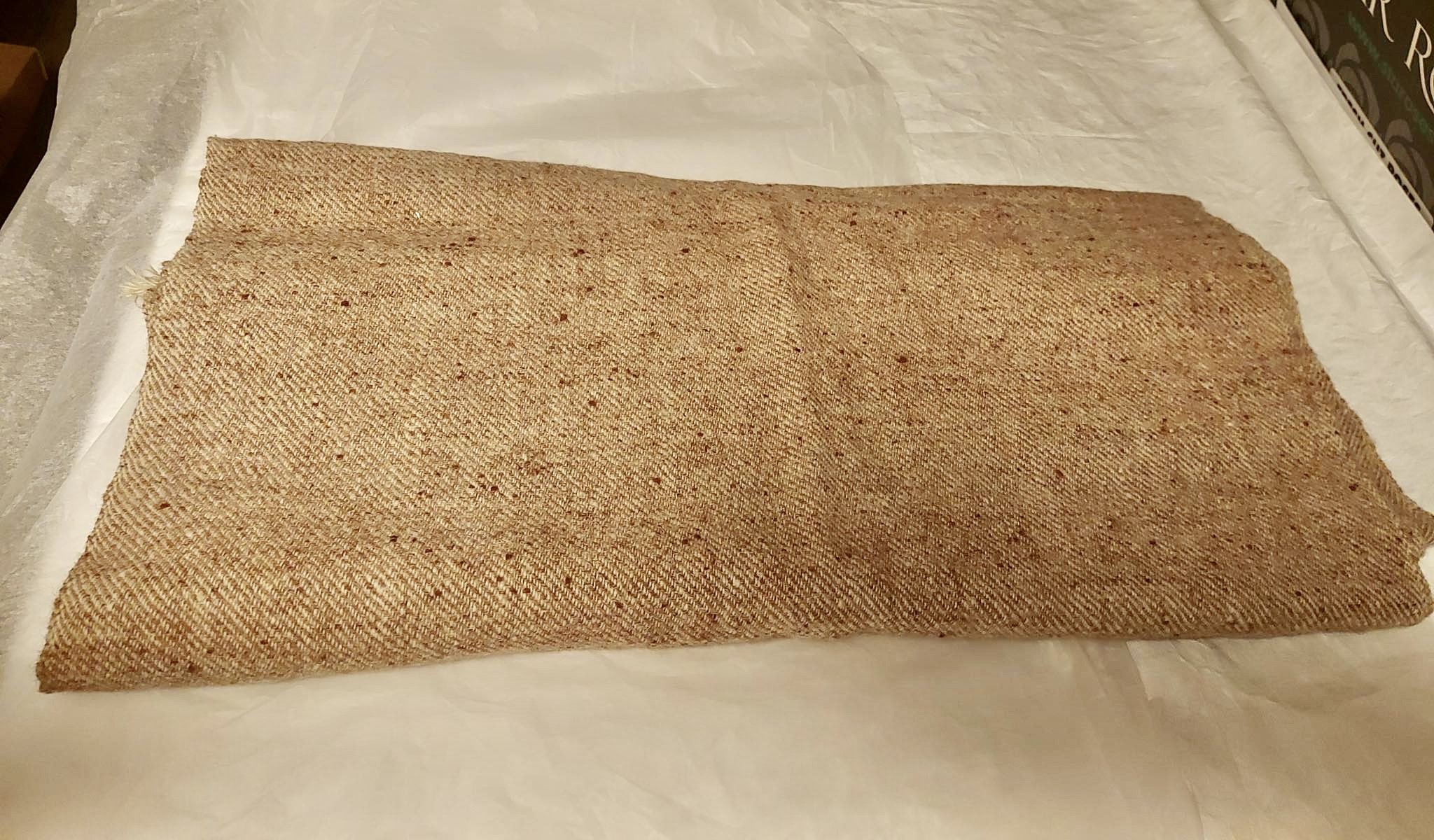
One of the last pieces of original St Kilda Tweed in the West Highland Museum in Fort William
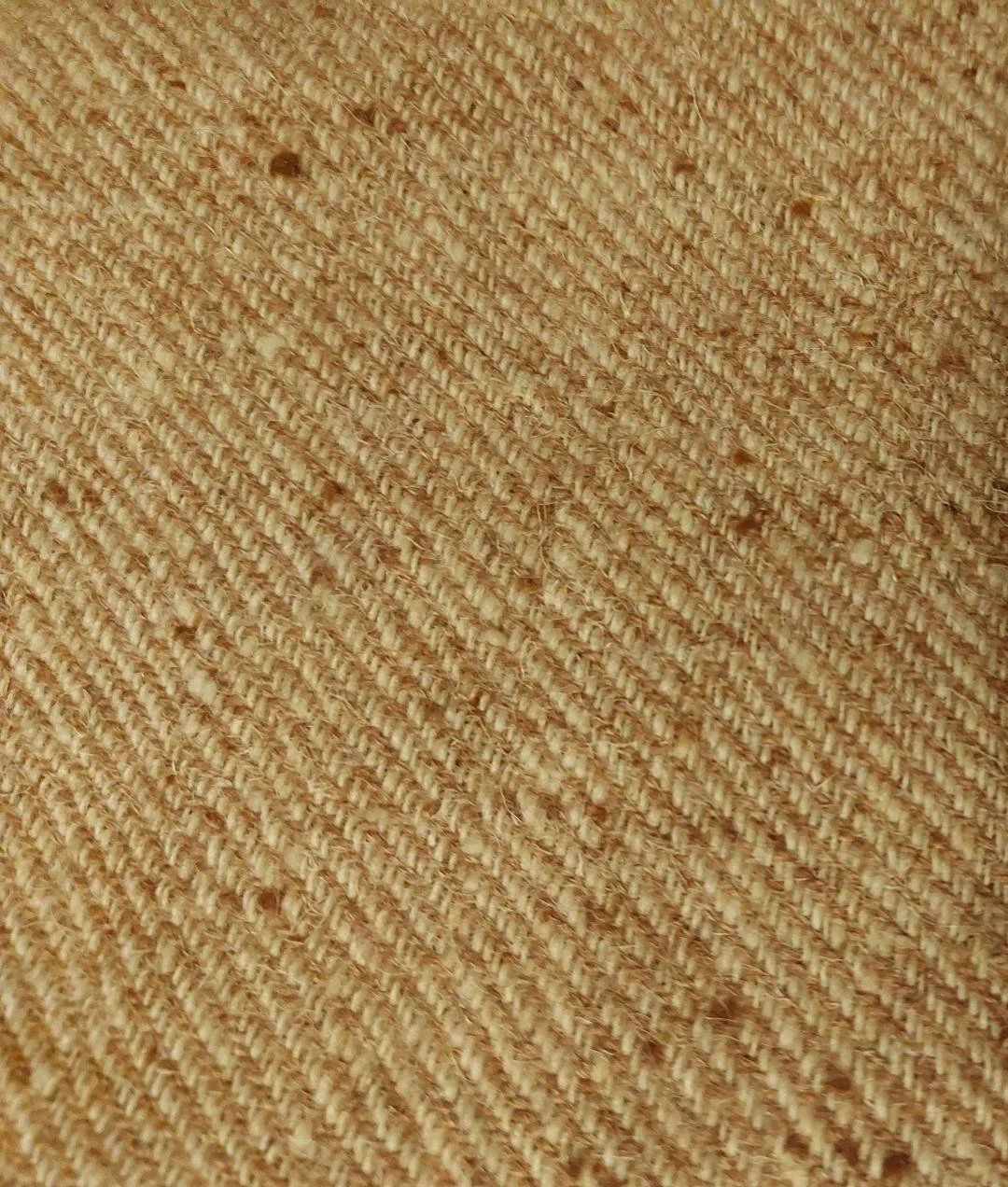
Closeup
The Synchronicities Just Keep Deepening
Sixteen years ago, when I first set foot on the island of St Kilda, a wild idea flashed into my mind: what if I could one day stay here and weave St Kilda tweed on the island itself?
Back in Australia, the thought slowly faded. It felt improbable — perhaps even fanciful.
It wasn’t until 18 months ago, after completing my kayak journey across Scotland via the Great Glen, that the project suddenly sprang back to life. And from that point on, the doors began opening — one after another — in ways I could never have orchestrated.
The Loom Appears
While visiting a friend in Tayport, I mentioned my long-forgotten idea in passing. She suggested I visit local weavers Jimmy and Erika in nearby Newburgh.
During that visit, Jimmy showed me the very type of loom that would have been used on St Kilda — a four-shaft, six-pedal counterbalance loom.
That night, back at my accommodation, I searched to see if anything similar might exist in Australia. Astonishingly, two looms matching that description were for sale — both within driving distance of my home in Bendigo.
I emailed both owners. The replies were positive.
Four weeks later, when I returned home, one loom had just been sold. The other was still available.
It was exactly what I needed. I bought it immediately.
The Wool Finds Me
During that same visit to Newburgh, I asked Jimmy if there was anywhere nearby I might source Soay fleece — one of the breeds kept on St Kilda.
“There’s a farm about ten miles from here,” he said. “Hilton Hill Farm in Kingskettle. Cheryl breeds Soay sheep.”
I rang Cheryl. She invited me to visit her flock.
Cheryl has since become a wonderful contact and supporter of the project. She has saved 30 kilograms of Soay fleeces for me, which I will collect in July.
At that stage, I still didn’t fully understand what St Kilda tweed actually was. I had imagined it might be a tartan. Instead, I discovered it was a simple 2/2 twill — understated, practical, and beautiful in its honesty.
I also learnt that one of the last known pieces woven on the island around 1930 is held at the West Highland Museum in Fort William. I wrote to the museum to ask if it might be possible to see a photograph. In time, they kindly sent several images — including close-ups and measurements.
For the first time, I could see not only the structure, but the colour. The tweed was undyed. I later discovered that the laird who purchased St Kilda tweed had not been impressed by the islanders’ dyeing skills, so natural fleece colours were generally used.
The photographs revealed something else remarkable:
the warp threads were the cream of Boreray wool, and the weft the mottled browns of Soay.
It made perfect sense. Boreray fleece has a longer staple length and produces a stronger yarn — ideal for warp tension. Soay is shorter and softer — beautiful for weft.
But I still needed Boreray fleece.
Cheryl suggested I contact Jane Cooper, author of The Lost Flock, which tells the story of rescuing the Boreray breed from near extinction. Jane generously connected me with Marianna in Orkney, who in turn introduced me to Hazel on the island of Stronsay.
Hazel now has 40 kilograms of Boreray fleeces waiting for me.
The Teacher Next Door
Back in Bendigo, I learnt of an annual wool show at the showgrounds. In the very first pavilion I entered, I met Paula, a weaver exhibiting her work. When I told her about my project — and that I needed to learn to weave — she said immediately:
“You need to contact Ilka. She’s the best weaving instructor in Australia.”
“Wonderful,” I thought. “But where is she based?”
“In Castlemaine,” Paula replied. A town just twenty minutes from my home.
I enrolled in Ilka’s next six-week beginner course. She proved to be an extraordinary teacher.
On the fifth week, she invited former students to join us for afternoon tea and share their work. About twenty chairs were arranged in a circle. I happened to sit beside Sandra.
When she asked about my interest in weaving, I began telling her about St Kilda. She almost fell off her chair.
Her ancestors were from St Kilda.
Neither of us could quite believe it. She also lives in Bendigo and has since lent me books from her personal collection about the island’s history.
The Mill and the Permission
With fleece secured, I still needed a mill to scour, prepare and spin the yarn. I eventually found one willing to take on the project — The Border Mill in Duns.
Then remained the door I thought least likely to open: permission to stay on St Kilda itself.
With the help of a close friend, I prepared a submission to the National Trust for Scotland, including a woven sample in the style of St Kilda tweed.
Some time later, I received approval for a four-week stay in the summer of 2027.
Even writing those words still feels surreal.
Timing Is Everything
Only days ago, during a WhatsApp call, Cheryl mentioned something astonishing. She had first contacted Jimmy and Erika about doing something with her Soay wool just two weeks before I happened to visit them.
Had I arrived fifteen days earlier, this chain of events may never have begun.
Had I attempted to pursue the idea sixteen years ago, it almost certainly would have failed.
The timing had to be right.
A New Chapter
Three weeks ago, another unexpected connection emerged. Cecilia, an accomplished weaver and spinner from the United States — currently living in Glasgow and undertaking a PhD on the revival of endangered weaving traditions — contacted me.
Jane Cooper had passed on my details.
Cecilia asked whether it might be possible to accompany me to St Kilda in 2027. Together, we have written to the National Trust for Scotland to explore whether accommodation might be found.
Our idea is simple and deeply meaningful:
I will first weave a length of tweed using mill-spun yarn.
Cecilia will hand spin Soay and Boreray fleece on the island.
I will then weave a second length using her hand-spun yarn.
In doing so, we hope to loosely emulate the way the St Kildans once worked — spinning and weaving side by side — and to compare our cloth not only with each other, but with the original surviving piece in the West Highland Museum.
We are now waiting for a response.
And as this remarkable journey continues to unfold, I am more convinced than ever that this project is arriving in its own time — through a series of connections too intricate to plan, yet too precise to ignore.
The synchronicities truly do keep deepening.