St Kilda Tweed
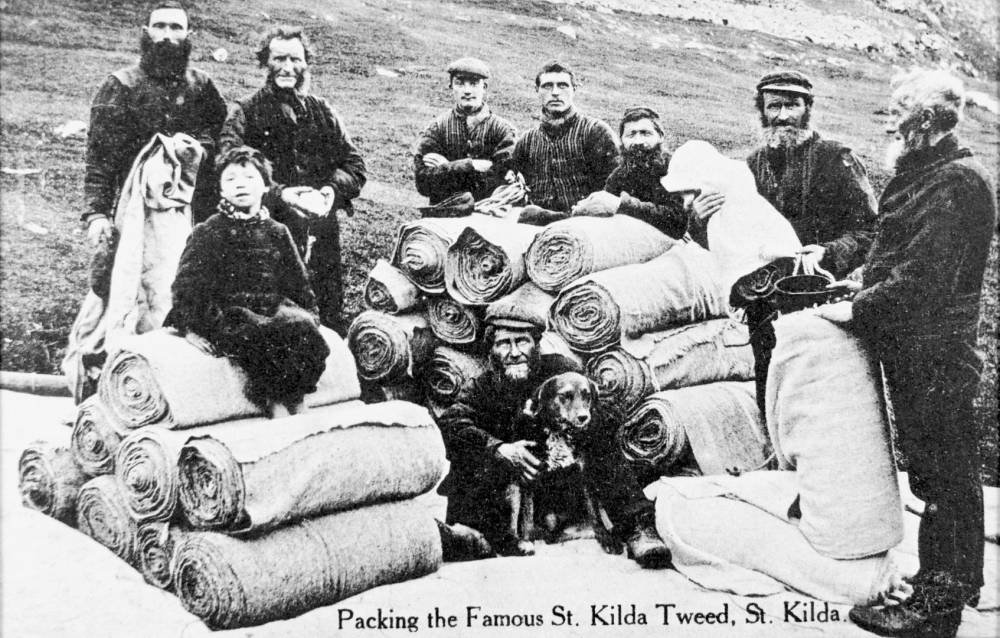
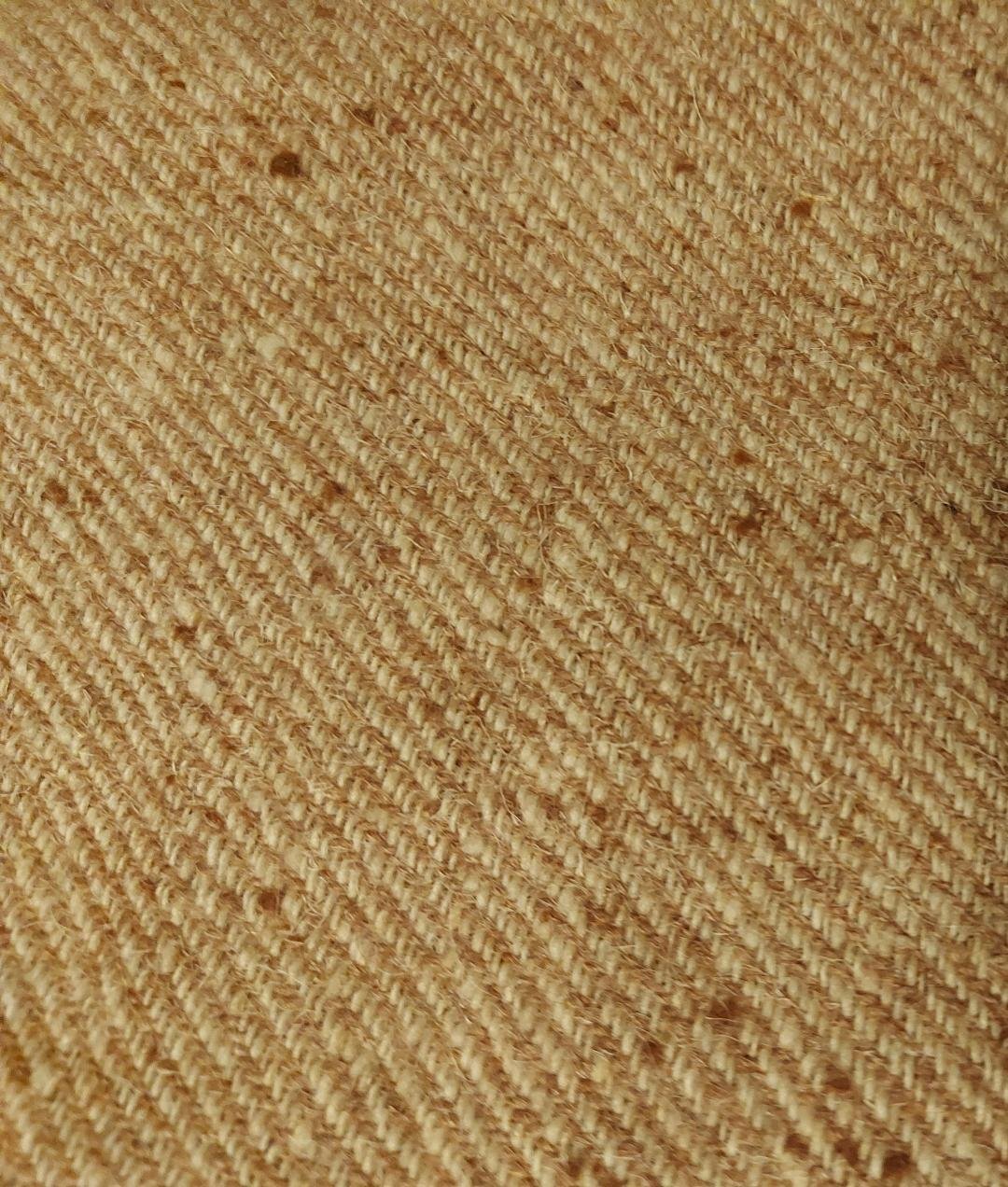
Photo taken around 1920
Closeup of the tweed in the West Highland Museum
There was a mixture of Soay sheep and Boreray sheep on St Kilda, which were a source of income for the islanders prior to the evacuation in 1930.
Sheep and cattle were brought off along with the islanders, with a few sheep left behind.
Research has shown that the sheep population on the island crashes then builds up again, in 12-14 year long cycles - likely due to ecology and grazing pressures etc. The population is currently stable, but the size of the sheep seems to be getting smaller.
When the islanders lived on St Kilda, wool was part of their income, with the weaving done by the men as a winter occupation. McLeod of Skye came to collect the tweed and used the old Scottish yard to measure its value! The warp of the Boreray sheep and the weft of the Soay combined strength and warmth in the fabric.
There are only two existing bits of St Kilda tweed that are known about, one of which is stored at the West Highland Museum in Fort William. The listing reads: 'Piece of tweed 3.5 yards x 30". Natural colour with brown flecks. Among the last tweed woven on St. Kilda in about 1930'.