Real St Kilda Tweed

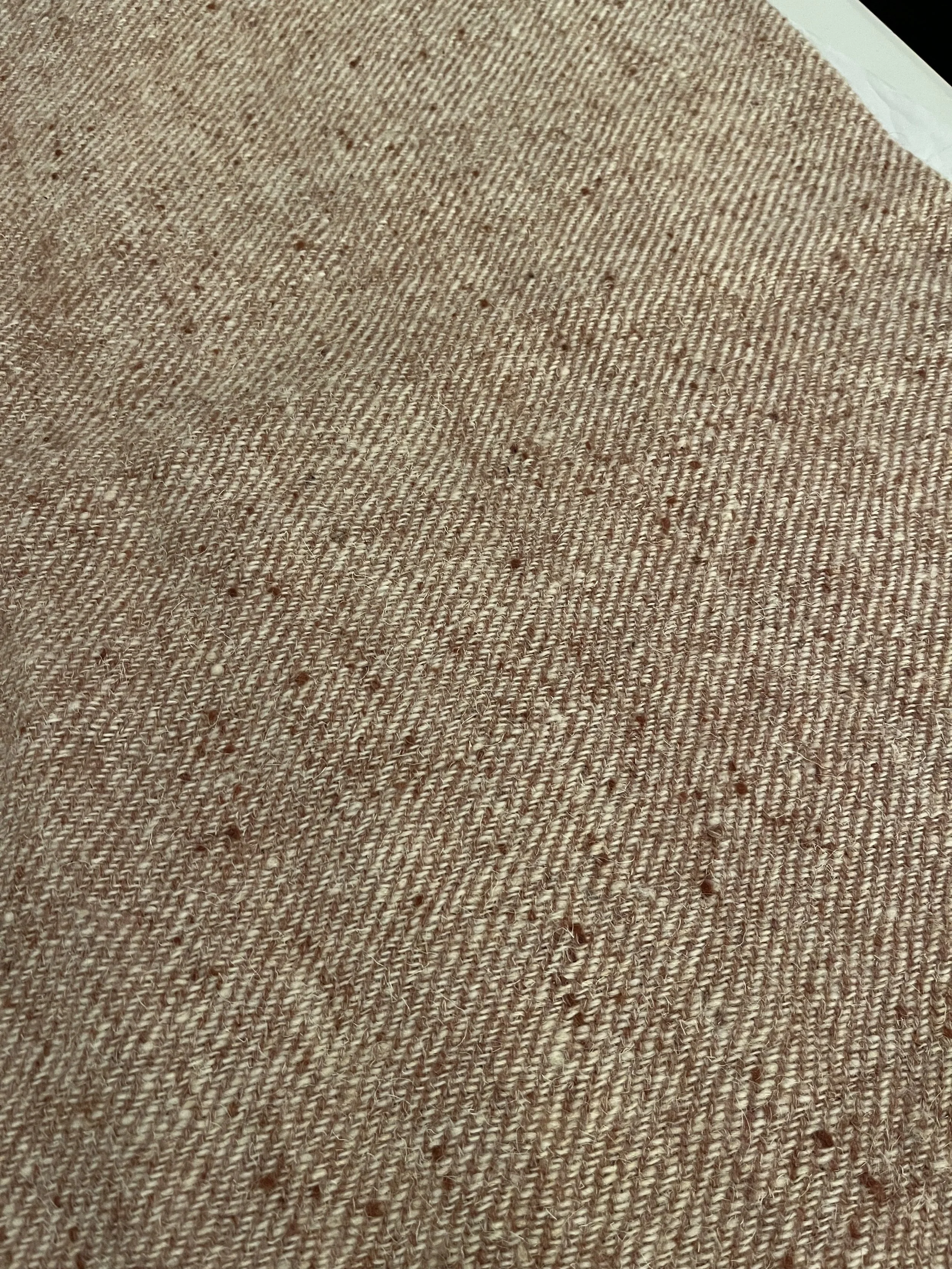
I wanted to clarify something regarding the weaving I have shared so far using Australian wool and referred to in my posts as St Kilda tweed. In truth, those pieces are more accurately described as being woven in the style of St Kilda tweed.
For me, a cloth can only truly be called St Kilda tweed if it is woven on the Island of St Kilda itself, using the traditional wool of the Soay and Boreray sheep. That understanding is one of the main reasons it was so important for me to seek permission to weave on the island.
Even then, my weaving would still not be entirely traditional, as I had intended to use machine-spun yarn rather than hand-spun yarn as the St Kildans once did.
However, I have recently approached the National Trust for Scotland with a proposal that Cecilia — whom I mentioned in my previous post — might accompany me to the island. Cecilia is an exceptionally accomplished spinner and weaver, and the idea would be for her to spin while I weave, closely emulating the way St Kilda tweed was originally produced.
This would create a remarkable opportunity to weave one length of tweed using machine-spun yarn, followed by another using Cecilia’s hand-spun yarn. The latter would more closely resemble the traditional tweed woven on St Kilda prior to 1930.
Accommodation on the island during the summer months is understandably very limited due to the arrival of National Trust for Scotland conservation staff, scientists, and volunteers. Because of this, I have suggested that Cecilia and I would be more than happy to stay on the island either before or after the peak period — whatever the weather may bring.
I’ll keep you all posted as the discussions progress.