The Naming of St Kilda — A Melbourne Story
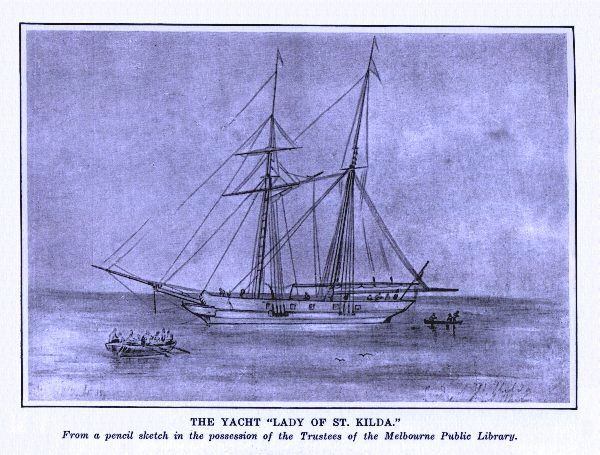
The Melbourne suburb of St Kilda owes its name not directly to Scotland, but to a ship — the Lady of St Kilda.
Launched in 1834 at Dartmouth in Devon, England, the Lady of St Kilda was a 136-ton topsail schooner built as a private yacht for Sir Thomas Dyke Acland. Fast and elegantly designed, she was later used in Australian waters before ultimately being wrecked in Tahiti in 1844.
The vessel itself took its name from the remote St Kilda archipelago off the north-west coast of Scotland — a place Sir Thomas had visited with his wife, Lydia Elizabeth, in 1812. The “Lady” in the ship’s name may have referred to Lydia, though some suggest it could allude to the tragic figure of Lady Grange. She was famously held in forced isolation on St Kilda’s main island of Hirta for eight years in the 18th century, after her husband had her secretly removed and declared dead following political tensions surrounding the Jacobite uprising.
The Lady of St Kilda first arrived in Port Phillip on 6 July 1841, carrying general cargo from England after a difficult voyage. Severe weather near the Cape of Good Hope had damaged the vessel, forcing the crew to strike her topmasts. Despite this, she completed the journey and began operating locally.
After unloading in Melbourne, her owners attempted to sell the schooner, but with money scarce in the colony, she instead spent much of 1841 trading between Sydney, Hobart, and Port Phillip. While in the bay, she was usually anchored off Williamstown.
At one point, after an incident involving crew members returning to the ship in a “very drunken and mutinous condition,” the schooner was moved on 18 January 1842 across the bay to anchor near a coastal rise known as the “Green Knoll.”
Not long after, in late summer or early autumn of 1842, a picnic was held on the shoreline near this same Green Knoll. Among those present were several prominent figures of early Melbourne, including Superintendent Charles Joseph La Trobe, merchant Jonathan Binns, and hotelier and artist Wilbraham Frederick Evelyn Liardet.
During the gathering, as the story goes, someone asked La Trobe what the place should be called. At that moment, he happened to look out across the water and saw a graceful schooner — the Lady of St Kilda — sailing past.
Inspired by the sight, he replied:
“Well, I don’t think we can do better than naming it after Captain Lawrence’s yacht.”
And so, the name St Kilda entered Melbourne’s map — not from the island itself, but from the ship that carried its name halfway around the world.