THE IMPORTANCE OF REVIVING THE LOST ART OF ST KILDA TWEED
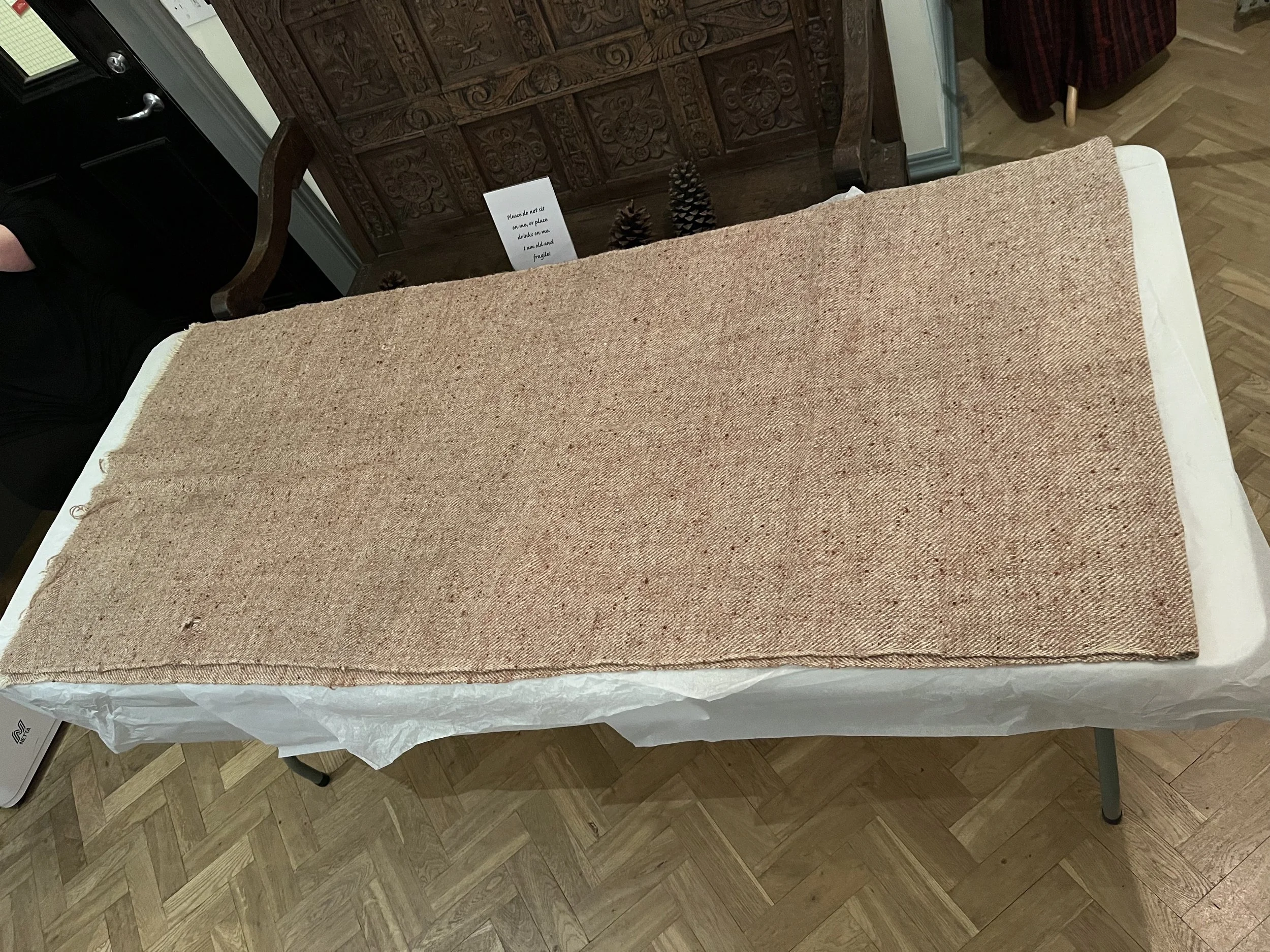
For almost a century, the distinctive tweed once woven by the people of St Kilda has been silent.
The simple twill cloth woven by the St Kildans was never a luxury fabric created for fashion houses or wealthy merchants. It was born out of necessity, isolation, ingenuity and survival on one of the most remote island archipelagos in the North Atlantic. Yet despite its humble origins, St Kilda tweed possessed a beauty and character entirely its own.
Its texture was rustic and alive beneath the fingers. Its natural colours reflected the landscape of the islands themselves — the muted browns, soft creams and weathered greys of the cliffs, rocks and sea birds that surrounded the St Kildan people for generations. Its understated 2/2 twill structure carried with it the unmistakable honesty of handwoven cloth made not by machines, but by human hands working in rhythm with nature.
What made St Kilda tweed truly unique, however, was the wool from which it was created.
The original cloth was woven from the fleeces of two ancient breeds of sheep found on and around the islands — the Soay and the Boreray. These remarkable animals are living links to the distant past. Small, hardy and incredibly resilient, they survived for centuries in one of the harshest environments imaginable. Their wool evolved not for softness or commercial uniformity, but for endurance. The resulting yarn possessed strength, character and an earthy beauty impossible to replicate with modern industrial breeds.
Today, both the Soay and Boreray sheep are considered rare and endangered breeds. In an age where commercial farming favours mass production and uniformity, these ancient sheep stand as fragile survivors of an older world.
This is one of the reasons why reviving the art of St Kilda tweed weaving matters so deeply.
To bring this cloth back to life is not merely an exercise in historical curiosity. It is an act of cultural preservation. It reconnects us with traditional handcraft skills that have almost vanished from living memory. It honours the ingenuity and resilience of the St Kildan people themselves. And perhaps most importantly, it creates renewed purpose and value for the wool of these extraordinary sheep breeds.
If people once again begin to appreciate the beauty and durability of cloth woven from Soay and Boreray wool, then there is hope that more breeders may continue to preserve these animals into the future. Rare breeds survive not simply through sentiment, but because people find meaningful reasons to continue raising them. Traditional textile crafts can play a vital role in that survival.
It is my hope that my own St Kilda Tweed Project will not be seen as the end of a journey, but rather the beginning of one.
Perhaps by demonstrating that authentic St Kilda-style tweed can once again be hand spun, hand woven and appreciated for its remarkable qualities, others may be inspired to explore these ancient fibres and techniques for themselves. New weavers may take up the craft. New spinners may discover the unique character of these fleeces. New appreciation may emerge for slower, more sustainable textile traditions rooted in history, locality and authenticity.
In many ways, St Kilda tweed represents something profoundly important in our modern world — the understanding that beauty does not need to be perfect, industrial or mass produced. Sometimes the most meaningful objects are those that carry the story of a people, a landscape and an ancient way of life within every thread.
And perhaps, after nearly one hundred years of silence, the looms of St Kilda may finally speak once again.