SOAY SHEEP INFORMATION
I would like to thank Vicki Beesley who is the secretary of the Soay and Boreray Breed Society for giving me permission to publish this data about Soay sheep from their web site www.soayandboreraysheepsociety.org
You can contact Vicki by emailing her on glaishebs@hotmail.co.uk
The Soay is one of the UK’s primitive breeds and part of the Northern short-tailed group. They are possibly the earliest example of primitive sheep in the United Kingdom and also the smallest. Mature ewes average 25kg and rams are about 35kg.
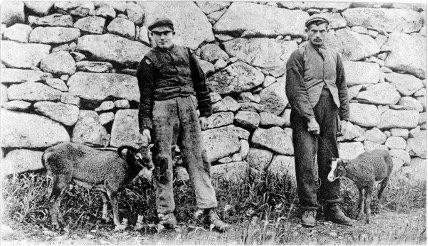
The name of the breed, Soay, is taken from the Island Soay (from the Scottish Gaelic, Soaigh), a now uninhabited island in the St Kilda archipelago, beyond the Outer Hebrides. The name originated from the Old Norse name Seyooy, meaning ‘island of sheep’.
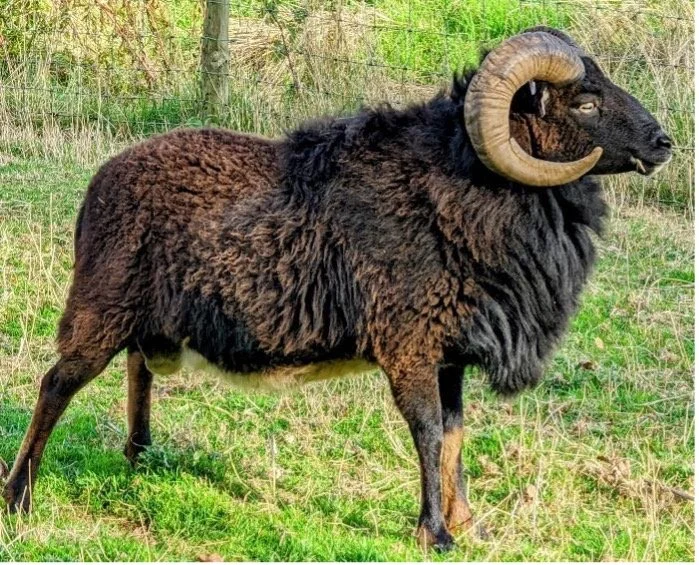
Soay have a wide range of fleece colours and types. The colours can be a sandy tan or dark chocolate, with other shades of brown between these two colours. Some of the lighter shades can have a fine fleece and the darker animals can have a coarse upper fleece with fine fibres nearer the body. Most animals have a mouflon pattern which can be a pale white around the eyes, under belly, inside legs and under the tail, and some can be a ‘self’ colour without the white lining. Occasionally, white occurs as a blaze or star on the head, or white feet or a white tip to the tail. In recent years some breeders have concentrated on producing animals with more white, but this is not normal on St Kilda where Soay have lived feral for centuries. Horn type is also very varied: the ewes can have horns or can be polled
(no horns at all) or can be scurred (small, often misshapen horns). Most rams have large spiral horns or a few are scurred (50% or less than normal horns).
Some Soay were taken off St Kilda in the 1800s to be kept in parklands of big estates, such as Woburn in Bedfordshire where they were selected for dark fleeces and horns.
St Kilda is now owned by the National Trust for Scotland and they do not allow any sheep to leave the island, but in 1963 Peter Jewell obtained permission to take 24 Soay from Hirta (the main island of St Kilda). These were a mixture of all types of Soay: horned, polled, scurred and with a wide range of fleece types and colours. The descendants of this group are now widely spread in the national registered flock.
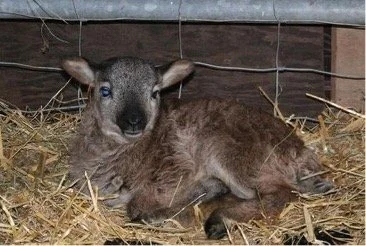
Soay are a thrifty sheep, they will browse hedgerows and do well on mixed vegetation. They can be flighty, but are very curious and quickly learn to come for feed. In normal breeding situations they naturally shed their fleece in early summer. Being lightweight, they do not suffer the foot problems that commercial sheep do. They lamb very easily and the lambs are up on their feet and suckling quickly. Generally young ewes will produce a single lamb, but more mature ewes often have twins. They are good mothers; as the lambs grow, the flock groups together and one or two ewes will keep watch as the lambs frolic. Their fleece is short, and Soay quickly seek shelter when it rains, readily using small field shelters.
Soay sheep are classified as ‘Priority’ on the RBST Watchlist. A sustained decline in registrations saw Soay move from ‘At Risk’ in April 2026.
There are 20 flocks in the USA that register their stock through Grassroots Systems Limited.