Highland Folk Museum Visit
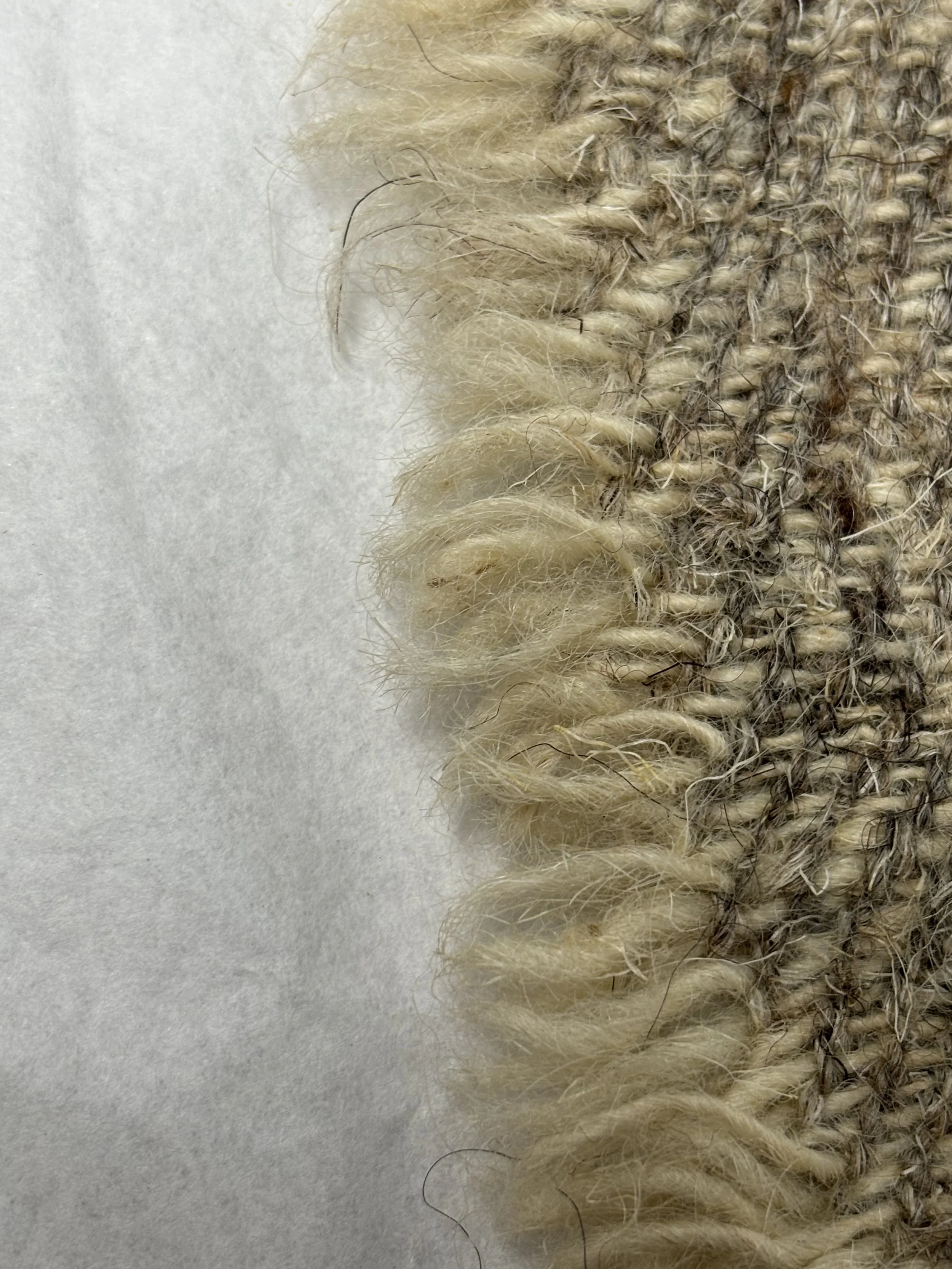
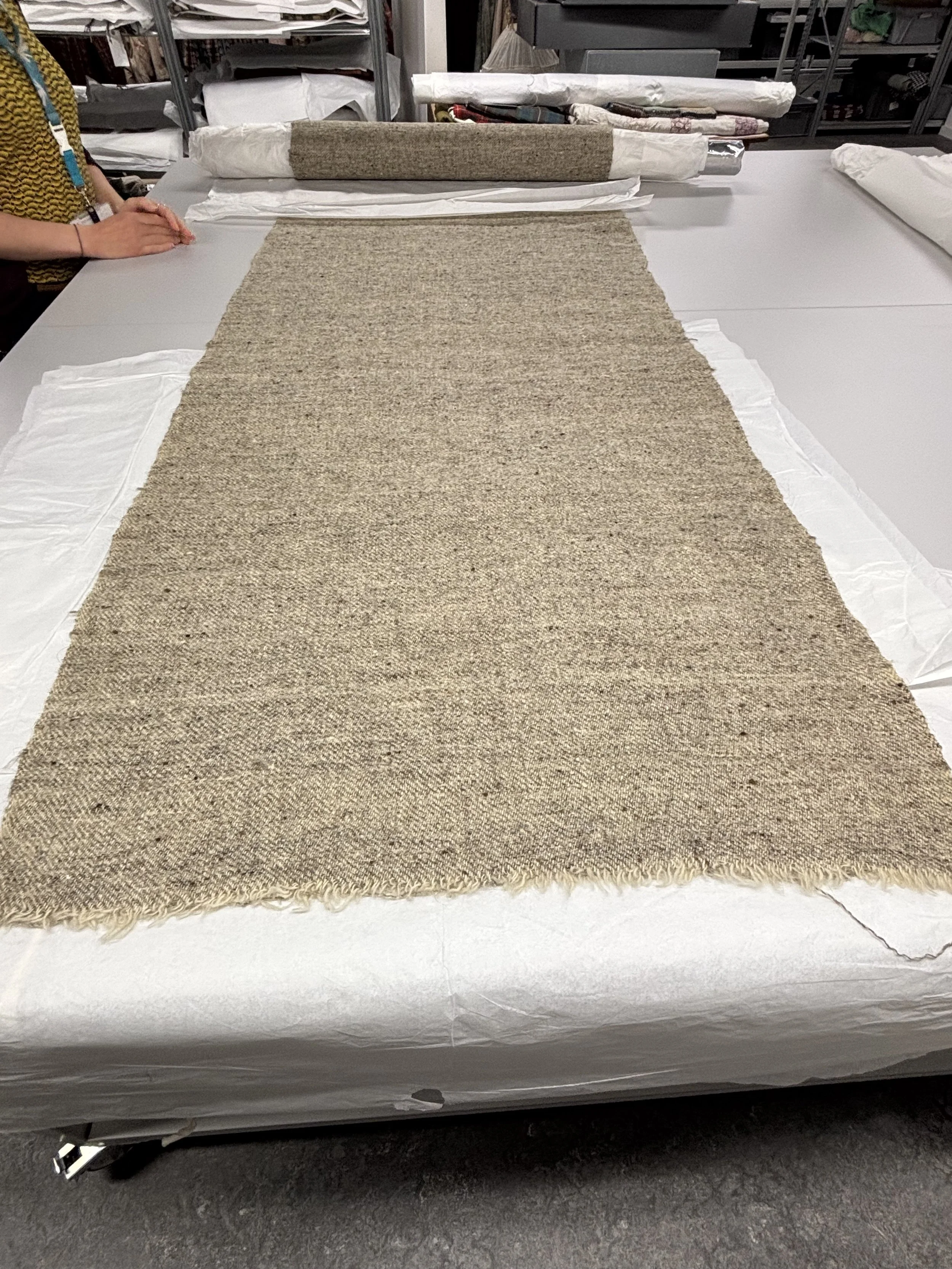
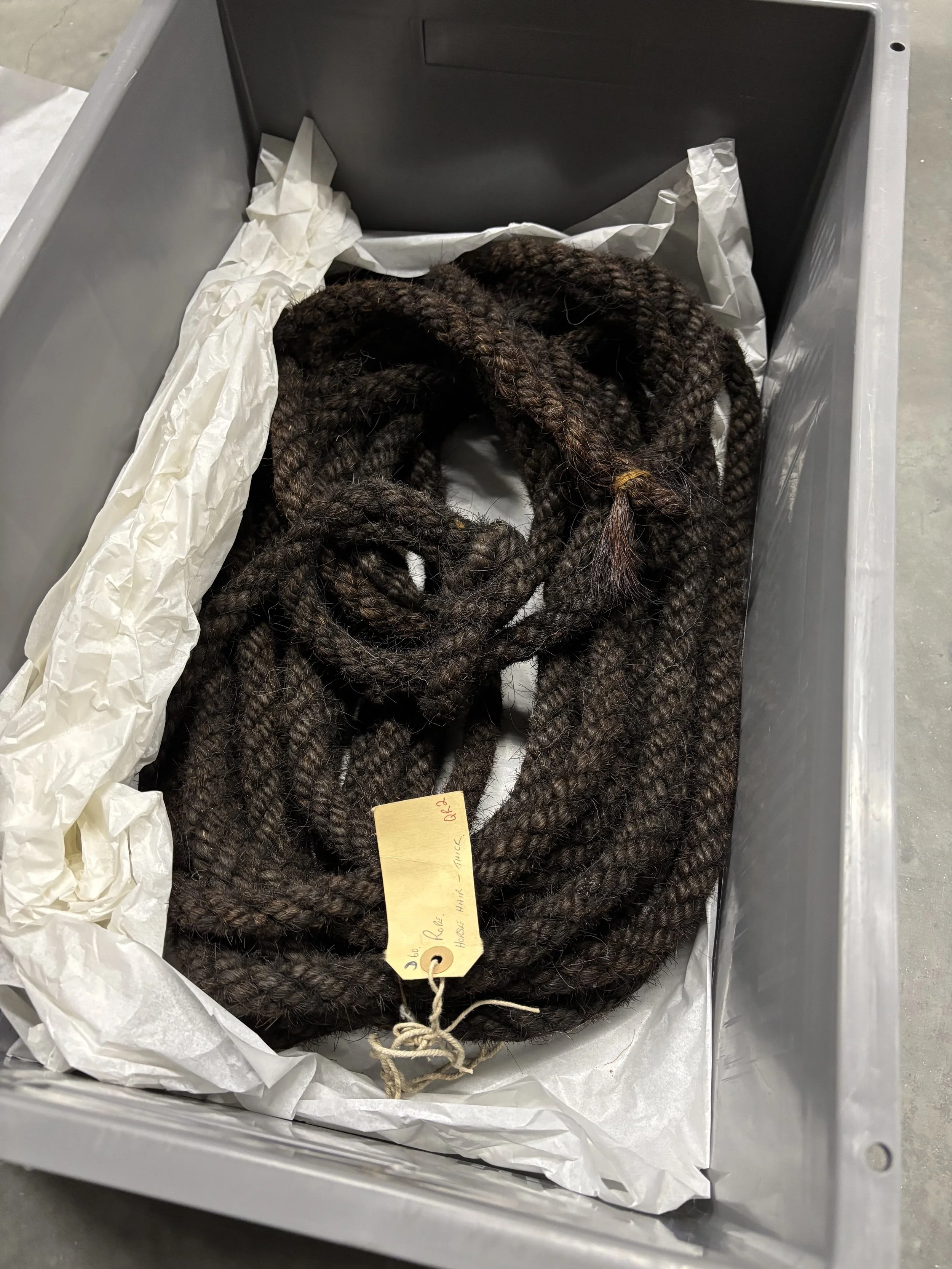
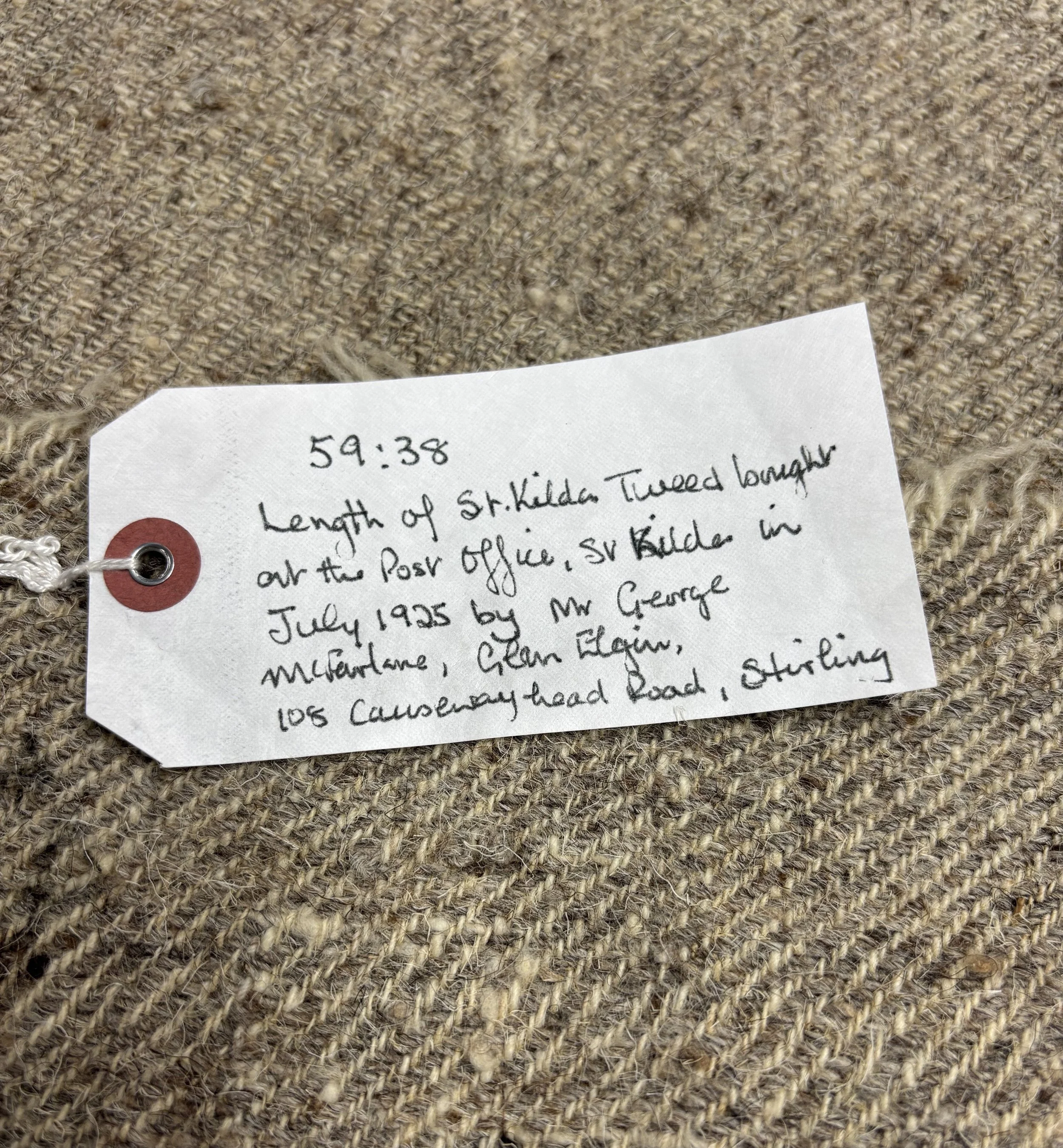
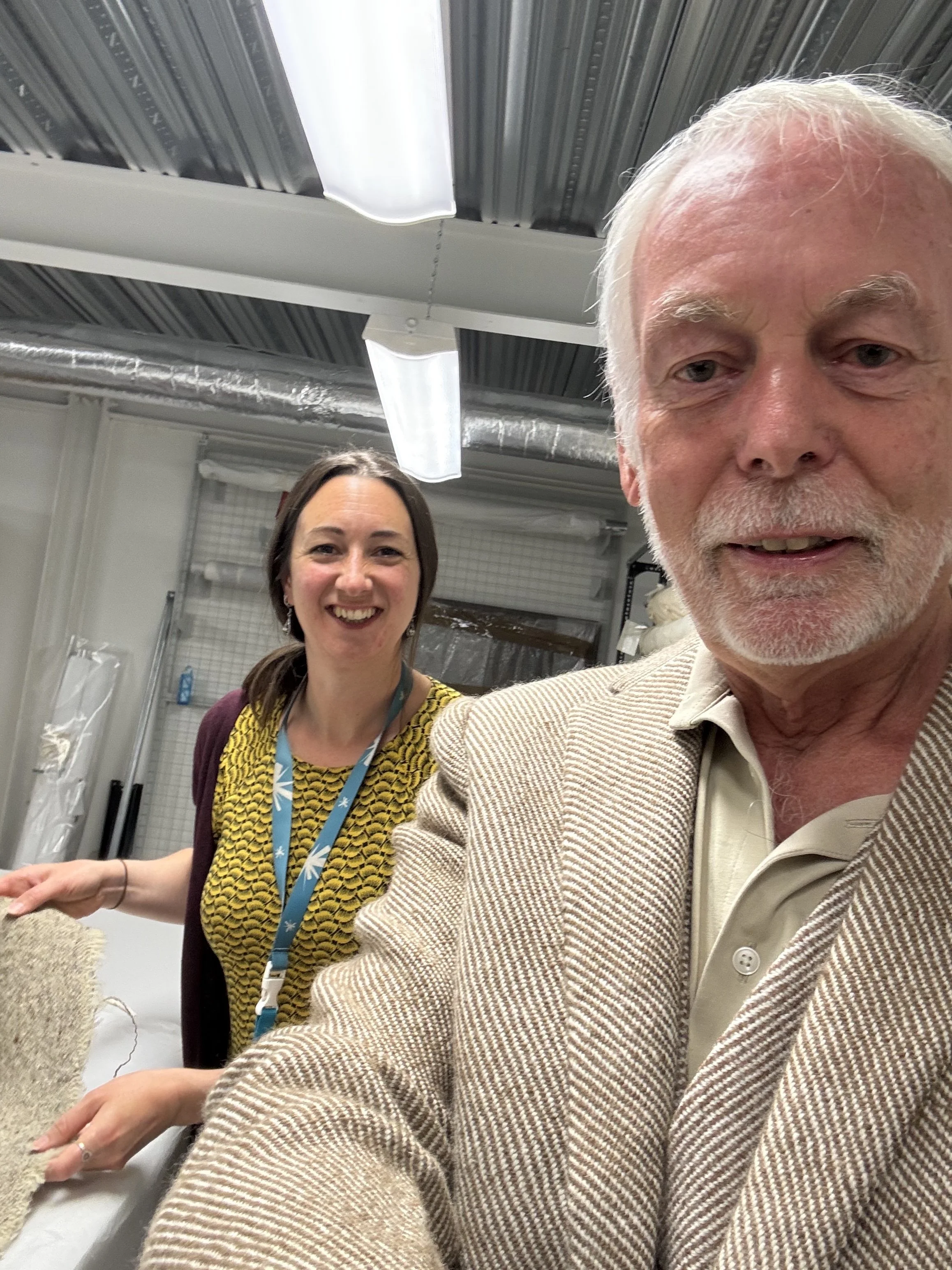
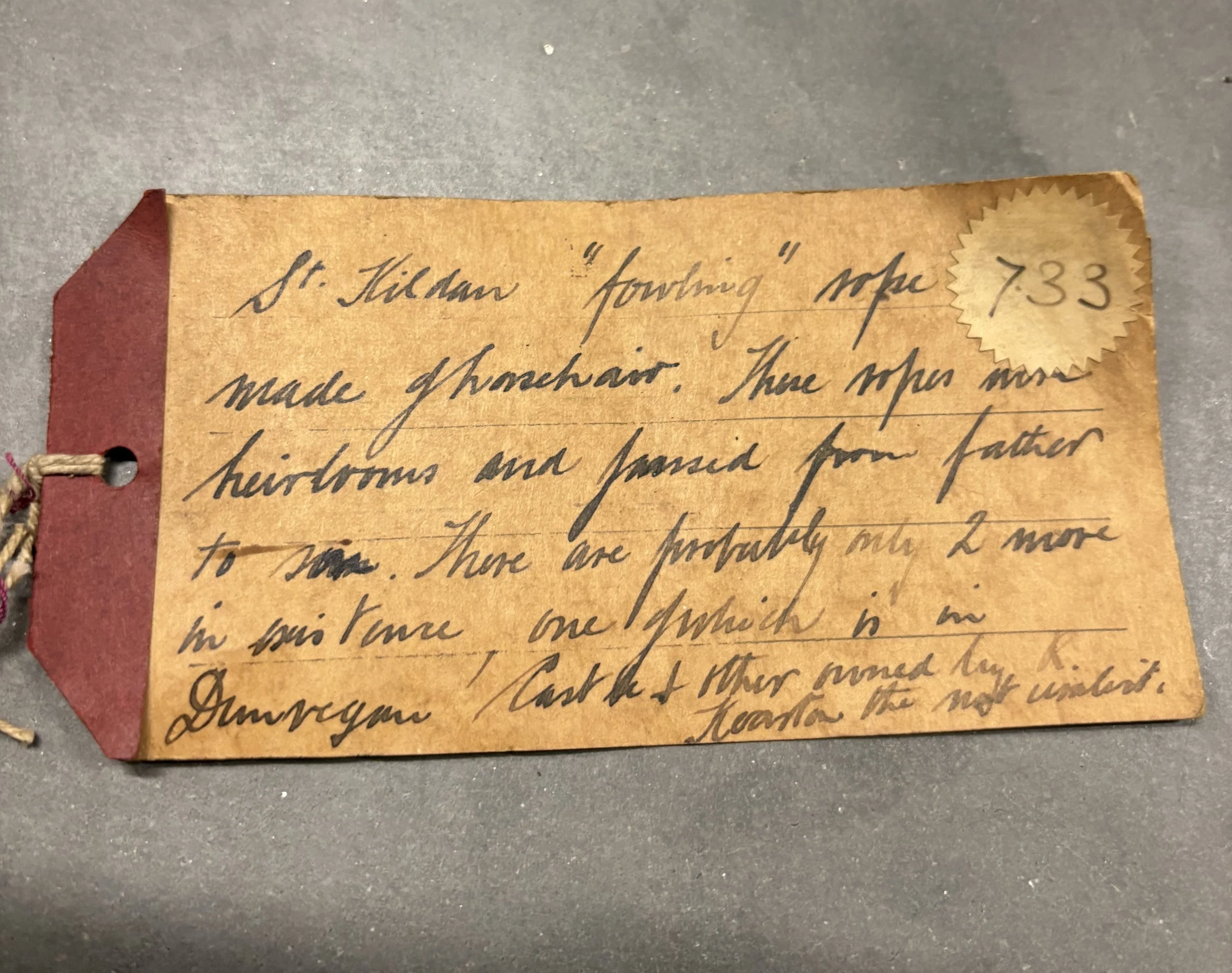
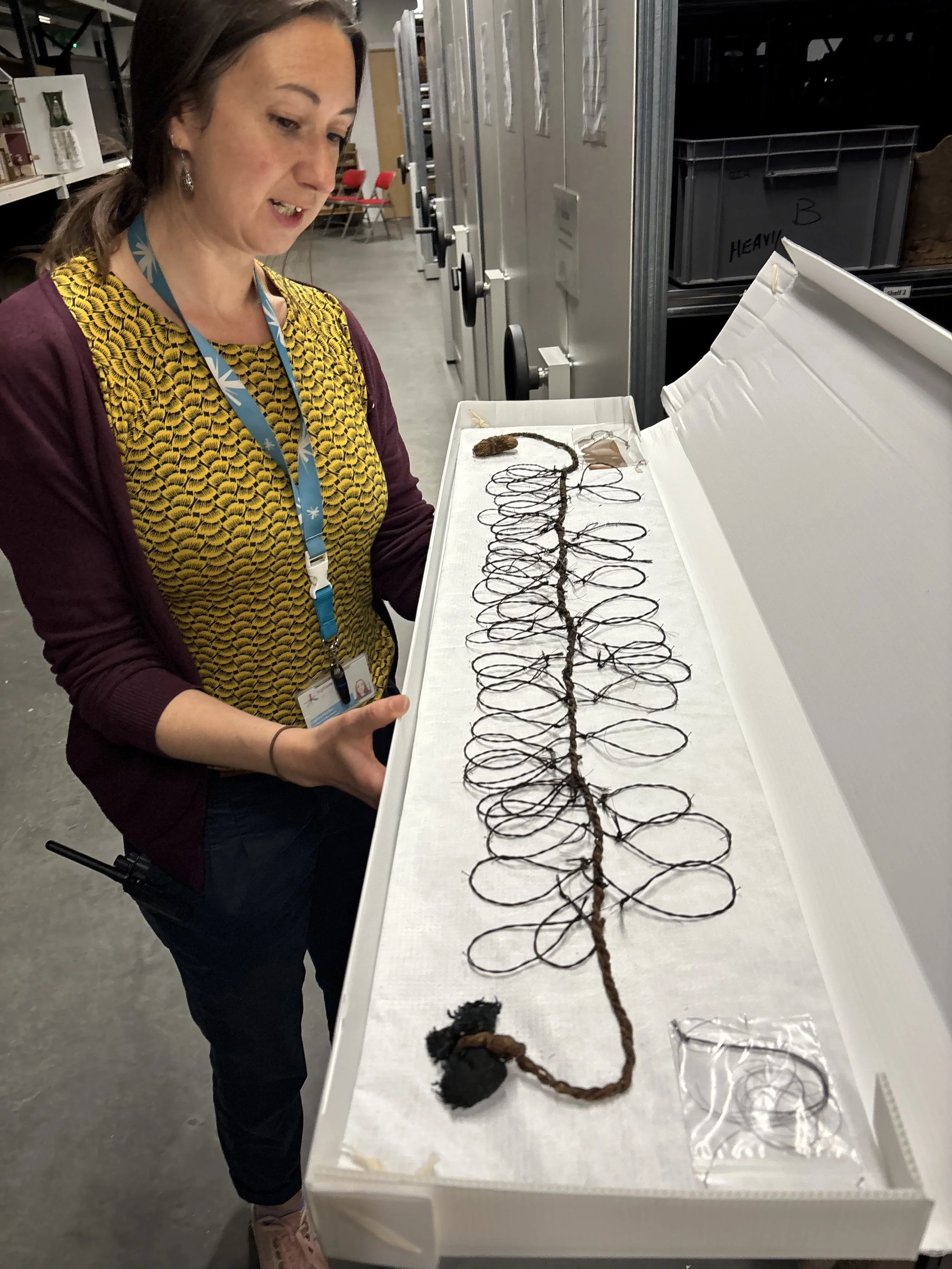
Last Friday I had the privilege of visiting Helen, the Collections Curator at the Highland Folk Museum in Newtonmore, to examine a remarkable collection of St Kildan artefacts.
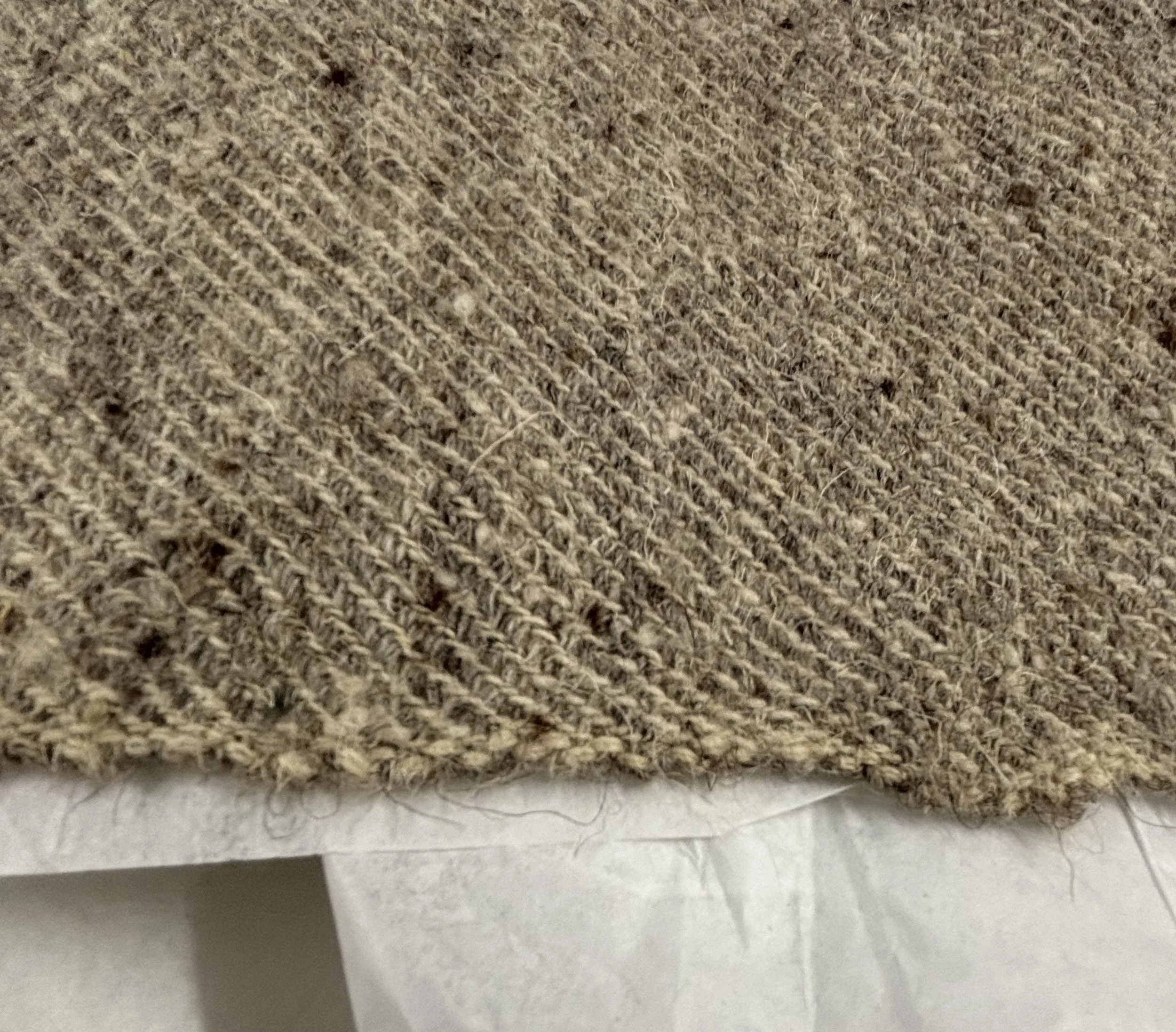
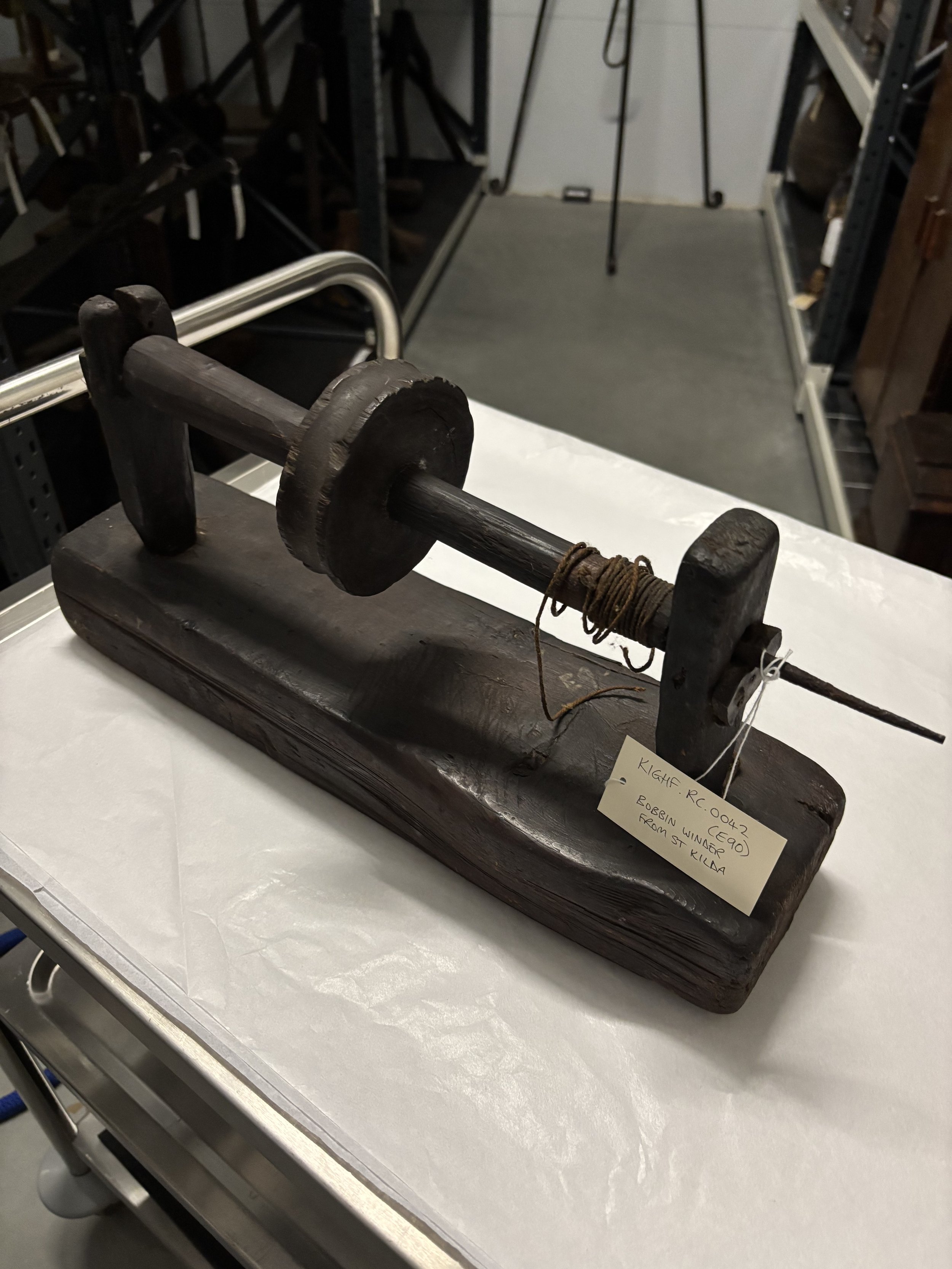
Among them was a 3.48-metre length of original St Kilda tweed woven in 1925, a traditional puffin trap, a horsehair rope used to descend the towering St Kilda cliffs to catch seabirds and collect their eggs—apparently one of only three surviving examples in existence—and a beautifully simple bobbin winder, most likely fashioned from driftwood washed ashore on the island.
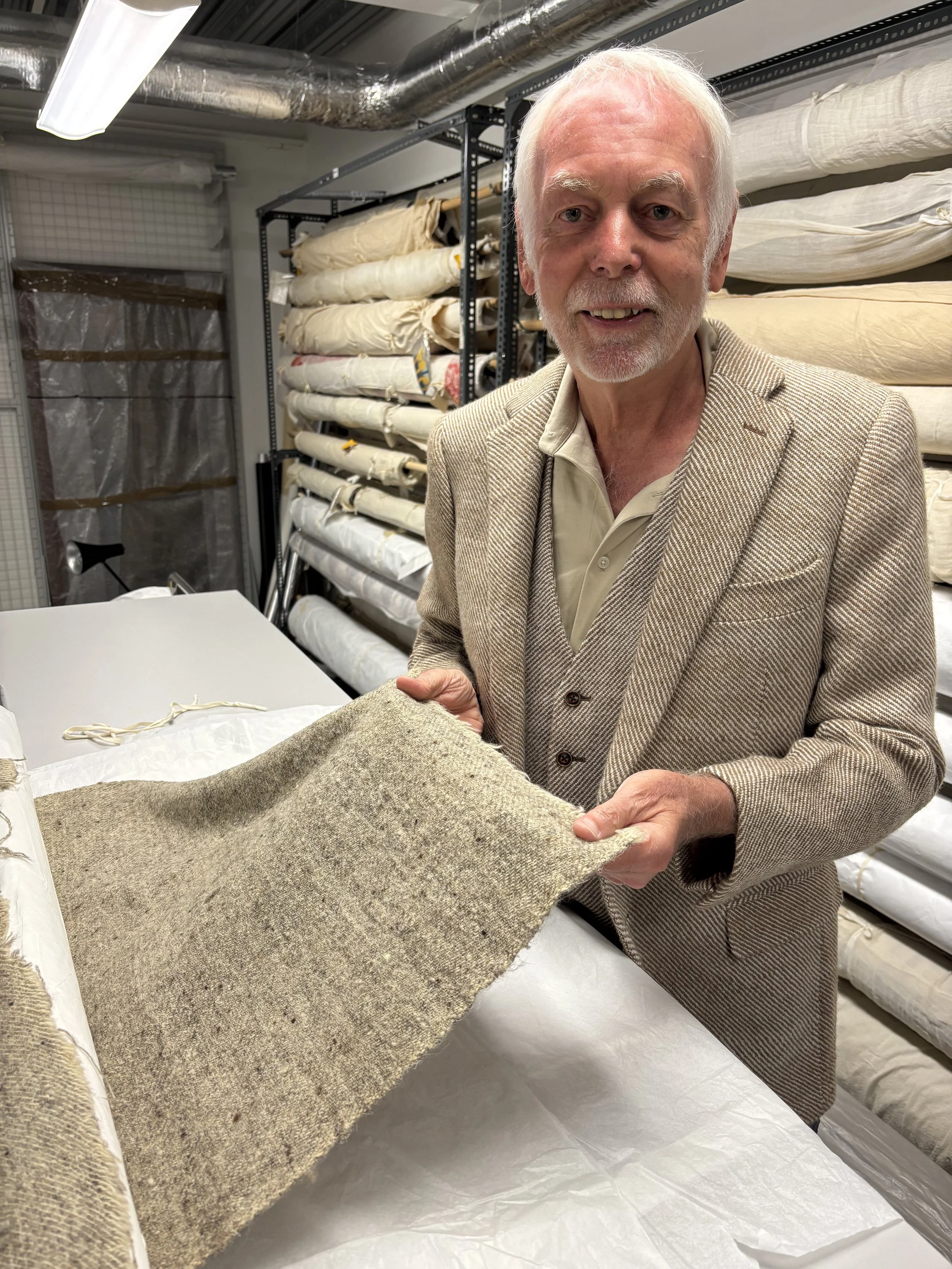
It was fascinating to compare this length of tweed with the piece I examined at the West Highland Museum in Fort William. The similarities were immediately apparent: the same natural colouring, the same distinctive texture, and the same neatly woven selvedges. This example, however, appeared to be a little less consistent, with slight variations in the twill and edges. Cecilia has often suggested that the quality of the weaving on St Kilda probably reflected the experience and skill of the individual weaver, and seeing these two surviving pieces side by side certainly lends weight to that idea.
The photographs also highlight the difference in colour between my tweed suit, woven from Australian Corriedale wool, and the softer, paler brown of the original St Kilda tweed, produced using Soay wool for the weft. It makes me even more excited to see just how closely I can reproduce the original fabric when I eventually weave on St Kilda using traditional Soay and Boreray wool.
Seeing these artefacts in person was a genuinely moving experience. Holding and studying the everyday tools and creations of the St Kildans somehow makes their lives feel much more real and tangible. With every museum I visit and every piece of history I have the privilege to examine, I feel one step closer to understanding the remarkable people whose story has inspired this entire project.