A Cloth of Distinction - Part 5
When I first began trying to understand St Kilda tweed, I thought primarily about the cloth itself.
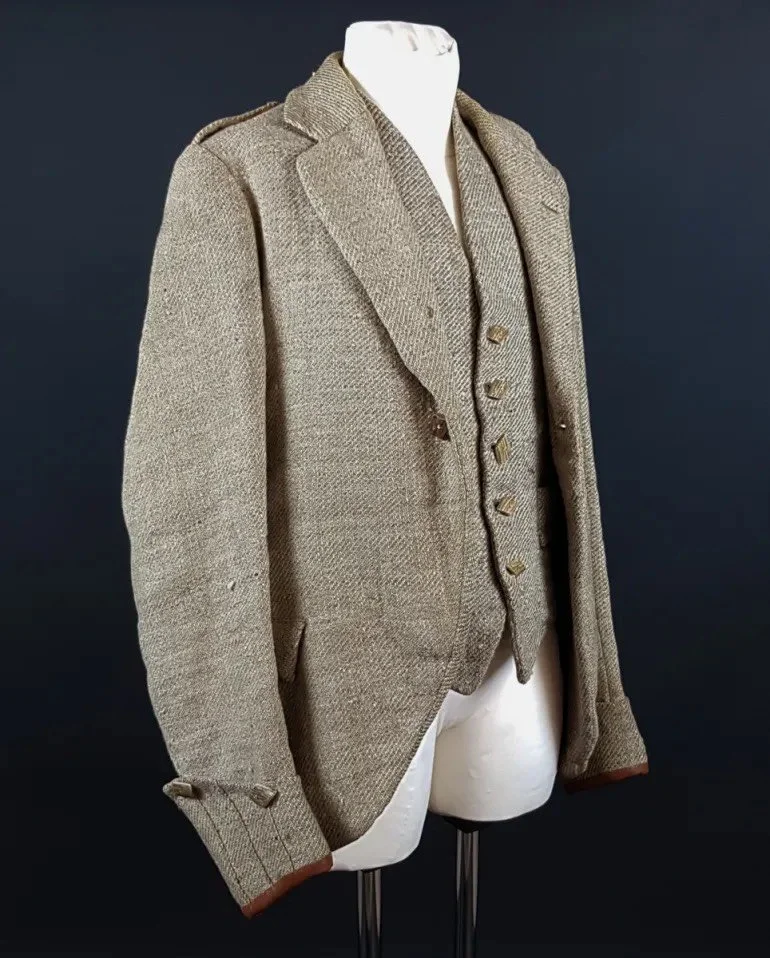
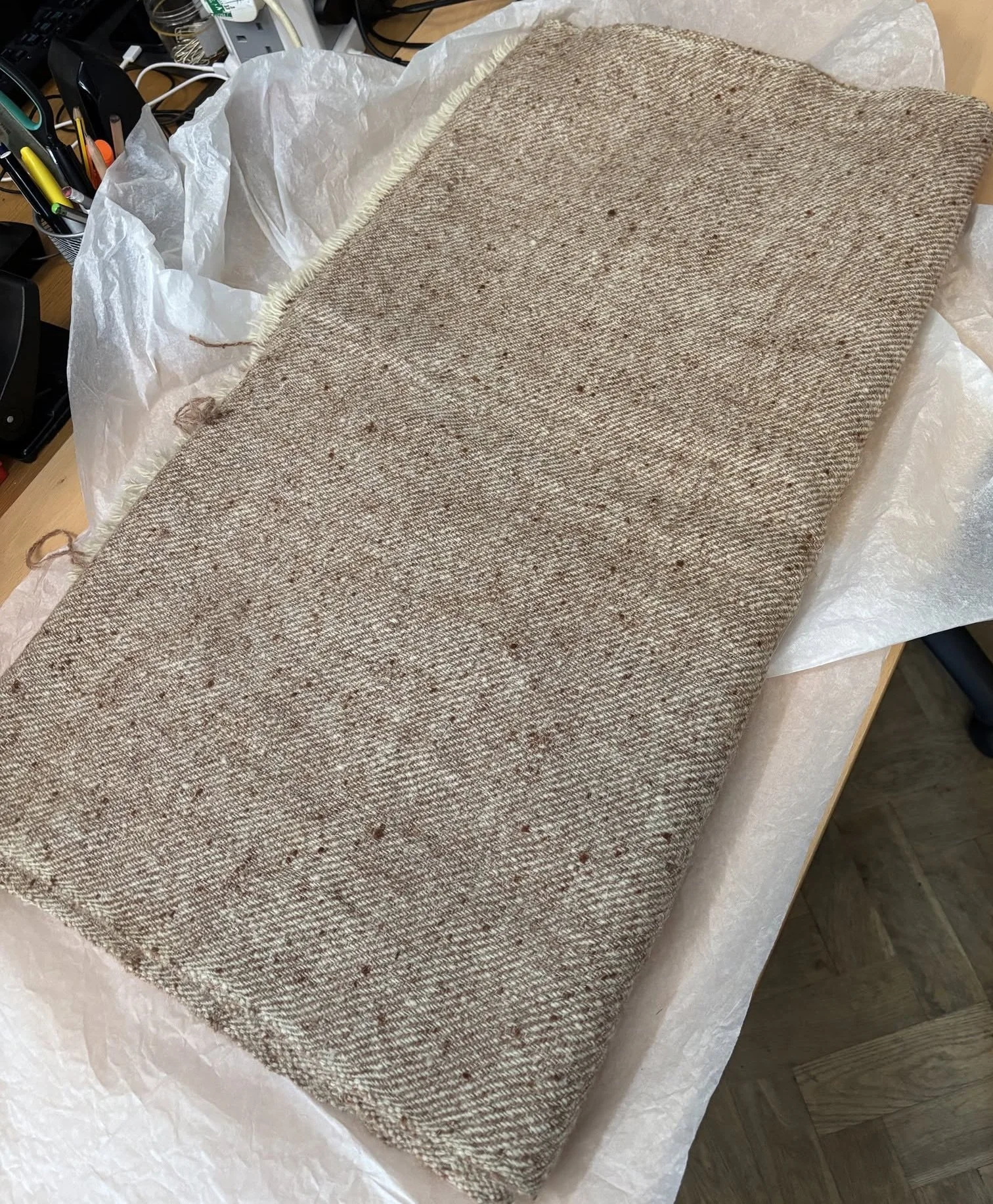
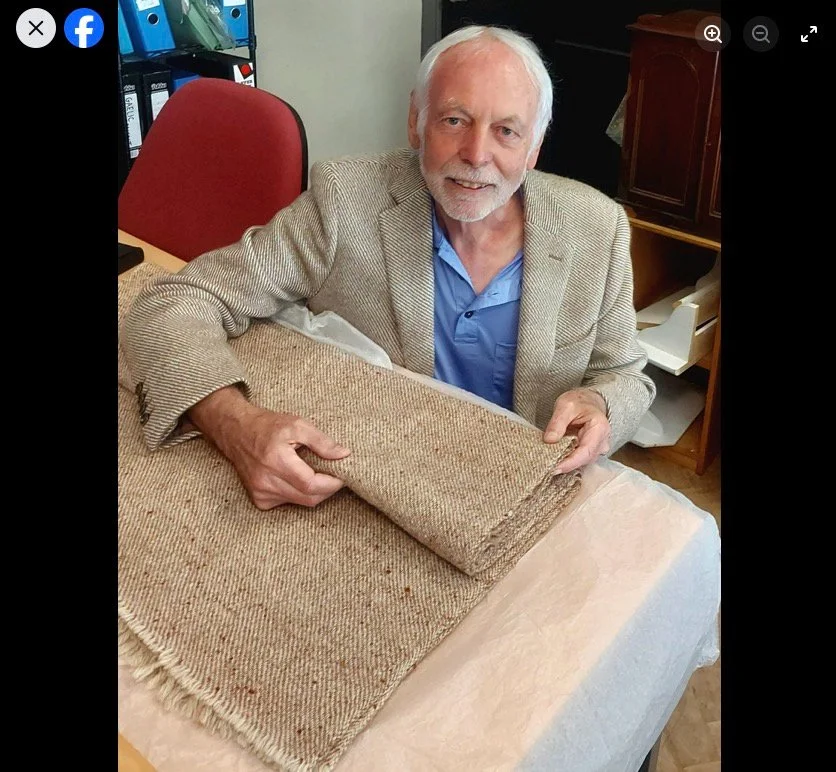
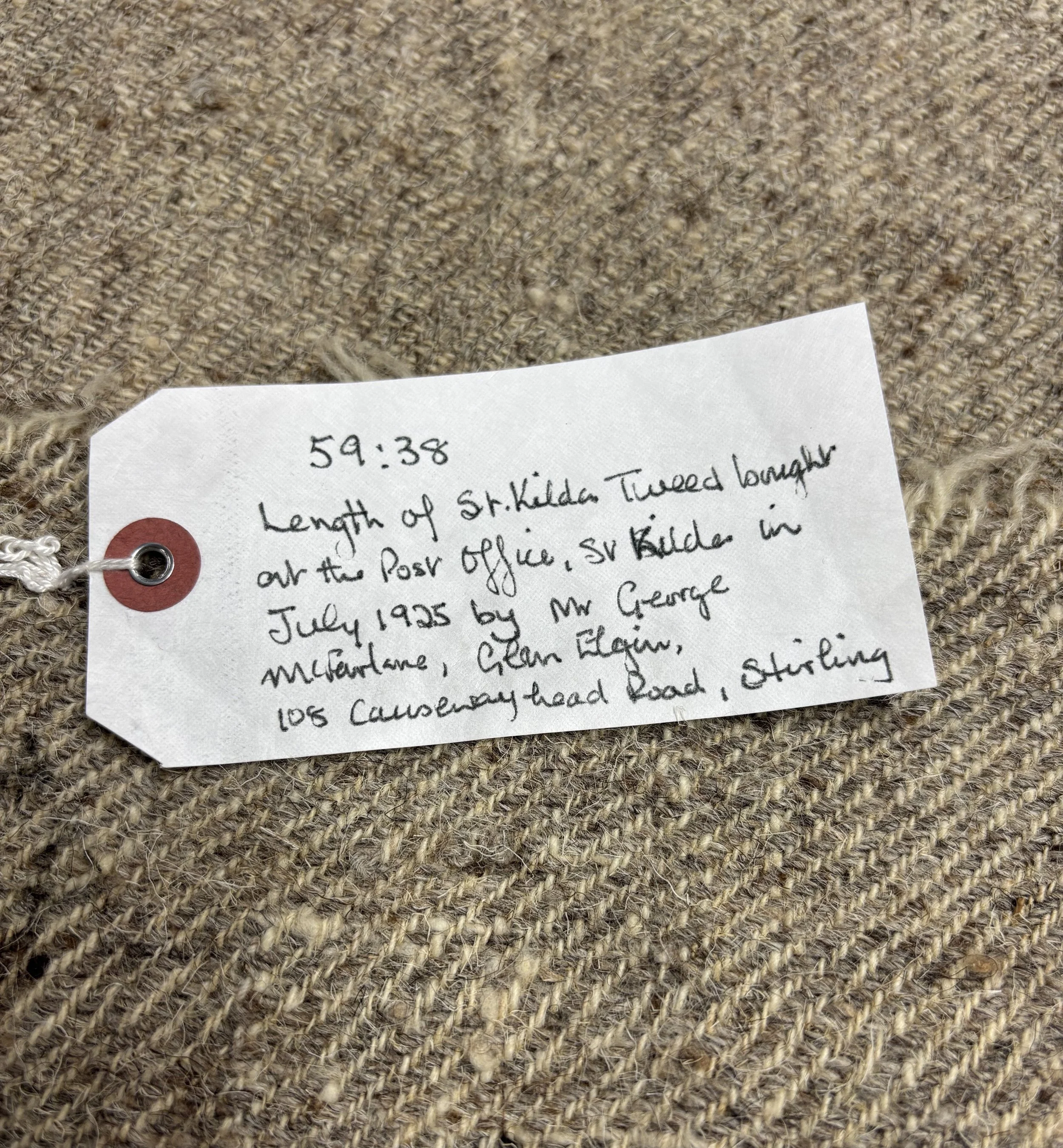
I wanted to know what it looked like, how it felt in the hand, what kind of wool had been used and how it had been woven. Examining the surviving lengths at the West Highland Museum in Fort William and the Highland Folk Museum in Newtonmore helped to answer many of those questions. The doublet and vest held by Museum nan Eilean in Stornoway provided another rare opportunity to see what became of the cloth once it had left the island and passed into the hands of a tailor.
But as I continued reading, another question gradually began to emerge.
Who actually wore St Kilda tweed?
Until then, I had tended to think of it chiefly as the domestic cloth of a remote island community: woven from the wool available to the St Kildans, used for their own purposes and occasionally sold to visitors. There is certainly truth in that picture, but it is far from the whole story.
The more evidence I encountered, particularly in Andrew Fleming’s The Gravity of Feathers, the more apparent it became that St Kilda tweed had once enjoyed a reputation extending far beyond the shores of Hirta. It was not merely an island curiosity bought by tourists as a souvenir. By the late nineteenth and early twentieth centuries, it had become a distinctive and desirable cloth, sought after by wealthy visitors and worn among what Fleming describes as “the great and the good”.
That discovery considerably changed the way I thought about the tweed.
St Kilda was geographically remote, but its cloth was not isolated from the wider world. Steamships and visiting vessels brought increasing numbers of travellers to the island, and the St Kildans were well aware of the value of what they produced. Accounts from the period show that tweed, blankets, knitted socks and gloves were offered for sale when visitors came ashore.
Nor were the islanders naïve in their dealings. One account from 1880 observed that the St Kildans “had all their wits about them” when selling their tweed. A visitor might purchase fifty yards, but not even an extra half-inch would be given away. It is a wonderfully revealing detail. The islanders understood both the worth of their cloth and the importance of receiving proper payment for it.
What began as a practical domestic skill had become a means by which St Kilda engaged with the outside world.
The cloth itself must have been part of its attraction. It was unmistakably handmade, naturally coloured and closely connected with one of the most remote inhabited islands in Britain. Every length carried something of the place from which it came: the sheep, the landscape, the labour of preparing the wool and the skill of the person who spun and wove it.
To own a length of St Kilda tweed was therefore to possess more than a piece of fabric. It was to possess something rare, distinctive and almost impossible to obtain anywhere else.
Some of this cloth found its way into the hands of tailors serving wealthy and influential customers. References to firms holding Royal Warrants or advertising royal patronage are tantalising, although they require careful interpretation. A tailor’s royal patronage does not by itself prove that a member of the Royal Family wore St Kilda tweed. Nevertheless, it demonstrates that the cloth had entered circles far removed from the small weaving cottages of Hirta.
This has led me to one of the most intriguing questions to emerge from my research.
Was St Kilda tweed ever worn by royalty?
There is a story that a length of the cloth was woven in 1911 to be made into a suit for King George V, possibly for him to wear during a visit to Scotland. If true, it would be a remarkable piece of the tweed’s history. At present, however, I have not found enough documentary evidence to state with confidence that the suit was completed or that the King actually wore it.
There is an important difference between a length of cloth being intended for a king, a suit being made from it and the king eventually wearing that suit. Each part of the story requires evidence of its own.
For the moment, therefore, it remains an intriguing possibility rather than an established fact. But it raises a much broader question. If St Kilda tweed was known to fashionable tailors and valued among wealthy and influential people during the Edwardian period, might other royal or aristocratic figures also have owned garments made from it?
The surviving doublet and vest in Stornoway provide a particularly fascinating example of how one length of St Kilda tweed travelled into this wider world.
The cloth from which the garments were made was purchased on St Kilda in 1930, the final year of the island’s permanent settlement, and was probably woven by Kirsty MacQueen. It was later tailored by R. W. Forsyth Ltd of Glasgow for a man named Eric Cornish. The garments are completed with horn buttons made in Harris and given to Cornish by the writer and novelist Compton Mackenzie.
When I weas privileged to examine the garments at Museum nan Eilean, my immediate attention was naturally drawn to the tweed. Here was original St Kilda cloth transformed into clothing and preserved in remarkably evocative form. Yet the more I thought about the garments afterwards, the more I realised that the cloth represented only one part of their story.
Who was Eric Cornish? How did he come to acquire this particular length of tweed? What was his relationship with Compton Mackenzie, and why did Mackenzie give him the Harris horn buttons? Who eventually donated the garments to the museum, and what information accompanied them when they entered the collection?
These questions remain unanswered.
Compton Mackenzie was a prolific writer and chronicler of his own life, leaving behind an enormous collection of correspondence, diaries and personal papers. If Eric Cornish appears anywhere in those records, it may help explain the connection between the two men and perhaps reveal more about the history of the garments.
An enquiry has now been sent to the Harry Ransom Center at the University of Texas, where the greater part of Mackenzie’s surviving papers is held. I have also contacted Museum nan Eilean seeking any information contained in the original accession records for the doublet and vest. Whether either enquiry will provide the missing pieces remains to be seen.
That uncertainty is becoming a familiar part of this project.
Every answer seems to reveal another question. A surviving length of tweed leads to the person who may have woven it. A tailored garment leads to its owner. A set of horn buttons leads to Compton Mackenzie. A passing reference to royal patronage leads to the possibility of a suit made for a king.
Not every trail will necessarily end in a definite answer. Some records may have been lost, while others may never have existed. Stories repeated over many years can acquire details that are difficult to verify, and it is important not to turn an attractive possibility into historical fact simply because we would like it to be true.
Yet even the unanswered questions reveal something important.
They show that St Kilda tweed once travelled much further than I had imagined. It moved from the hands of island spinners and weavers into steamships, shops and tailoring establishments. It was purchased by visitors, valued by wealthy customers and fashioned into garments intended to be worn with pride. Its reputation reached people whose lives could hardly have been more different from those of the community that produced it.
This changes the story of St Kilda tweed.
It was certainly a cloth born of necessity, made from the resources of the islands by people whose lives demanded skill, resilience and ingenuity. But it was also a cloth of distinction. Its remoteness did not diminish its value; in some ways, that remoteness may have increased it. The name of St Kilda carried its own fascination, and the tweed offered people a tangible connection with a place that few would ever experience for themselves.
More than a century later, I find myself following the same threads in reverse—beginning with the surviving garments and lengths of cloth and trying to trace them back through their owners, tailors and makers to the looms of Hirta.
There is still a great deal to discover. Perhaps the archives will reveal who Eric Cornish was. Perhaps the connection with Compton Mackenzie will become clear. Perhaps documentary evidence concerning the reported suit for King George V will eventually be found.
Or perhaps some of these questions will remain unanswered.
Either way, what has already emerged is a much richer picture of the cloth I hope to weave again. St Kilda tweed was not simply an isolated homespun that disappeared when the island was evacuated. It was a valued and sought-after fabric whose reputation once extended into some of the highest levels of British society.
The names of many of its makers may have been lost, but the cloth they created survives.
And through it, their skill continues to speak.