THE MYSTERIES OF ST KILDA TWEED
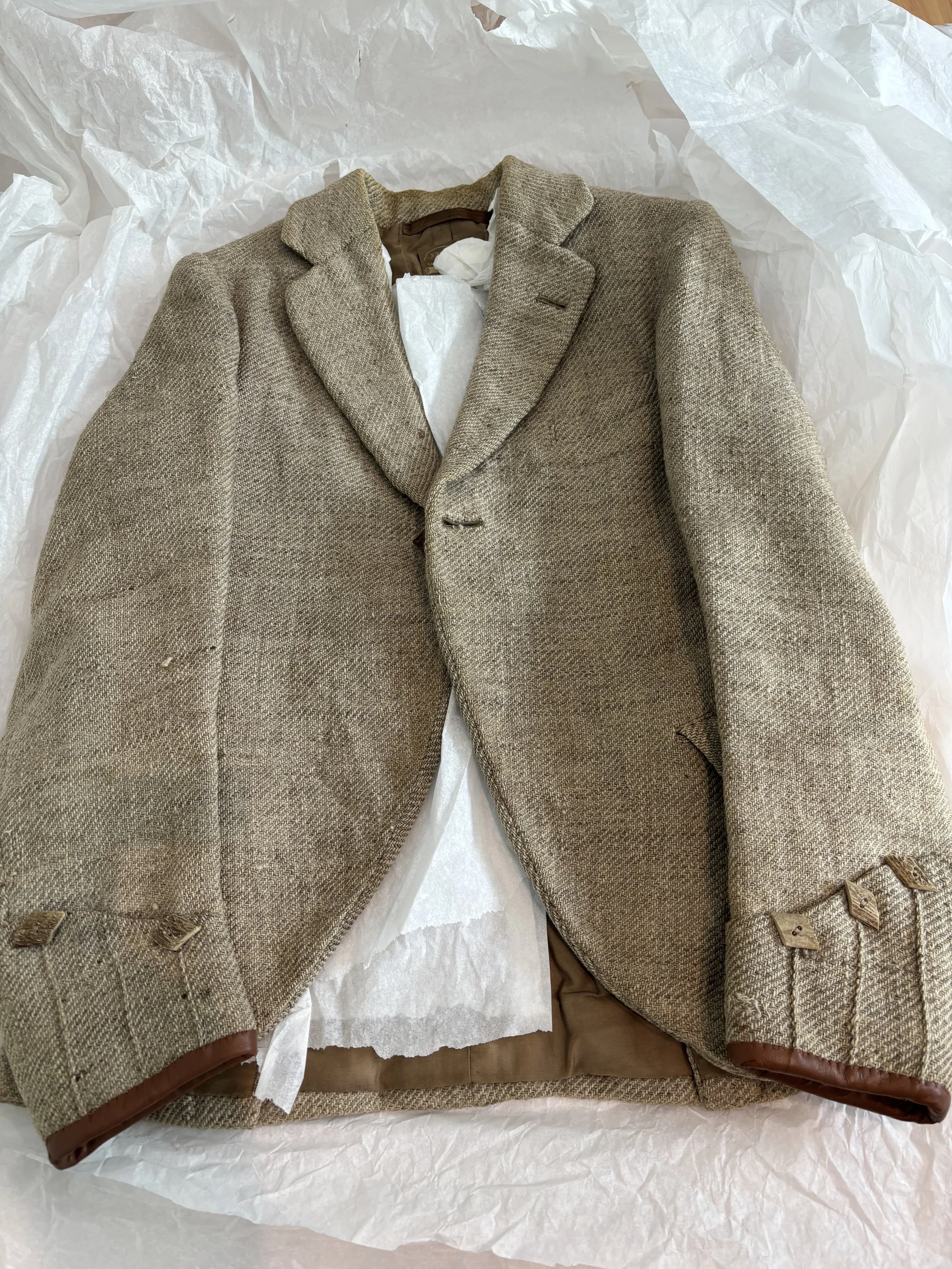
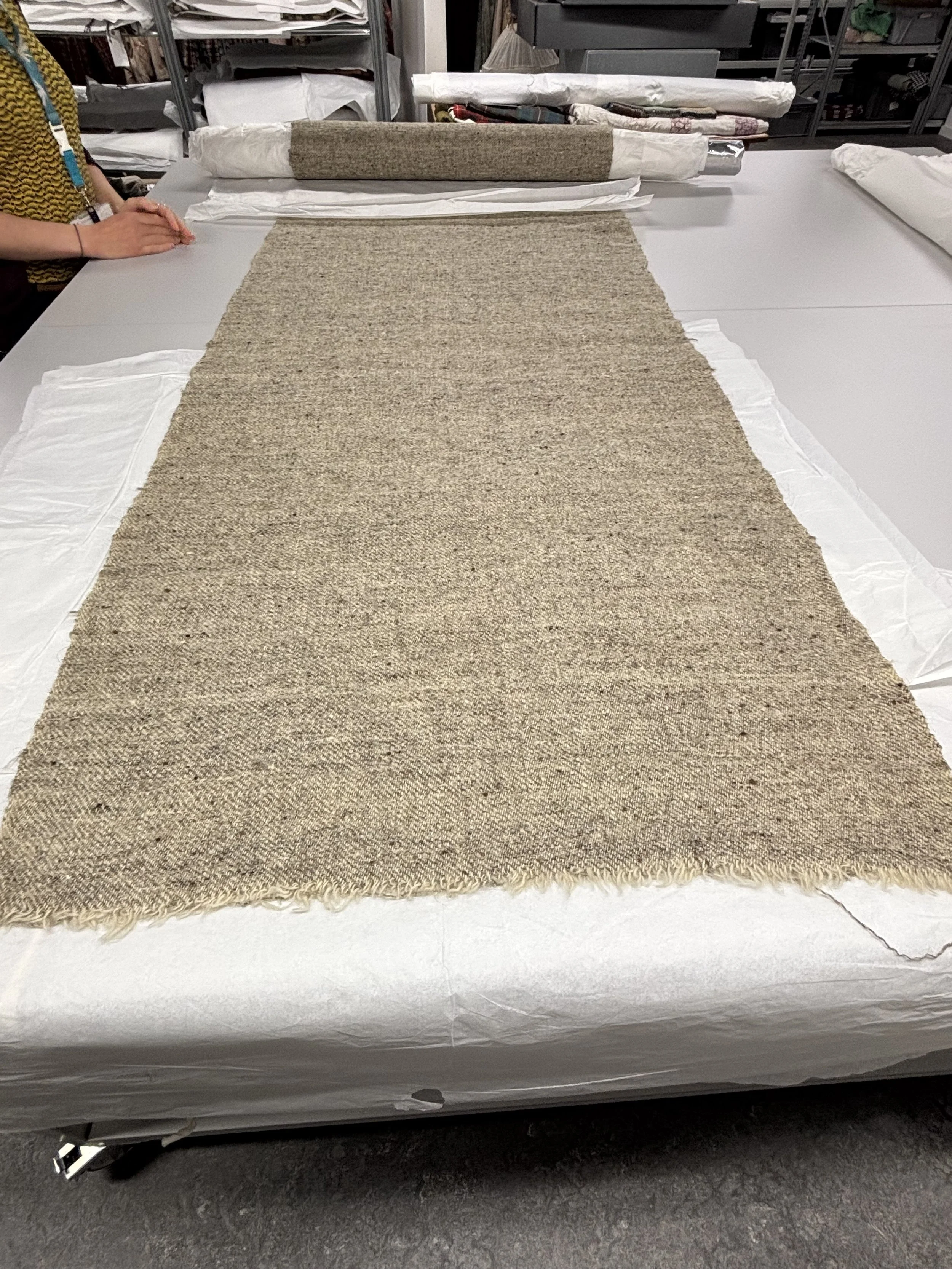
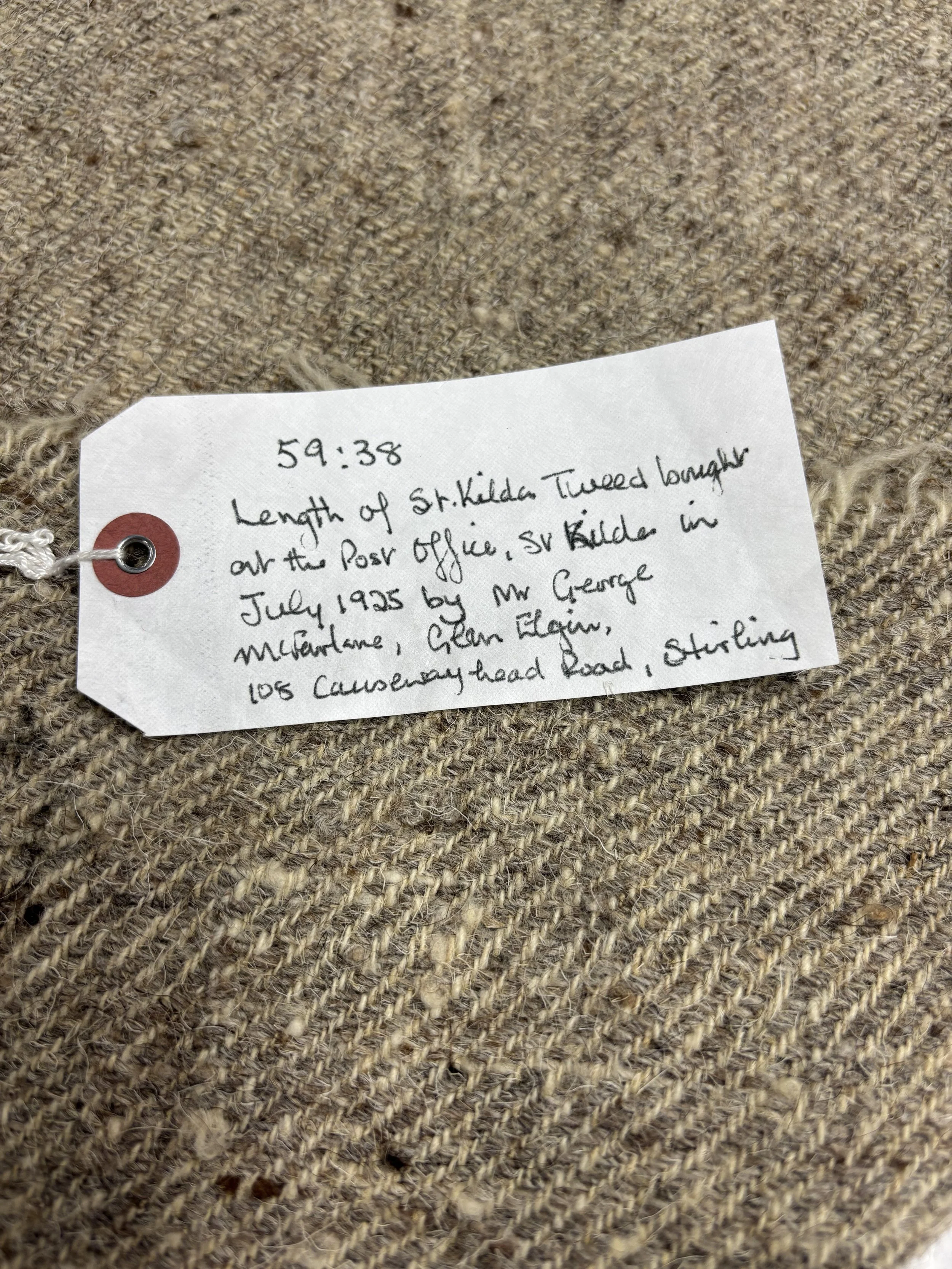
The more I investigate the history of St Kilda tweed, the more I discover that there are still fascinating questions waiting to be answered.
While preparations continue for my return to St Kilda in 2027, another aspect of the project has been occupying much of my time — tracing the history of the surviving tweed and the people associated with it.
Three particular investigations are proving especially intriguing.
1. Eric Cornish and Compton Mackenzie
In Museum nan Eilean in Stornoway are a doublet and waistcoat made from St Kilda tweed purchased on the island in 1930, shortly before the evacuation.
The garments belonged to Eric Cornish, and their distinctive horn buttons were apparently a gift from the celebrated Scottish author Sir Compton Mackenzie.
But who exactly was Eric Cornish? What was his relationship with Mackenzie, and how did these remarkable garments come into his possession?
These are questions I am hoping further archival research will help answer.
2. St Kilda Tweed and King George V
One of the most exciting discoveries has come through correspondence with the Royal Archives at Windsor Castle.
An archival record dated May 1935 reveals that the Earl of Dumfries offered St Kilda tweed to King George V, five years after the island's evacuation.
A subsequent handwritten note refers to something being sent to Sandringham in November that year.
Was it the tweed? And if so, what became of it?
This investigation has also led me to enquire about the intriguing Bute Box, a collection of historical material associated with St Kilda and the Bute family, who once owned the island.
Could it contain further clues about the tweed and its possible royal connection? That is something I am hoping to establish.
3. The Mystery of the Surviving Tweed
During my visit to Scotland in July, I was privileged to examine two surviving lengths of St Kilda tweed, one at the West Highland Museum in Fort William and the other at the Highland Folk Museum in Newtonmore.
The Newtonmore length carries a fascinating label recording that it was purchased at the St Kilda Post Office in July 1925 by a Mr George McFarlane of Stirling.
We also know that it entered the museum's collection in 1959. But who was George McFarlane, and how did his tweed eventually find its way into the museum?
The Fort William length presents another mystery. Donated to the museum in 1962, more than thirty years after the evacuation, its earlier history remains unclear.
Who preserved this remarkable piece of cloth, and what journey did it take before reaching the museum?
These are questions I am continuing to investigate.
The Search Continues
These investigations may seem somewhat removed from the practical business of spinning wool and weaving tweed, but to me they are an important part of the project.
I am not simply trying to recreate a fabric. I am trying to understand its history, the people who made it, and the remarkable journeys it undertook beyond those remote Atlantic islands.
And perhaps, somewhere among those who follow this project, there is someone who holds a small piece of information that could help solve one of these mysteries.
Sometimes the smallest clue can open the door to an extraordinary story.