The Compromises That Make It Possible - Part 10
Since beginning this series, I have received several thoughtful questions about some of the practical decisions I have made.
Why will I be using a modern table loom rather than the type of treadle loom used by the St Kildans?
Why is some of the wool being commercially spun instead of spun entirely by hand?
And if this is to be St Kilda tweed, why am I using Soay and Boreray wool gathered elsewhere in Scotland rather than wool from the sheep living on St Kilda itself?
And why aren’t you planning to finish the cloth as the St Kildans did?
These are perfectly reasonable questions. In fact, they go to the heart of what it means to recreate a historic cloth under modern conditions.
My intention has always been to produce tweed that comes as close as reasonably possible to the surviving examples woven on St Kilda before the evacuation of 1930. However, it has never been possible to reproduce every element of the original process exactly.
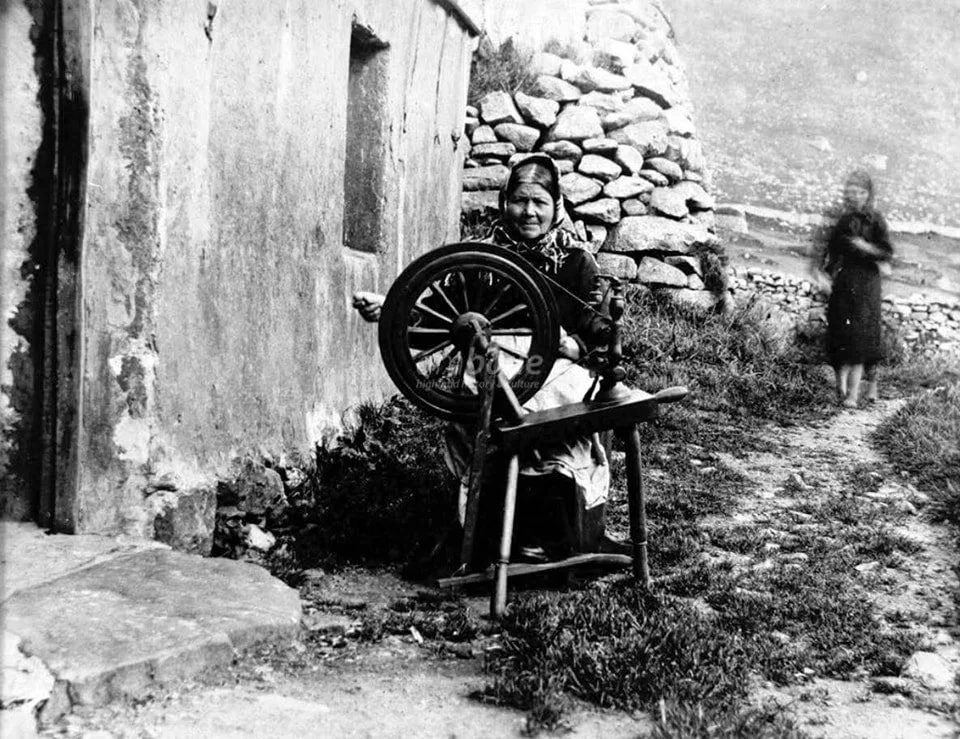
The St Kildans worked with sheep living around them, skills passed down through their community, looms already established in their homes and the shared labour of people accustomed to preparing wool, spinning yarn, weaving cloth and finishing it together.
I will arrive from Australia with everything I need transported by aircraft, road, ferry, boat and, finally, dinghy. I will be working within modern conservation requirements, with limited space and equipment, and with only four weeks on the island.
These are very different circumstances.
The Wool
Perhaps the most obvious question concerns the source of the fleece.
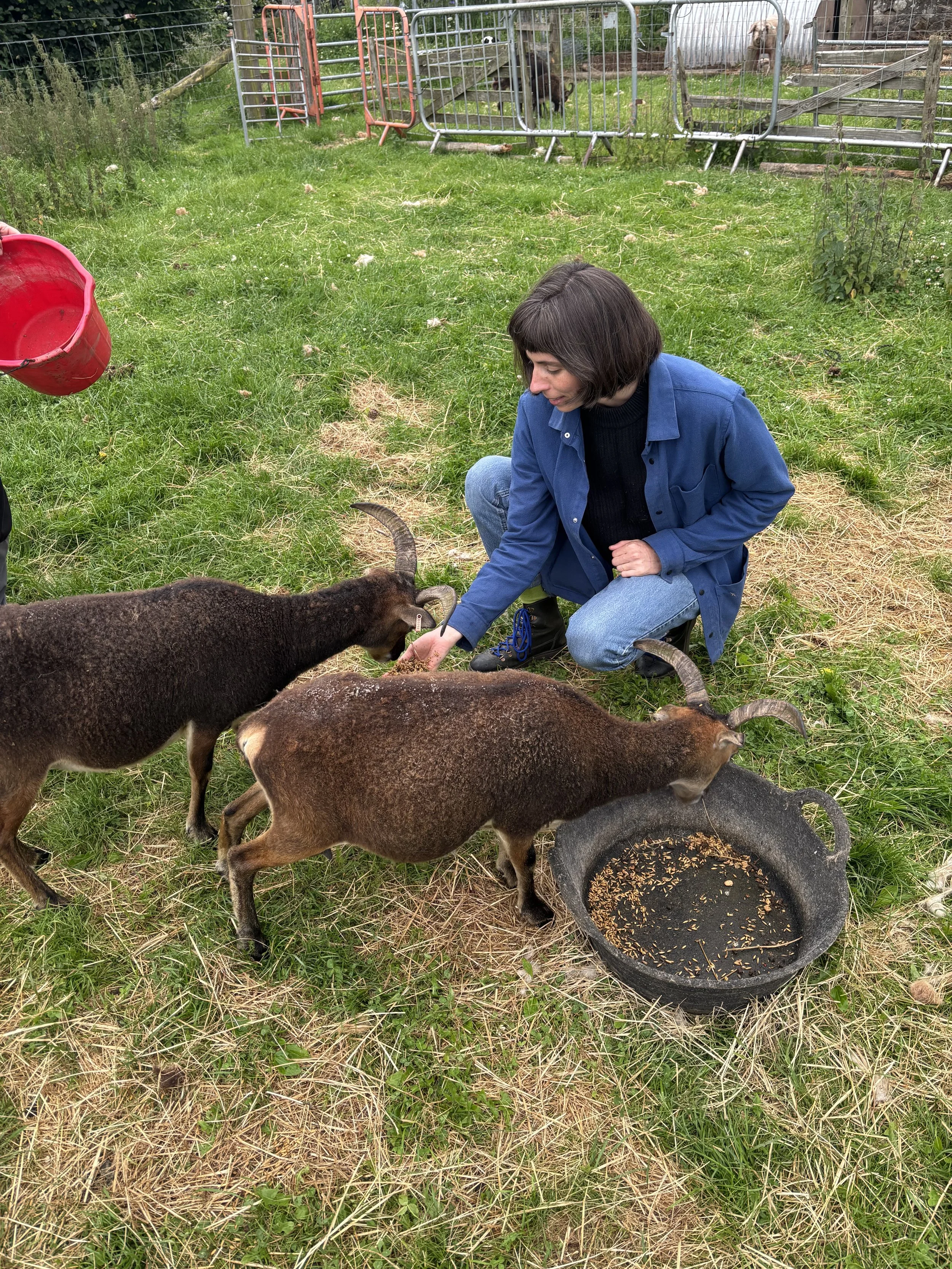
In all probability, the warp of the surviving St Kilda tweed was spun from Boreray wool, while the weft was spun from the shorter and softer wool of the Soay sheep. Both breeds remain closely associated with St Kilda and are central to my attempt to recreate the cloth.
Ideally, of course, the fleece would come directly from the sheep living there.
However, the National Trust for Scotland does not permit wool to be removed from the St Kilda sheep. There are sound conservation reasons for this, and it is a condition that I fully accept and respect.
Consequently, I had to find Soay and Boreray fleece elsewhere.
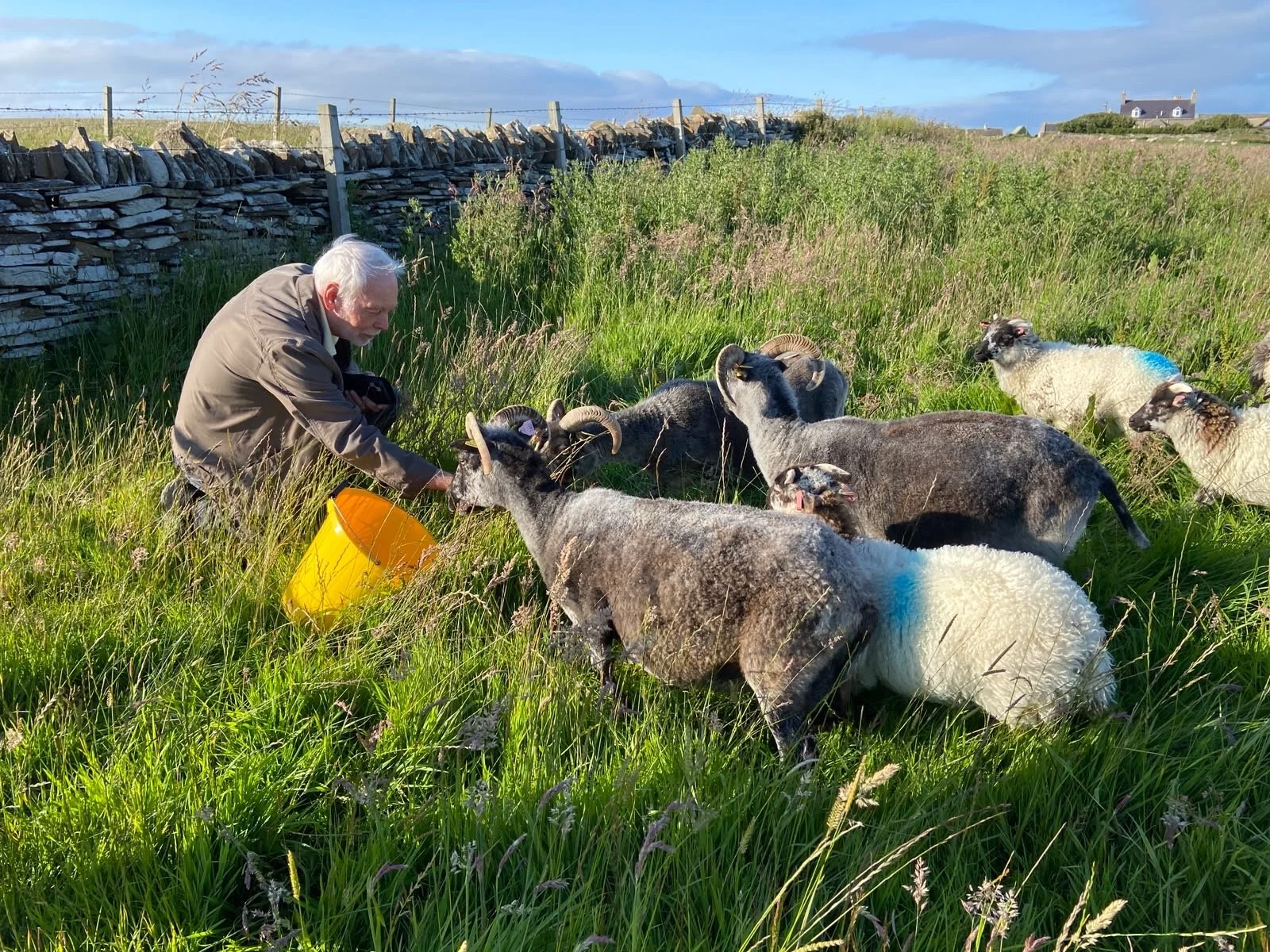
The Soay wool was gathered for me by Cheryl at Hilton Hill Farm in Fife, while the Boreray wool came from Hazel and Norman’s flock at Airy Farm on Stronsay in Orkney. These sheep do not live under precisely the same conditions as those on St Kilda. Differences in climate, grazing and husbandry may all influence the fleece.
I cannot pretend, therefore, that their wool will be identical to wool gathered on Hirta or Soay.
Nevertheless, it comes from the same rare and historically important breeds and provides the closest responsibly obtainable material for the project. Using their natural, undyed wool will also allow the recreated cloth to retain the mixture of creams, browns and darker fibres that gives the surviving St Kilda tweed much of its distinctive character.
The Spinning
Another question I have been asked is why the wool for one length of tweed is being commercially spun when the St Kildans spun their yarn by hand.
The simple answer is that producing enough yarn for two five-metre lengths of cloth is an enormous undertaking.
Because I live in Australia, bringing raw fleece home was not a straightforward option. Australian quarantine requirements make the importation of untreated animal fibres difficult, while arranging for the wool to be prepared, distributed among a number of handspinners in Britain, spun to consistent requirements, collected again and eventually delivered to me would have been a very complicated process to coordinate from the other side of the world.
There would also have been the difficulty of ensuring that sufficient yarn was completed in time.
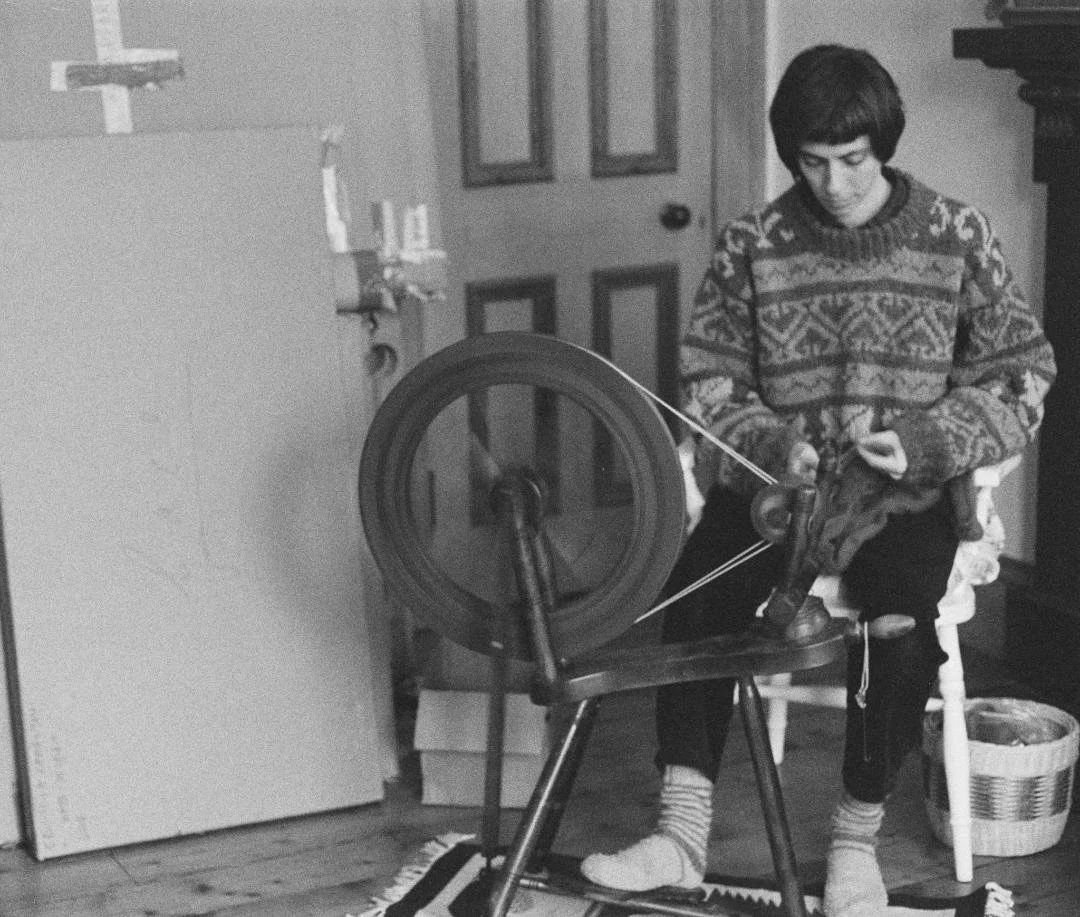
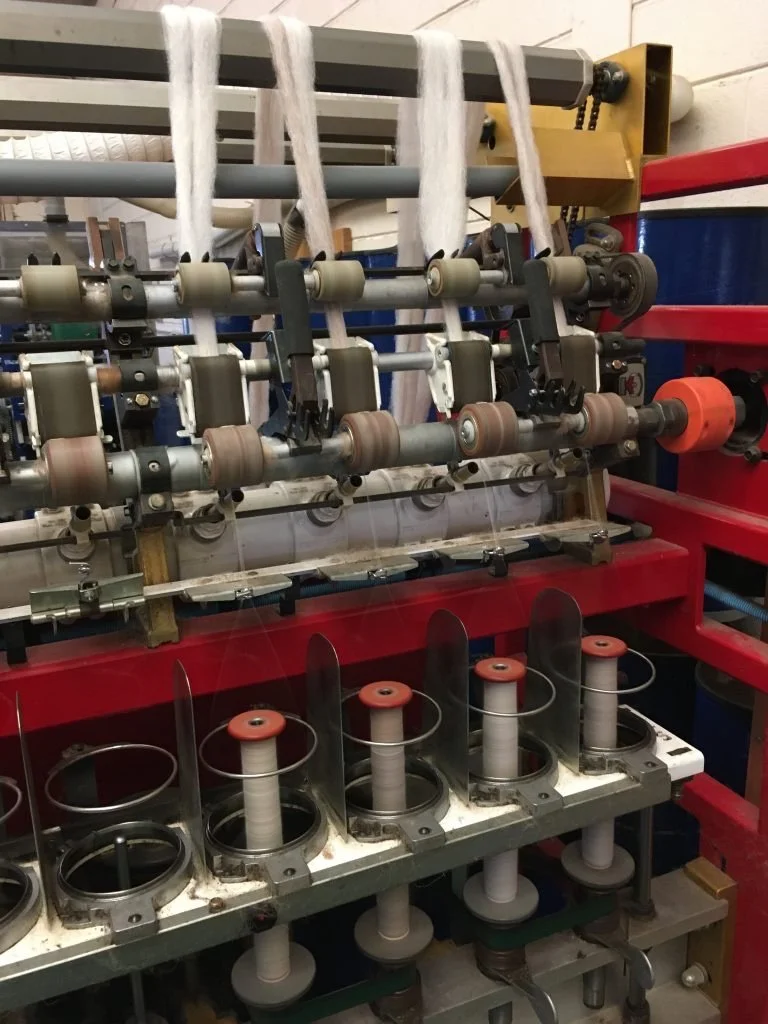
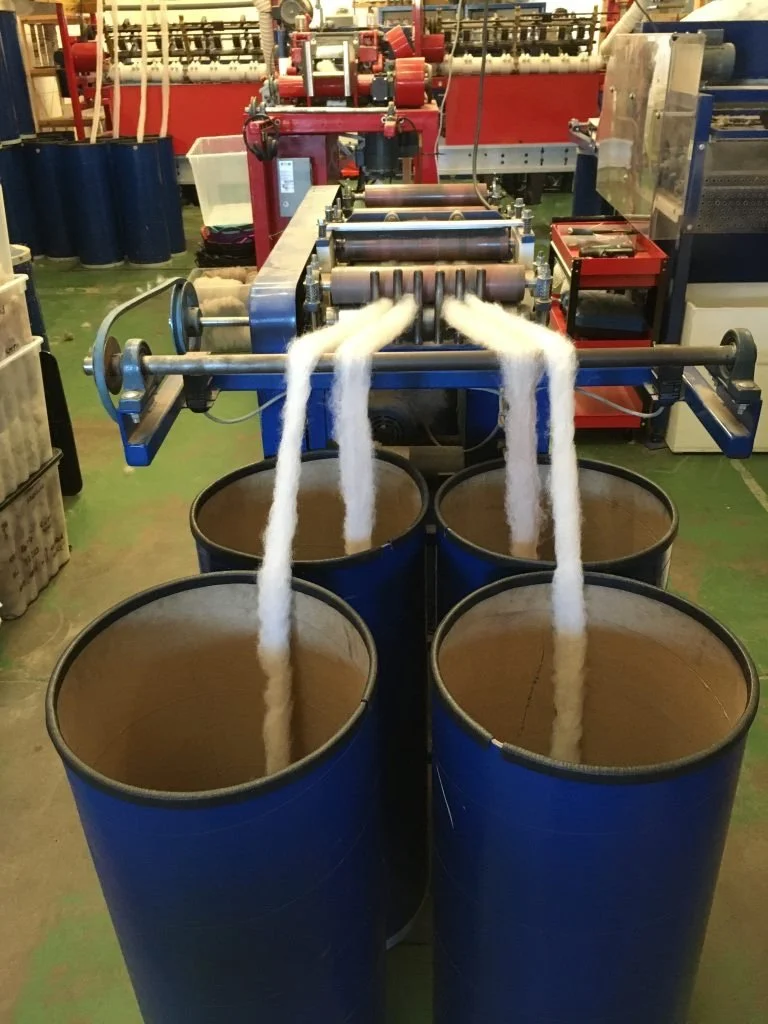
For these reasons, the wool for my first length of tweed is being prepared and spun by The Border Mill in Duns. The mill understands what I am trying to achieve and has worked with Cecilia and me to produce yarn suited to the project.
This yarn will be two-ply rather than the handspun singles found in the surviving museum cloth. Two-ply will provide the additional strength and consistency needed for the first length and make it possible for the mill to process these challenging primitive fleeces successfully.
But the historical handspinning element has not been abandoned.
When I visited Scotland in July, I gave Cecilia five kilograms of Soay fleece and five kilograms of Boreray fleece. She is presently undertaking the considerable task of processing that wool and plans to begin spinning it in February 2027, several months before we travel to St Kilda.
This means that the yarn for the second five-metre length will not have to be spun entirely during our four weeks on the island. Sufficient yarn should already be available when we arrive, although Cecilia will also spin on Hirta as part of our attempt to bring the process itself back to St Kilda.
This has led to another understandable question: if Cecilia can produce enough handspun yarn for one length, why not ask her to spin enough for both?
The answer is simply that hand-processing and spinning the wool for even one five-metre length of tweed is an enormous undertaking.
Cecilia is also an extremely busy person. She is completing a PhD that still requires extensive research and travel throughout Scotland, and she has teaching responsibilities as well. I am enormously grateful for the time, skill and energy she is already contributing to this project, and I certainly do not wish to overload her by asking her to produce the vast quantity of yarn required for both lengths.
The two lengths will therefore serve slightly different purposes.
The mill-spun yarn will give me the best opportunity to complete a substantial and usable length of cloth during my limited time on Hirta. The handspun singles will allow us to explore more closely the character, variability and challenges of the material with which the St Kildans themselves worked.
Far from diminishing the project, I believe the comparison between the two lengths may become one of its most interesting outcomes.
The Loom
The loom has required another carefully considered compromise.
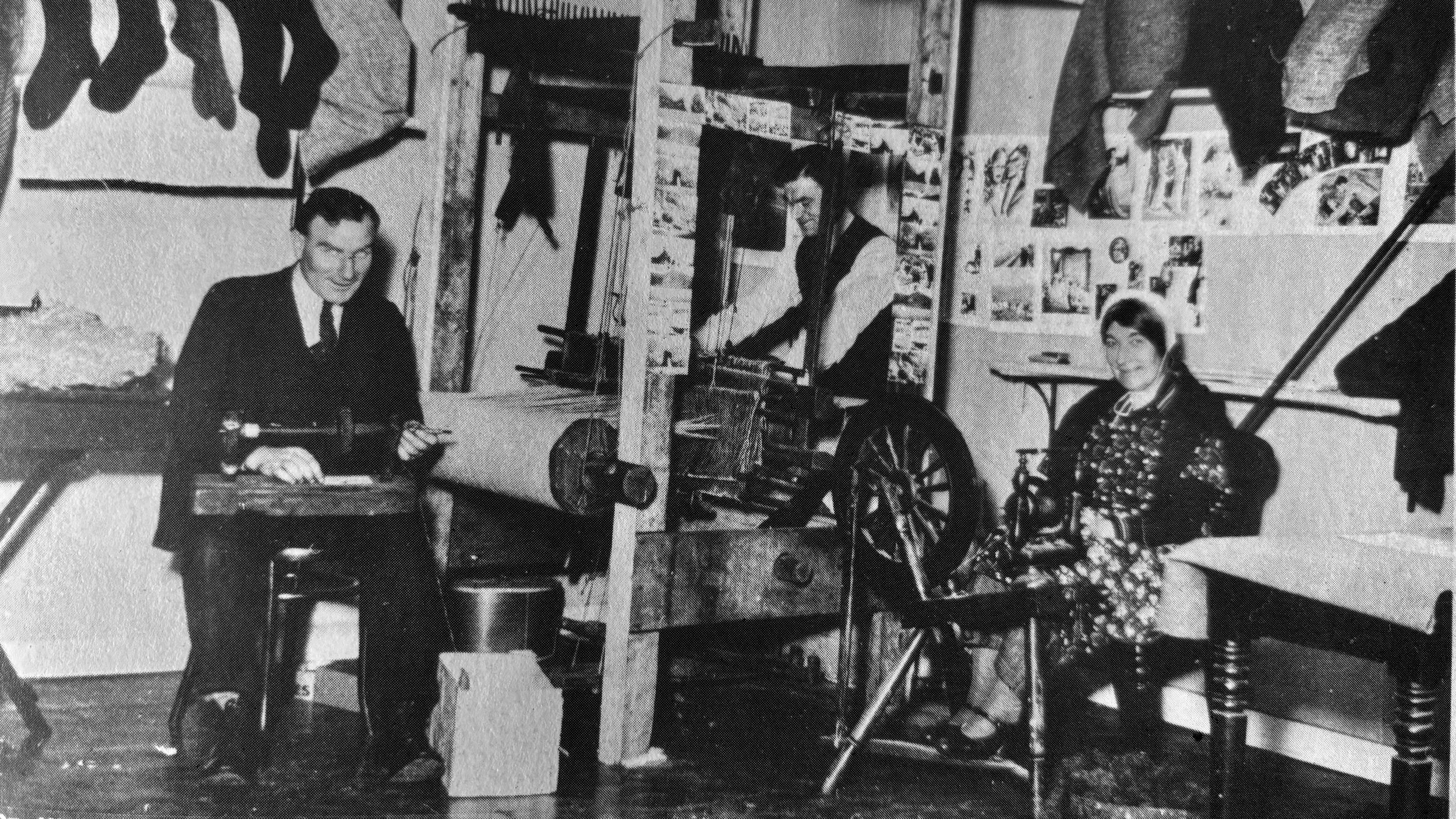
The St Kildans did not weave their commercial tweed on modern Ashford table looms. By the later nineteenth and early twentieth centuries, they appear to have used floor standing domestic treadle looms.
It would be wonderful to reproduce one of those looms and weave on it inside a St Kildan cottage. Practically, however, that has never been a realistic possibility.
Everything must first travel from Australia to Scotland. It must then be carried to the west coast and loaded onto the boat for St Kilda. On arrival, both people and equipment are transferred by dinghy before being landed at the pier.
A traditional floor loom would be large, heavy and awkward to transport. It would probably need to be dismantled for the journey, reassembled on the island and then dressed with hundreds of individual warp threads before weaving could begin. At the end of the stay, the entire process would have to be reversed.
Although I originally requested six weeks on St Kilda, I was granted four. I am deeply grateful for that opportunity, but four weeks will pass very quickly. I cannot afford to spend several precious days assembling and warping a floor loom, followed by more time dismantling it for the return journey.
The 80-centimetre Ashford table loom solves many of these problems. It is portable, it can produce cloth of the required width, and it can be folded while already warped.
My intention is to prepare the loom before leaving for St Kilda so that, once we reach the island and have settled in, I can begin weaving almost immediately.
The mechanism may be modern and operated by hand levers rather than foot treadles, but it can still produce the same straight 2/2 twill structure found in the surviving St Kilda cloth. The loom changes the way I operate the shafts; it does not change the underlying weave I am attempting to reproduce.
Finishing the Cloth
A further compromise will come after the weaving itself has been completed.
The St Kildans traditionally soaked their newly woven tweed in stale urine, which acted as a cleansing agent, before washing it thoroughly in spring water. The cloth was then waulked by hand—traditionally by groups of women singing rhythmic songs as they worked—and finally stretched and hung out to dry on tenterhooks.
This process did much more than clean the fabric. It helped shrink and consolidate the weave, transforming the newly woven material into a denser, softer and more weather-resistant cloth.
Although this traditional method is an important part of the story of St Kilda tweed, reproducing it during my four-week stay would be completely impractical. It would require additional materials, equipment, labour and time, while also raising obvious questions about hygiene and what would be appropriate within the carefully protected environment of St Kilda.
Nor do I want to risk damaging ten metres of irreplaceable cloth by attempting such an important finishing process without the facilities and specialist knowledge required.
I am therefore presently in discussions with a professional cloth-finishing company in Galashiels to determine whether the two lengths could be sent there after our stay on the island. If an arrangement can be reached, the cloth would be finished under controlled modern conditions by people with the experience and equipment to do it properly.
This will not reproduce the communal waulking of St Kilda, nor can it replicate every effect of the original process. However, it should allow the fibres to settle, the weave to close and the material to develop into a properly finished tweed.
Once again, it is a balance between respecting the historical method and protecting the cloth we have worked so hard to produce.
Three Years to Make It Possible
It is sometimes difficult for me to believe how quickly this project has developed.
From the first serious steps to the planned residency on St Kilda, the entire undertaking will have come together in only about three years.
During the first year, I had no certainty that I would ever receive permission to return to the island and weave there. I simply continued taking one step at a time.
I learnt to weave. I found people willing to share their knowledge. I searched for suitable looms, studied surviving examples of the cloth, contacted museums and researchers, and gradually began to understand what recreating St Kilda tweed might involve.
Each answer seemed to lead to another question, and each person who helped appeared to open another door.
All the while, the greatest question remained unanswered: would the National Trust for Scotland allow me to do it?
Once permission was granted, the project entered an entirely different phase.
The second year became one of preparation and commitment. Suitable Soay and Boreray fleece had to be located and purchased. Arrangements had to be made with the mill. I travelled through Scotland collecting the wool, delivering it to Duns, examining original cloth in museum collections and meeting the people whose assistance would be essential.
Transport to St Kilda had to be discussed. Equipment had to be selected. The involvement of Cecilia had to be approved. Food, accommodation and the practicalities of living and working on Hirta for four weeks all had to be considered.
Much of this has been organised from Australia, separated from Scotland by thousands of kilometres and a considerable difference in time zones.
The Financial Reality
There is also another practical reality that I feel is important to acknowledge.
I am self-funding this project.
I am retired, and I am certainly not the richest of people. Every fleece, every journey, every piece of equipment, every night’s accommodation and every stage of processing must be paid for carefully.
There are always things that could be done differently with unlimited time and money. A replica loom might be commissioned. Teams of specialist handspinners might be engaged. More experimental yarn could be produced, and longer periods could be spent on the island.
But that is not the project I have the means to undertake.
The challenge has been to decide where historical accuracy is essential, where experimentation is most valuable and where a practical compromise will allow the larger undertaking to continue.
Without those decisions, this project might have remained a wonderful idea that never reached St Kilda.
Faithful, but Not Identical
I do not claim that the tweed I weave in 2027 will be identical in every respect to cloth woven by the St Kildans a century ago.
No one can fully recreate the environment, knowledge, community and way of life from which the original cloth emerged. Even fleece from the same breed may differ from year to year, flock to flock and island to island. The hands preparing the wool will be different. The spinning and weaving equipment will be different. The finishing process will be different. The cloth will be made in another century and under very different circumstances.
What I can do is study the surviving evidence, use the most appropriate materials available, preserve the known structure and character of the cloth, and remain honest about every departure from the historical process.
The project is not about pretending that the conditions of the pre-1930s can be recreated exactly in 2027.
It is about respecting what is known, acknowledging what cannot be reproduced and discovering how closely the cloth can be recreated within the realities of the present day.
Every compromise has been considered carefully. Each one represents a balance between historical faithfulness and practical possibility.
They are not compromises that weaken the project.
They are the compromises that make it possible.