Learning From The Cloth - Part 12
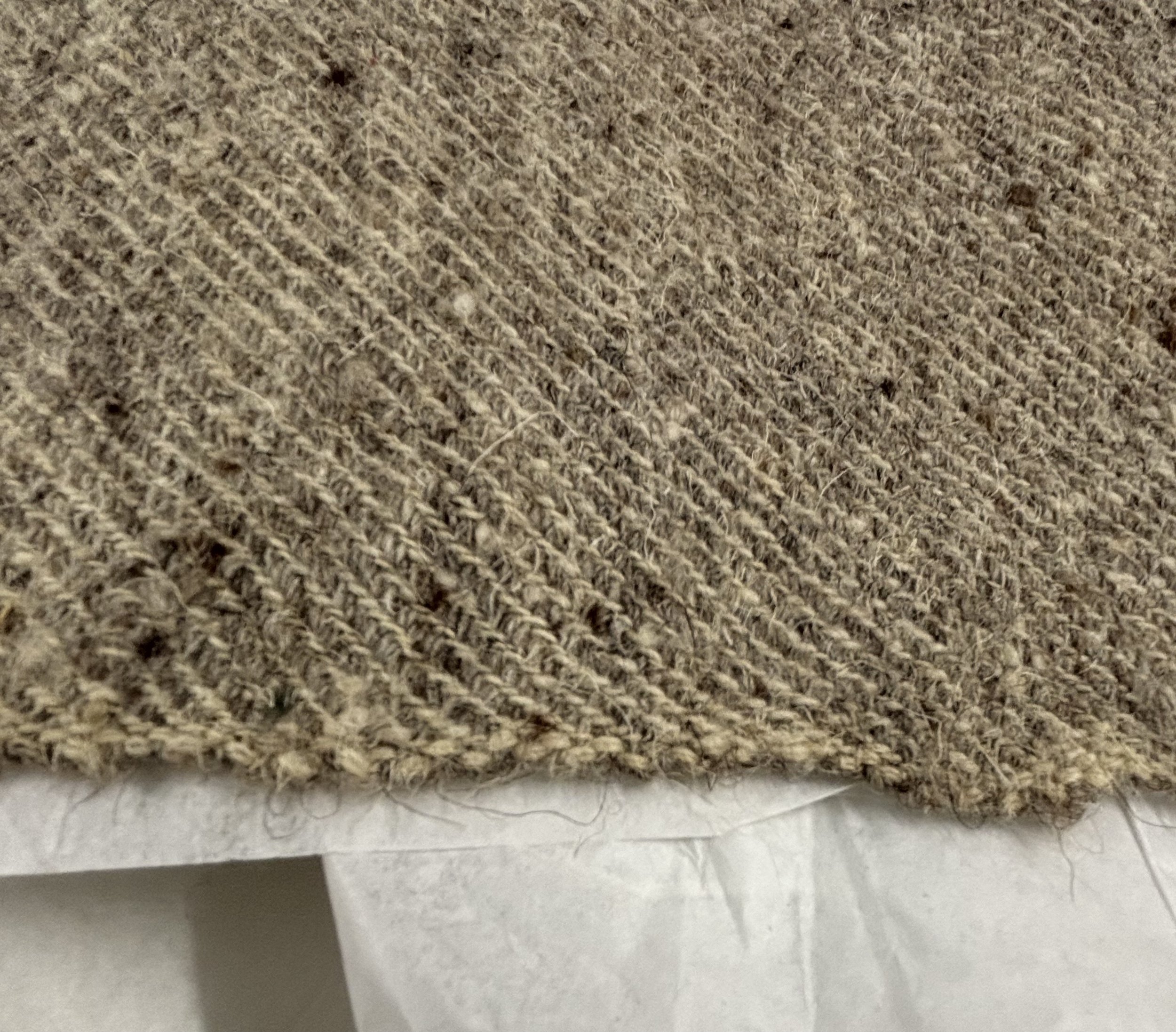
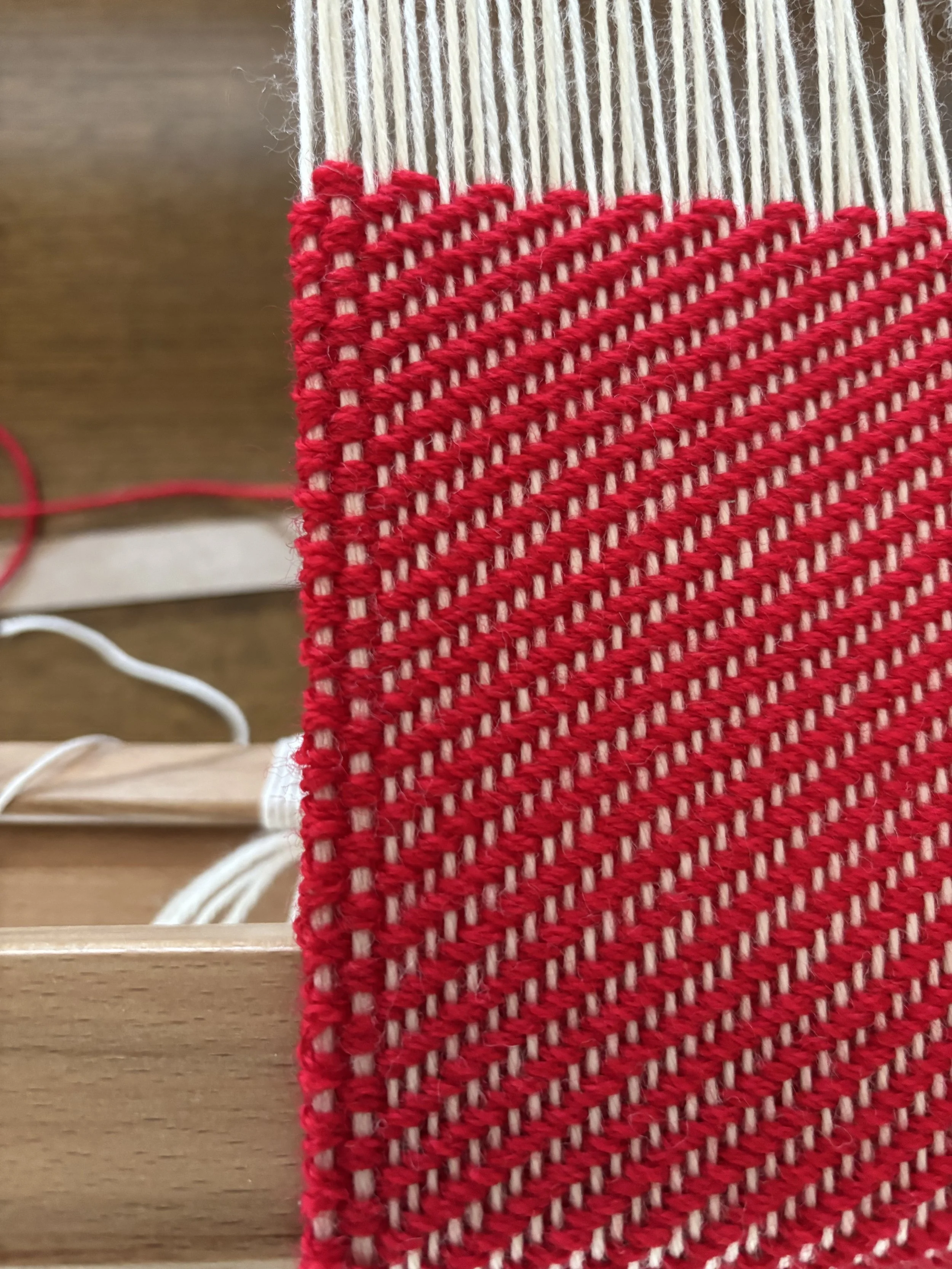
Sometimes the most important discoveries in this project have come not from books or archives, but from sitting at the loom and trying to understand why the St Kildans did something the way they did.
When I travelled through Scotland in July examining surviving examples of St Kilda tweed, I was looking for every clue the cloth might offer me.
I looked closely at the colour and character of the wool, the thickness of the yarn, the twill structure, the width of the cloth and the way it had been finished. I examined individual threads where damage to the cloth allowed me to see them more clearly.
But there was another detail that particularly caught my attention.
The selvedges.
On the surviving lengths I examined, the edges appeared to have been deliberately strengthened. Rather than simply accepting this as an interesting feature of old St Kilda tweed, I wanted to understand how it worked—and, more importantly, whether I could reproduce it when I eventually weave on St Kilda.
Until now, my own weaving has generally used a single floating warp thread at each selvedge.
For the St Kilda tweed, however, I intend to use two doubled warp ends at each edge, threaded through the heddles along with the rest of the warp. In other words, the first two and last two warp positions will each contain doubled threads, creating a stronger and more substantial edge.
It was one thing to decide that this was what I intended to do.
It was quite another to discover what happened when I actually tried it.
Recently I warped my Ashford loom to weave an 8-ply scarf for a friend. With considerable help and advice from my weaving teacher Ilka, I decided this would be an ideal opportunity to experiment with the doubled selvedges before committing precious Soay and Boreray yarn to them.
The result surprised me.
Not only did the doubled warp threads produce a noticeably straighter and more substantial edge, but I found the weaving itself simpler, quicker and, perhaps most importantly, more enjoyable.
Suddenly something I had noticed on cloth woven on St Kilda around a century ago was no longer simply an historical curiosity.
It worked.
I cannot, of course, say that I have discovered why the St Kildans constructed their selvedges in this way. There may have been several reasons for doing so, and we have no weaver from St Kilda left to ask.
But by reproducing what I observed in their cloth, I have discovered for myself some very practical advantages that those weavers may also have appreciated.
And during the same scarf, I solved another problem that has bothered me almost from the beginning of my weaving journey.
Whenever I have started weaving a new piece of cloth, I have found that its width gradually narrows. Eventually it settles down and becomes reasonably consistent, but the difference between the width at the beginning and that of the main body of the cloth has always annoyed me.
I knew that the weft was somehow being drawn in as I wove, but I had never completely solved the problem.
Then I came across a YouTube video demonstrating a slightly different weaving sequence.
My normal method had been to pass the shuttle through the shed, change the shafts, and then beat the weft into place.
The video suggested something subtly different:
pass the weft through, beat it into place while the shed is still open, and only then change the shafts before making the next pass.
It sounded almost too simple.
But once I thought about it, it made perfect sense.
By beating the weft before changing the shed, the reed helps to place it consistently across the full width of the cloth before the next shed locks everything into position. On my loom, with this particular yarn and weave, the difference has been remarkable.
For the first time, the scarf has remained at essentially its original width from beginning to end.
No gradual narrowing.
No waiting for the weaving to settle down.
Just a far more consistent piece of cloth.
These may sound like small technical details, but to me they represent something much larger.
Every scarf, sample and practice length I weave before 2027 has really been preparation for those four weeks on St Kilda. I would much rather discover problems—and solutions—here in Australia than when I am sitting on Hirta with a limited amount of precious Soay and Boreray yarn and no opportunity to start again.
And this latest scarf has taught me two particularly valuable lessons.
One came from a modern source—a simple weaving demonstration that helped me correct something in my own technique.
The other came from cloth woven by people who are no longer here to explain it.
That second lesson is perhaps the more moving of the two.
When I stood in the museums in Scotland examining those surviving lengths of St Kilda tweed, I sometimes wondered just how much information could still be contained in a piece of cloth almost a century old.
I am beginning to realise that the answer is: quite a lot.
The original weavers left no instruction manual explaining how their tweed should be recreated. There is no surviving pattern telling me precisely how many ends per inch to use, exactly how tightly the yarn should be spun, how much tension should be placed on the warp, or why they finished their selvedges in the way they did.
Instead, the cloth itself has become part of the instruction manual.
Every surviving thread is evidence.
Its width tells me something.
Its texture tells me something.
Its yarn tells me something.
Its twill tells me something.
And now I know that even its edges can teach me something.
That is why this latest scarf feels like another small milestone in the project.
It is not St Kilda tweed. It is an 8-ply practice piece woven thousands of kilometres from Hirta. But within it is another little piece of knowledge that I will eventually carry back to the island.
For much of this journey I have been trying to answer the question:
How did the St Kildans weave their tweed?
Increasingly, though, I find myself asking another:
What can the cloth they left behind teach me about weaving it again?
Perhaps that is where the project now begins to change.
The research is no longer simply telling me about the past.
It is beginning to guide my hands at the loom.