The Cloth I Will Weave - Part 8
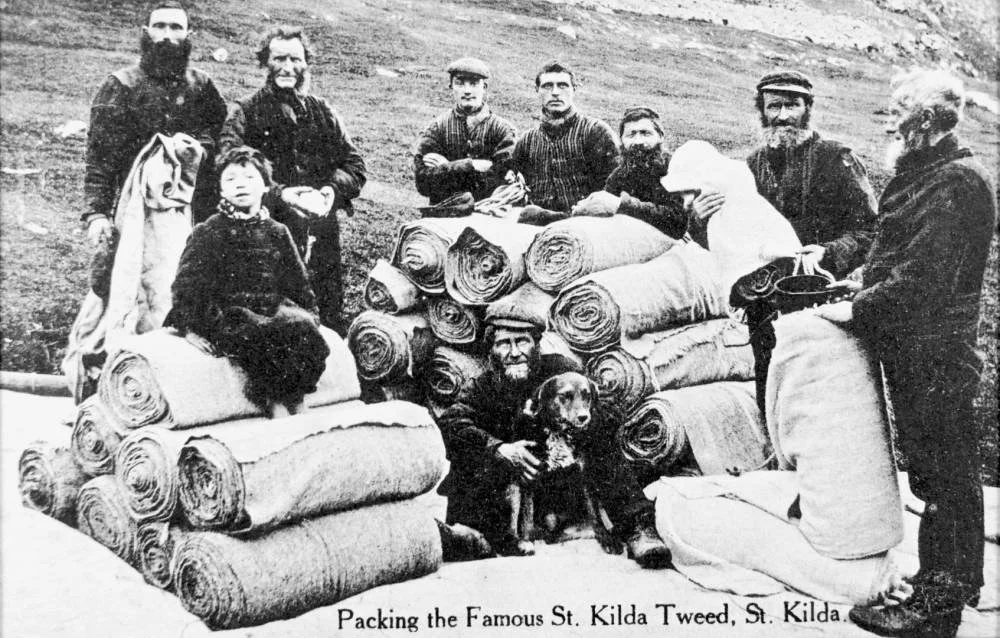
Permission to return to St Kilda was the great turning point in this project. But receiving permission did not answer the most important practical question of all:
What, exactly, would I weave when I got there?
From early in my investigations, the evidence suggested that the warp of St Kilda tweed was probably spun from Boreray wool, while Soay wool was used for the weft.
The distinction matters.
The warp threads run lengthwise through the cloth and must withstand the continual tension and abrasion of the weaving process. Boreray fleece generally has a staple length of around four to six inches, giving it the strength needed for this demanding role. Soay fleece is usually much shorter—often around two to three inches—and is therefore less suited to being held under tension as a warp. Its softer, shorter fibres are more naturally suited to the weft, which passes from side to side across the loom.
At first, I formed this theory from photographs of surviving St Kilda tweed, particularly those sent to me by the West Highland Museum in Fort William. The appearance of the cloth seemed consistent with the different characteristics of the two breeds.
During my recent visit to Scotland, however, I was able to examine the evidence for myself.
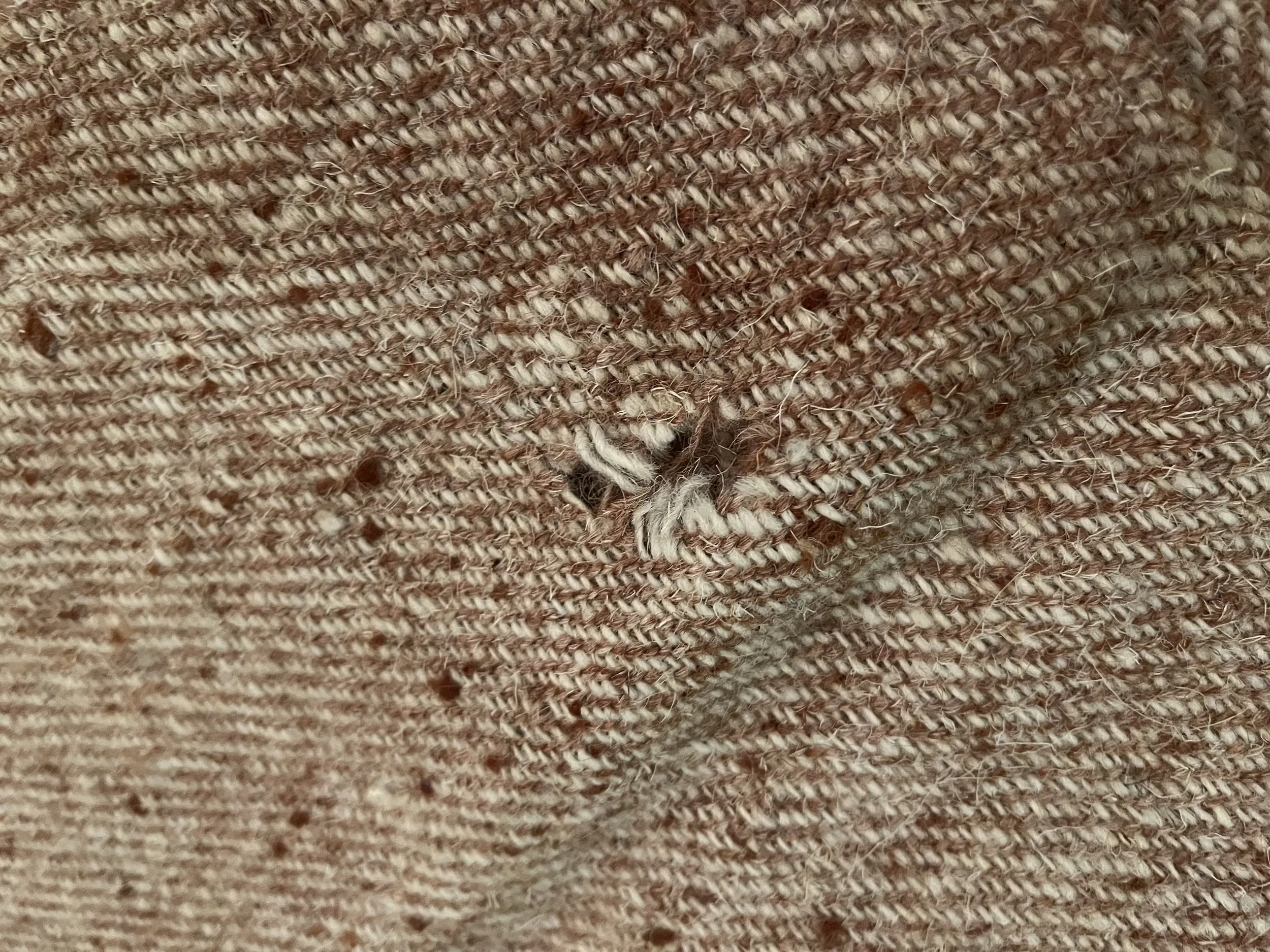
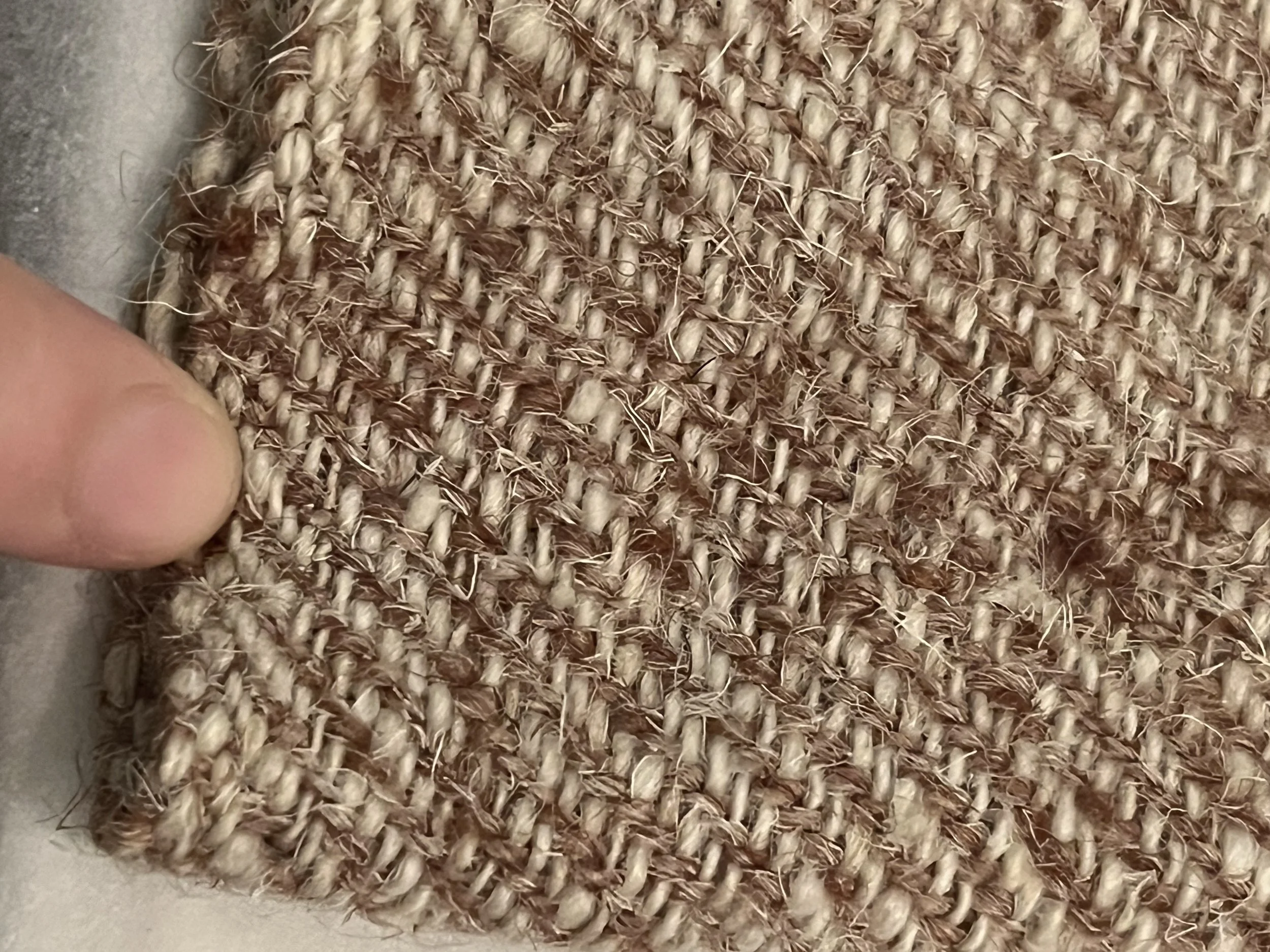
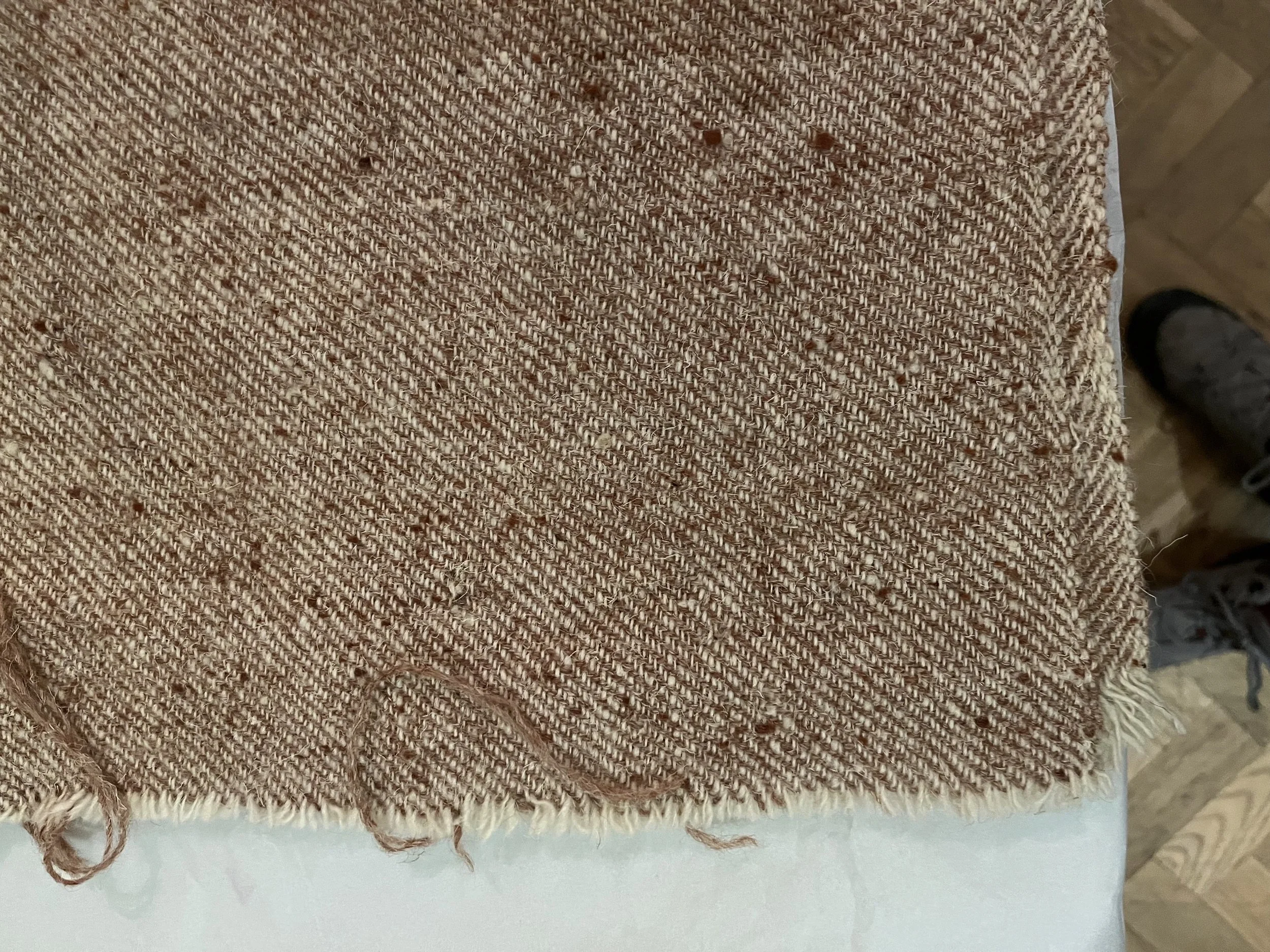
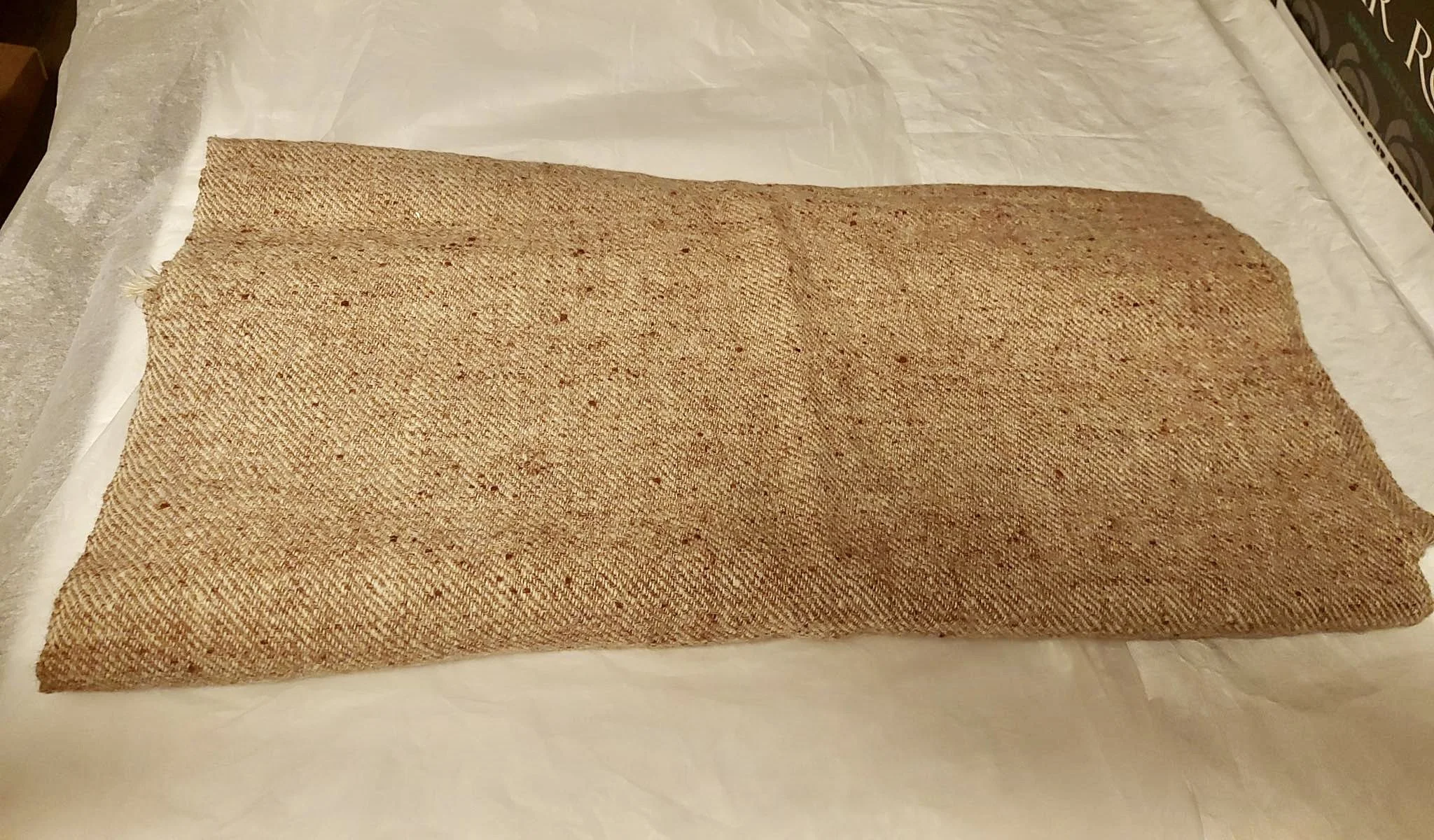
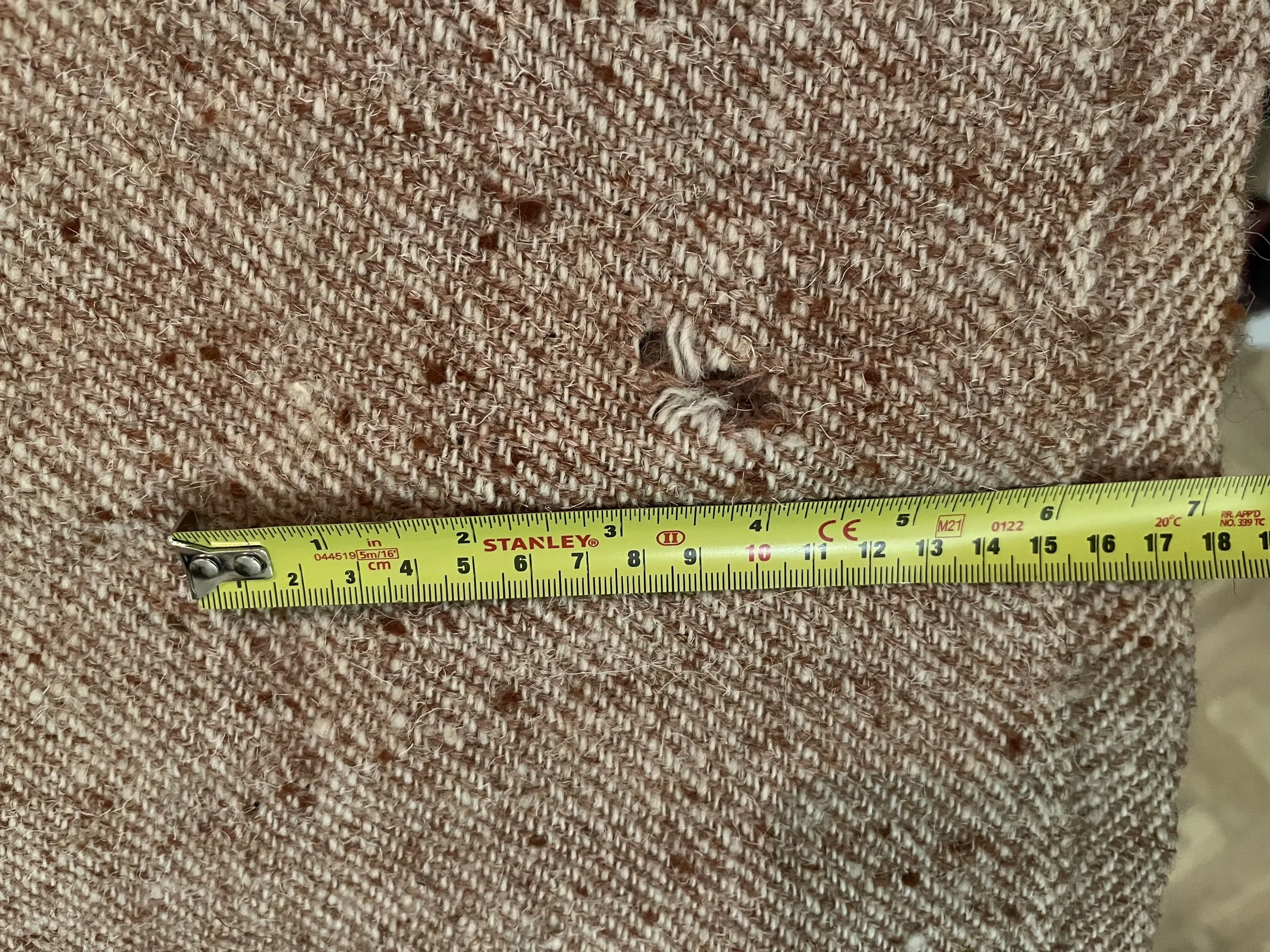
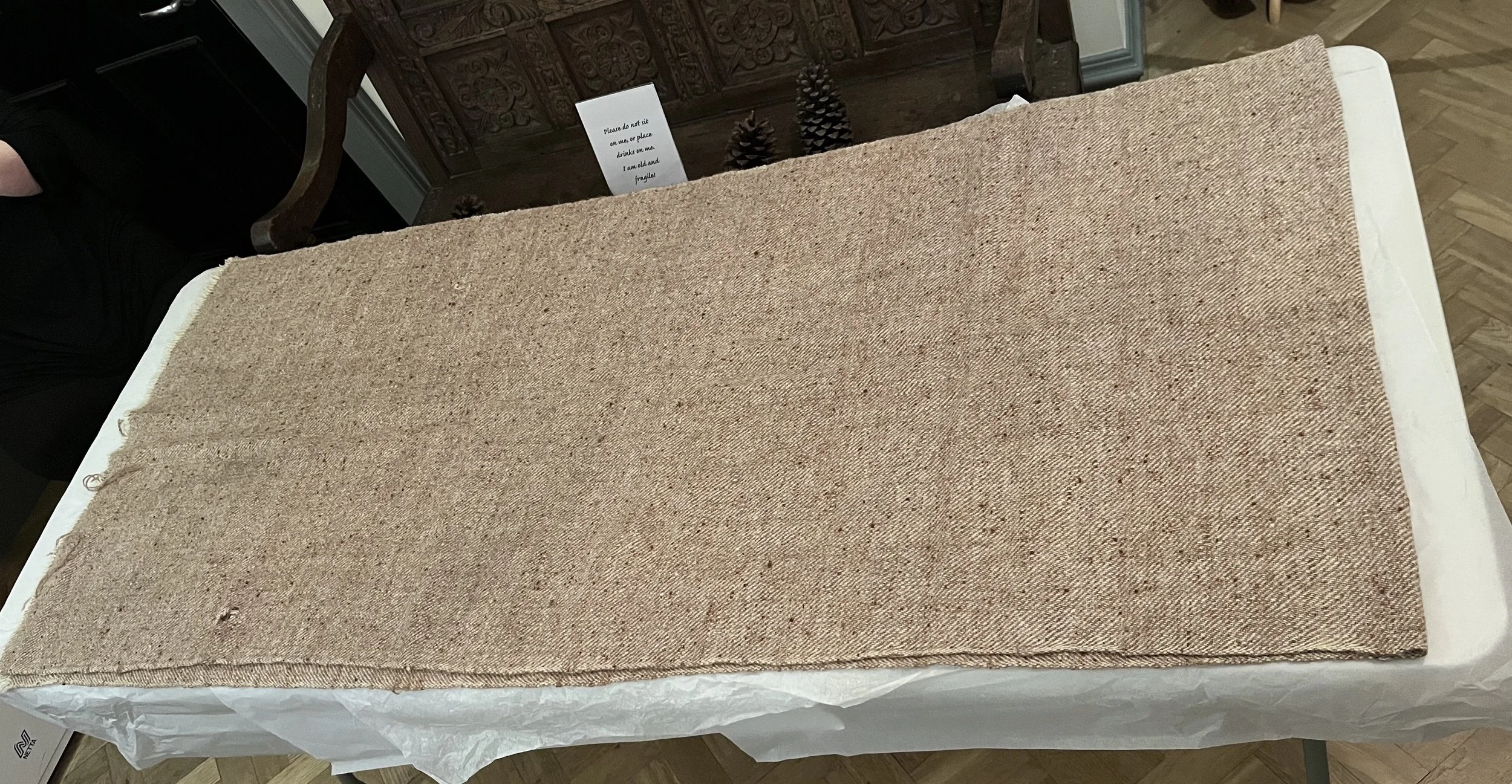
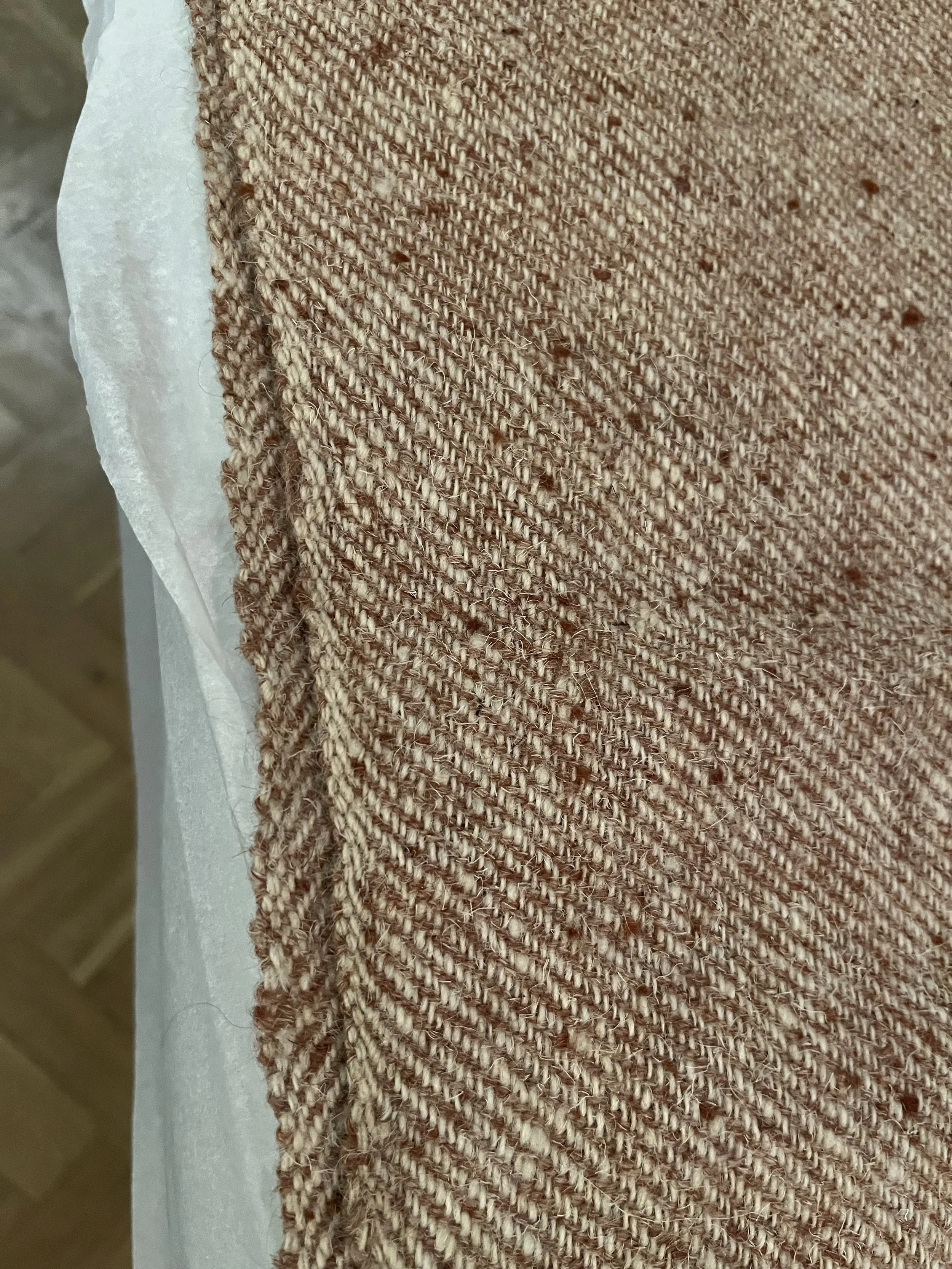
I closely studied surviving lengths of St Kilda tweed at the West Highland Museum and the Highland Folk Museum in Newtonmore, as well as the doublet and vest held by Museum nan Eilean in Stornoway. In each case, I observed a similar distinction: the warp was predominantly creamy in colour, while the weft was more mottled and brown.
These colours closely resembled the natural Boreray and Soay fleeces I had collected—the Boreray from Hazel and Norman on Stronsay and the Soay from Cheryl at Hilton Hill Farm in Fife.
We cannot now prove that every St Kildan weaver always used Boreray for the warp and Soay for the weft. Different fleeces may have been selected according to what was available, and individual weavers may have followed their own practices. Nevertheless, the combination of staple length, natural colouring and the evidence of the surviving cloth makes it a compelling working hypothesis.
It is the method I intend to follow.
The colours of the cloth present another important decision.
From my reading of numerous accounts of St Kilda, it appears that much of the tweed woven for sale—to visitors on the island or through the factor—was left undyed. Some sources suggest that small quantities of indigo may occasionally have been introduced in later years, but the surviving lengths I examined retain the varied creams, browns and darker flecks of the natural wool.
The cloth I weave on St Kilda will therefore also be undyed.
Interestingly, the cloth made for the St Kildans’ own clothing appears often to have been treated differently. Contemporary descriptions frequently refer to their garments as being blue. This suggests a distinction between the naturally coloured tweed woven for sale and at least some of the cloth prepared for the islanders’ personal use.
By weaving with undyed Boreray and Soay wool, I hope to reproduce something of the quiet complexity I saw in the museum pieces: not a uniform brown or cream, but a cloth whose colour comes directly from the animals themselves.
Another important discovery lay at the very edges of the surviving cloth.
Before examining the museum pieces, I had generally woven using a floating selvedge—a single thread at each edge that does not pass through a heddle. This helps produce a neat edge, but it does not appear to have been the method used by the St Kildan weavers.
Their selvedges were more substantial.
At each edge, the first two and last two warp positions appear to have been doubled. These doubled threads passed through the heddles in the same way as the single warp threads and remained an integral part of the twill structure. The result was a stronger and more durable selvedge—an important feature in a practical cloth intended to be handled, sold and eventually tailored into garments.
Once I receive the yarn being prepared by the Border Mill, I will begin practising this method. It is a seemingly small detail, but these small details are precisely what connect the cloth I will weave with the surviving examples made by the St Kildans nearly a century ago.
There will, however, be one significant difference.
The Border Mill will be producing two-ply yarn for me. By twisting two singles together, the yarn becomes stronger, more stable and less inclined to unravel. It is also far more practical for the mill to spin.
This should give me a more dependable yarn, particularly for the warp, but it will inevitably have a different character from the hand-spun singles found in the original cloth.
That difference has led to one of the most exciting parts of the project.
Rather than weaving only one length of tweed on St Kilda, I intend to weave two.
The first will be woven with the machine-spun two-ply yarn produced by the Border Mill. The second will be woven with single-ply yarn hand-spun by Cecilia from the same breeds of wool.
This will allow us to compare the two cloths directly.
How will the two-ply yarn behave under tension? How will Cecilia’s hand-spun singles alter the texture, surface and character of the finished tweed? Will the hand-spun cloth resemble the museum pieces more closely? And what practical difficulties will we encounter when attempting to weave singles on the island?
We do not yet know the answers—and that is precisely why the comparison matters.
Another question I have already been asked several times concerns what will happen to the cloth after it leaves the loom.
Will I follow the traditional St Kildan method of soaking the newly woven tweed in stale urine, rinsing it in spring water and then waulking it?
The short answer is no.
Historically, finishing was not merely the final act of cleaning the cloth. It was a vital part of transforming a loose and relatively open piece of weaving into dense, warm and weather-resistant tweed.
Stale urine was once widely used in wool processing because, as it ages, it produces ammonia. This alkaline solution acted as a natural cleansing and scouring agent, helping to break down and remove the lanolin, grease and dirt remaining in the newly woven wool.
The cloth could then be rinsed in clean spring or rainwater, flushing away the ammonia together with the loosened grease and dirt.
After washing came waulking.
Fresh from the loom, the cloth would have been comparatively loose, stiff and open. During waulking, the wet tweed was rhythmically beaten, kneaded and worked—traditionally by a group of women around a wooden table. The repeated moisture, friction and pressure encouraged the wool fibres to swell, move and begin locking together.
As the cloth shrank and lightly felted, the weave tightened. What began as loose woven fabric was gradually transformed into a thicker and more cohesive material capable of offering far greater protection against the cold, wind and rain of the Hebridean climate.
Although I want to understand this traditional process, I will certainly not be soaking my finished tweed in stale urine.
Instead, I intend to wash the cloth in mild soapy water using a commercial wool detergent. This should remove the remaining spinning oil, grease and dirt without subjecting the wool to unnecessarily harsh treatment. I will then rinse it thoroughly in clean spring water to remove the detergent.
The cloth will afterwards be carefully steamed. The combination of washing, heat, moisture and controlled handling should encourage the fibres to swell and settle together while allowing the fabric to shrink. My hope is that this will produce some of the density, cohesion and weather resistance achieved through the older finishing methods, while giving me much greater control over the final result.
This, too, is part of the experimental nature of the project.
Until the cloth has been woven, washed and finished, I cannot know how closely its final colour, texture, density and water resistance will resemble those of the surviving St Kilda tweeds. Nor can I know whether the two-ply and hand-spun lengths will respond in the same way. The finishing process may bring their differences into even sharper relief.
Perhaps one cloth will shrink more than the other. Perhaps the hand-spun yarn will bloom more fully, partly obscuring the twill beneath a softer and hairier surface. Perhaps the machine-spun yarn will produce a more even and predictable fabric. Or perhaps the results will confound all our expectations.
The answers will emerge only through doing.
This project has never been simply about producing a length of brown tweed and calling it St Kilda cloth. It is about recovering knowledge through observation, experiment and practice. It is about discovering what works, what fails and what the surviving evidence can still teach us.
Cecilia and I hope to record not only our successes but also our mistakes, broken threads, false assumptions and dead ends. That knowledge can then be passed on to future spinners and weavers who may wish to continue exploring this lost island craft.
A friend recently offered another thought that has remained with me.
Had the St Kildans continued spinning and weaving after 1930, their methods would not necessarily have remained frozen in time. They, too, might have adopted new loom designs, improved equipment and more efficient ways of preparing, spinning and finishing their wool. Like every living craft, St Kilda tweed would probably have continued to evolve.
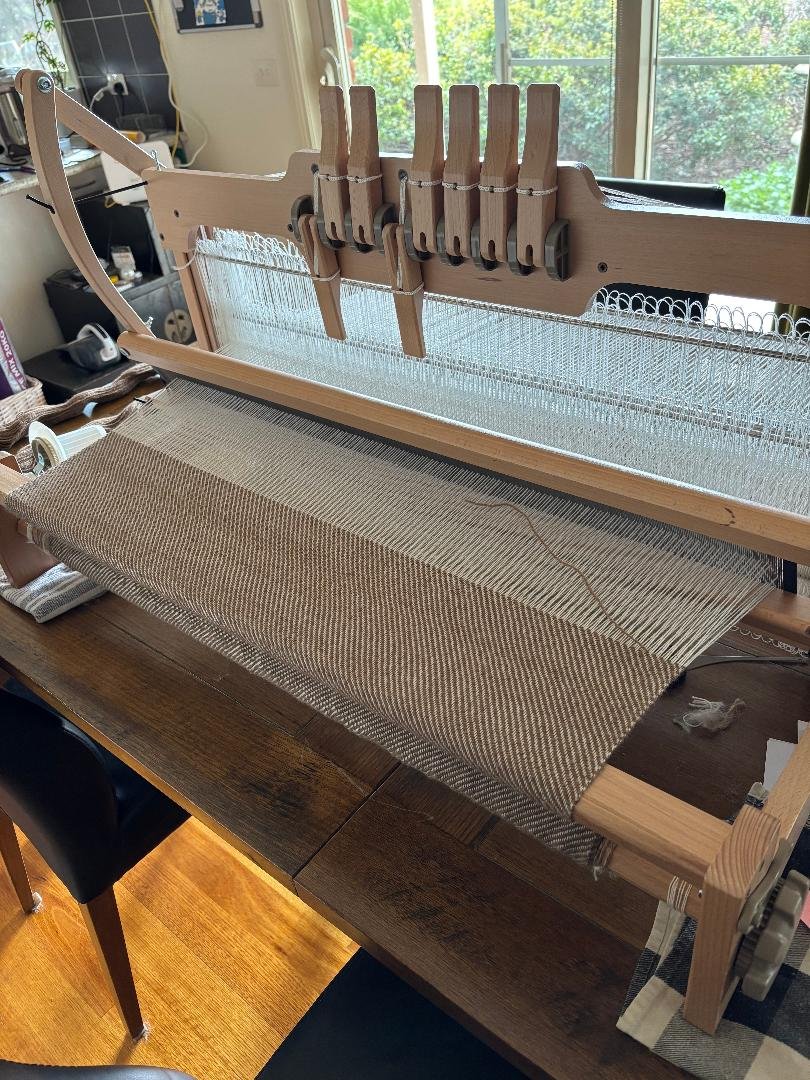
However meticulous we are, we can never recreate every condition under which the original cloth was made. I will be using a modern folding table loom rather than one of the domestic looms once used in the cottages. The wool will come from Soay and Boreray sheep raised on the Scottish mainland and on Stronsay, where the grazing, climate and management differ from those of St Kilda. The yarn will not be scoured and finished in precisely the same manner. Even the hands preparing, spinning and weaving it belong to another time and another world.
For that reason, the cloth I weave cannot be an exact replica of the past.
But perhaps that is not really the purpose.
The aim is to follow the surviving evidence as faithfully as we reasonably can, to learn from the original cloth and to allow the old knowledge to live again through our hands. The two lengths I weave will not be the final word on St Kilda tweed. They will be experiments—part reconstruction, part continuation and part invitation for others to carry the work forward.
Nearly a century after the last islanders left St Kilda, Boreray warp and Soay weft will once again meet on a loom on Hirta.
Then, once the weaving is finished, the cloth will face one final transformation.
Only when it has been washed, shrunk and finished will we discover how closely those threads have brought us to the tweed once made by the people of St Kilda—and how much there still remains to learn.