The Island Calls Again - Part 7
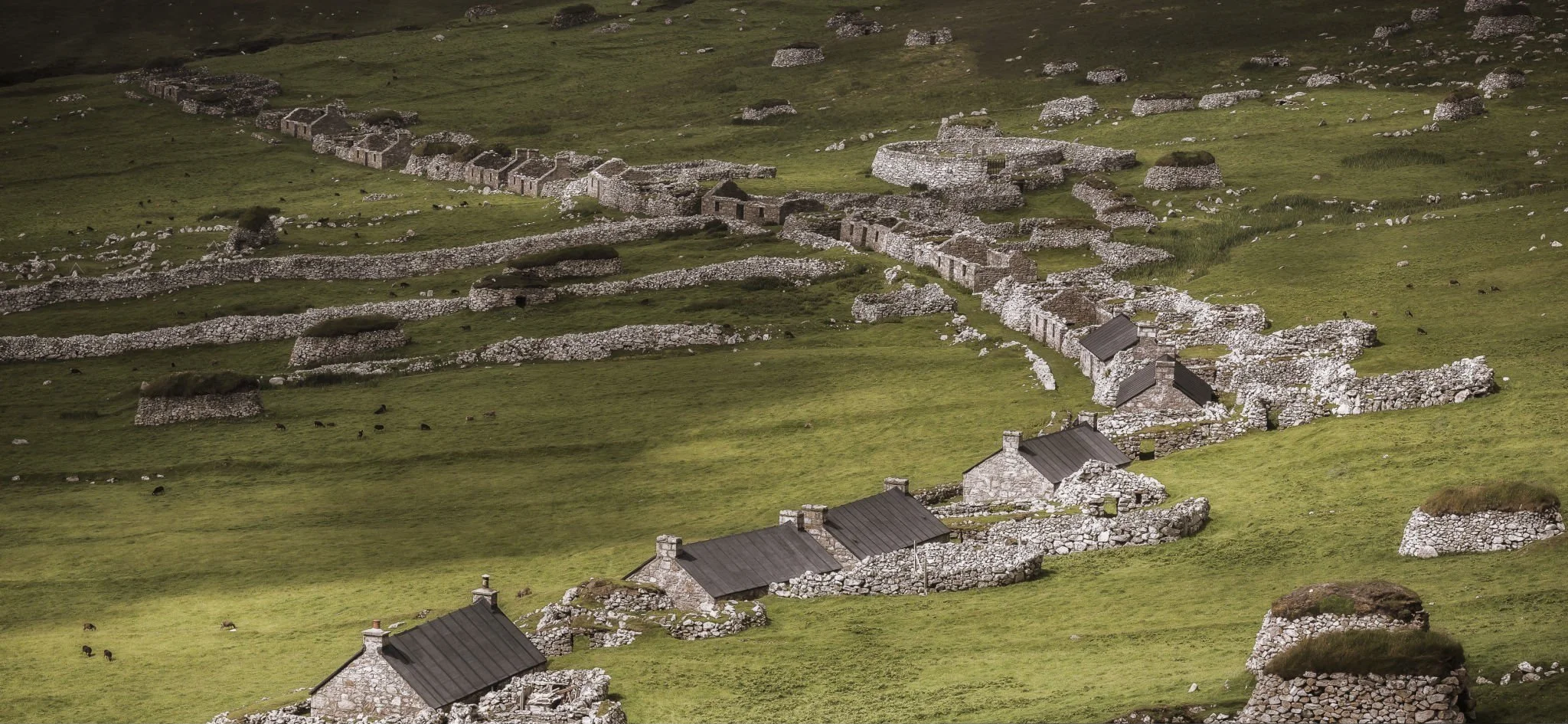
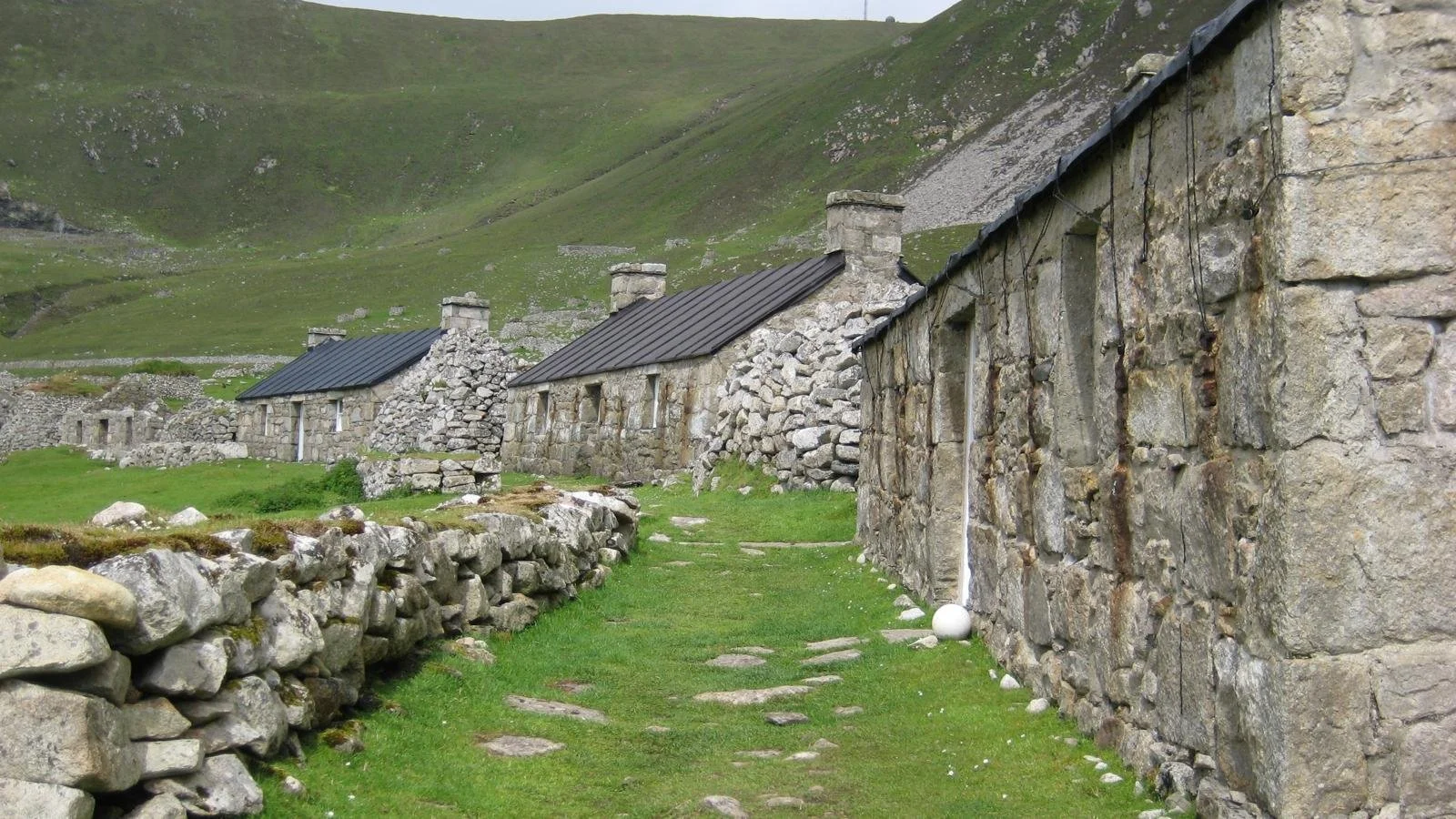
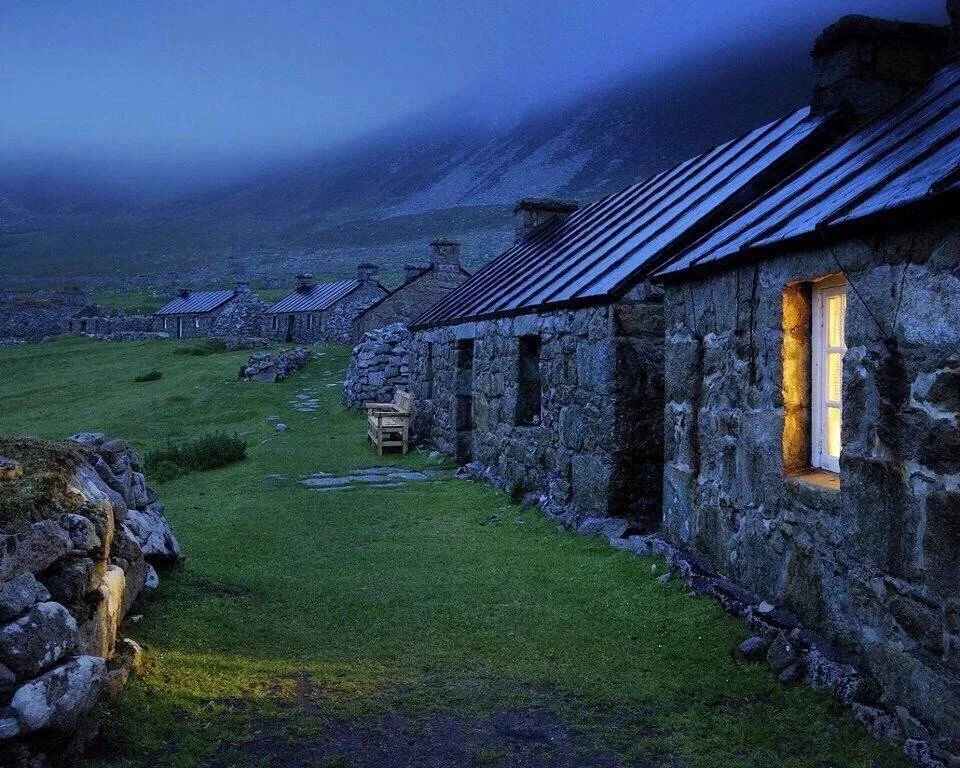
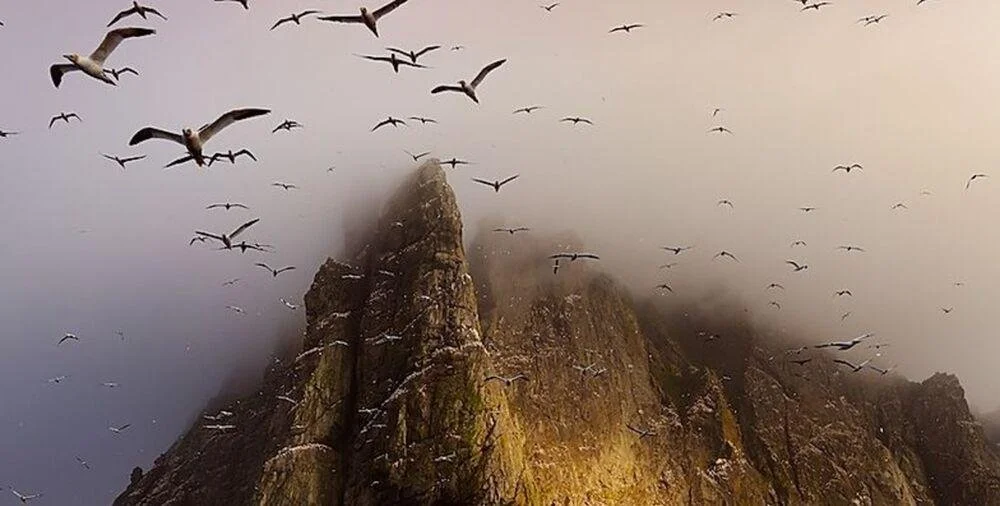
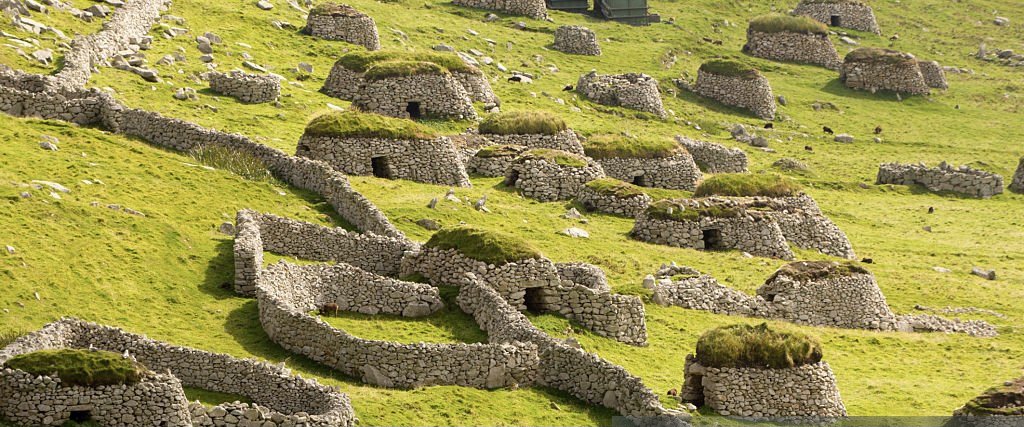
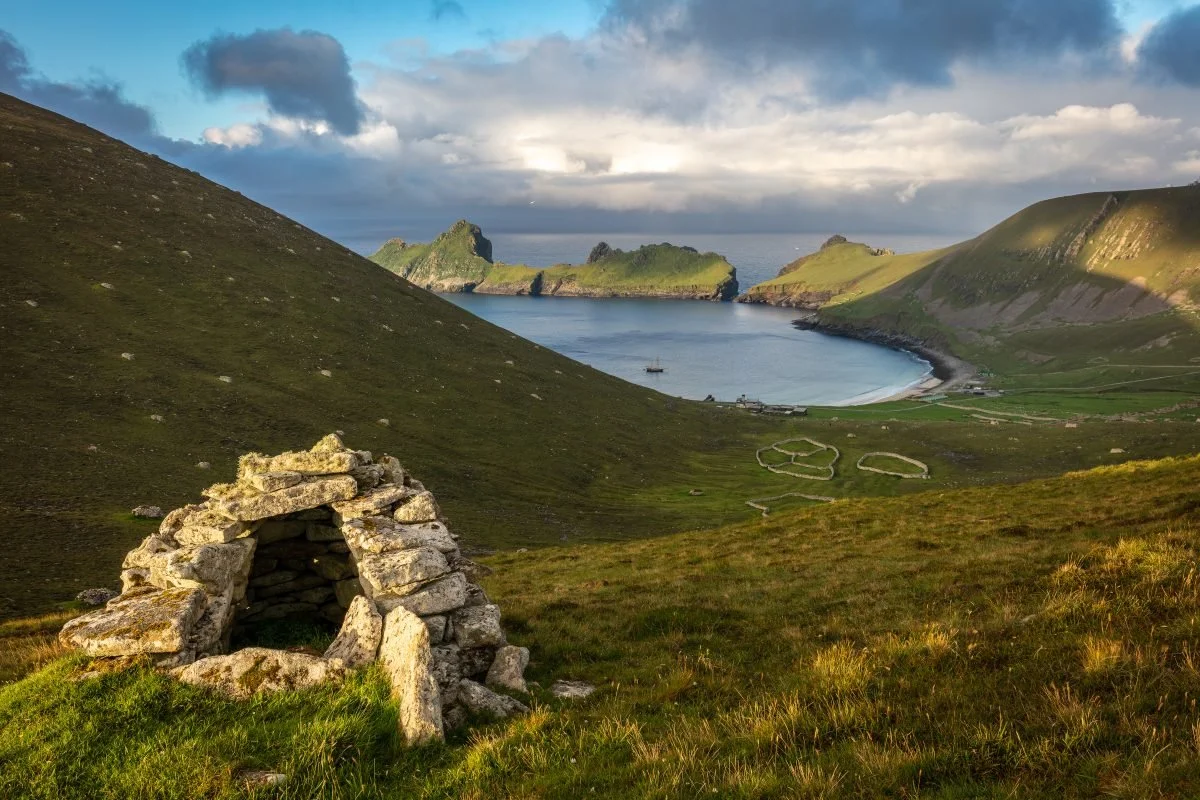
For a long time, the idea of returning to St Kilda to weave its tweed remained just that—an idea.
It was something I thought about, researched and slowly prepared for, without knowing whether it would ever be possible.
I could learn to weave. I could search for Soay and Boreray wool. I could study the surviving cloth and try to understand how it had been made.
But there was one thing I could not do for myself.
I needed permission to live and weave on St Kilda.
MAKING THE APPLICATION
In March 2025, I finally wrote to the National Trust for Scotland with what must have appeared a rather unusual proposal.
I asked for permission to stay on St Kilda for six weeks during the summer of 2027 and to weave St Kilda tweed on the island again.
In my application, I explained how my interest in St Kilda had first begun when I lived in the Melbourne suburb bearing its name during the late 1970s.
I described my journey to the island in 2010, after cycling through Orkney, across Skye and down the length of the Outer Hebrides. That first day on Hirta had stayed with me ever since.
Walking through the abandoned village and standing among the cottages I had previously known only through books and old photographs, I began to wonder what it might have been like to experience life there—even briefly.
Years later, that thought gradually developed into something far more specific.
What if St Kilda tweed could be woven on the island again?
By the time I submitted my application, the idea was no longer simply a dream.
I had obtained photographs of one of the last surviving lengths of St Kilda tweed, held by the West Highland Museum in Fort William. I had begun learning to weave in Australia and had produced samples attempting to emulate the original cloth.
I had visited Jimmy Hutchinson and Erika Douglas at Newburgh Handloom Weavers, who showed me a loom similar to those once used on St Kilda. Through them, I had met Cheryl at Hilton Hill Farm, who had begun saving Soay fleeces for the project.
I had found a loom in Ballarat and undertaken formal weaving lessons with Ilka. During those lessons, I had also experienced the extraordinary chance meeting with Sandra Dexter, a descendant of the MacQueens and Fergusons of St Kilda.
I enclosed one of my weaving samples with the application, together with a letter of support from Sandra.
Sandra wrote not only as someone who had seen my work and understood the project, but as someone with a deeply personal connection to the island. Her great-great-great-grandparents, Finlay MacQueen and Christina Ferguson, had left St Kilda for Australia aboard the Priscilla in 1852.
She had also travelled to St Kilda herself as a member of Work Party Number 5 in 1988.
In her letter, Sandra wrote:
“As well as being delighted by the idea of weaving coming alive on the island, I am very impressed with Paul’s dedication, his fine weaving skills, and the significant amount of research and organisation he has already undertaken.”
She concluded:
“I strongly commend his application to you.”
Her support meant a great deal to me. It created another link between St Kilda and Australia and connected the proposed weaving with the descendants of those who had once lived on the island.
In my own application, I tried to demonstrate that this was not a passing whim.
I wrote about my background as an occupational therapist and about the many endurance challenges I had undertaken: long-distance running, mountaineering in Scotland and the Alps, cycling from Land’s End to John o’ Groats, six crossings of Australia by bicycle and, more recently, long-distance kayaking.
These experiences had taught me how to plan carefully, live with limited resources and persist when circumstances became difficult.
More importantly, I wanted the National Trust to understand why I believed the project mattered.
St Kilda tweed had once been an important product of the island. It had been spun and woven within the community, worn by islanders and sold to visitors. The cloth carried within it the wool of the islands, the work of the people and the particular conditions under which they lived.
Almost all of that knowledge had disappeared.
I proposed taking a compact loom, spun Soay and Boreray wool, and all the provisions I would require. I offered to give the tweed I produced to the National Trust for Scotland, either to preserve or to sell in support of St Kilda.
I even suggested that a St Kilda tweed scarf might be offered to His Majesty King Charles III if the Trust considered it appropriate—a gesture that would echo the reported weaving of St Kilda tweed as a jubilee gift for King George V in 1935.
Then I sent the application away.
And waited.
PERMISSION GRANTED
Towards the end of 2025, the reply finally came.
The National Trust for Scotland was prepared to allow me to stay on St Kilda—not for the six weeks I had originally requested, but for four weeks during the summer of 2027.
After so many months of preparation, research and uncertainty, I had permission.
The idea that had begun as a thought while walking through the abandoned village was no longer merely imaginary.
I was going back.
I was going to live on St Kilda for four weeks and attempt to weave its tweed there again.
But even then, the project was not finished evolving.
Another door was about to open.
AN UNEXPECTED EMAIL
In February 2026, I received an email from someone I had never met.
Her name was Cecilia Charlton, and Jane Cooper, author of The Lost Flock, had given her my contact details.
Cecilia was a textile artist and a PhD researcher at the Glasgow School of Art, studying the traditional textiles of the Highlands and Islands.
She explained that St Kilda had particularly captured her attention because it represented such a powerful example of the disappearance of a traditional way of life—one of the lost cultural expressions being its weaving practices.
Cecilia had also undertaken ethnographic weaving in rural Lithuania. By working on a traditional loom in a farmhouse setting, she had discovered that some aspects of an historic textile could only be understood by making it within the environment and circumstances from which it had emerged.
She immediately understood why I wanted to weave St Kilda tweed on St Kilda itself.
“Your idea to produce St Kildan Tweed while being on St Kilda seems like the absolute best way to understand the people and the fabric,” she wrote, “and I can completely understand the impulse!”
Then came the sentence that would change the project:
“If there is any way to get involved in your project please let me know.”
After looking at Cecilia’s artwork, reading about her PhD research and learning of her lifelong experience with textiles, I responded enthusiastically.
Until then, I had planned to take commercially spun Soay and Boreray yarn to the island and weave it myself.
Cecilia’s involvement offered the possibility of doing something much closer to the way the cloth had historically been produced.
She could spin the wool while I wove.
The project would no longer be solely about recreating the finished cloth. It could also begin to recreate the relationship between spinner, weaver, wool and place.
There was, however, one considerable difficulty.
My permission from the National Trust was for one person.
We now needed approval for two.
THE MEETING IN INVERNESS
In July 2026, during my return to Scotland to collect the Soay and Boreray fleeces and continue my museum research, I met Susan Bain, the National Trust for Scotland’s Western Isles Manager and Property Manager for St Kilda.
The meeting took place in Inverness and was enormously important.
It gave me an opportunity to explain how the project had developed and why Cecilia’s presence would add such a significant dimension to it.
During that meeting, Susan gave her verbal approval for Cecilia to accompany me in 2027.
The spinner and the weaver could now go to St Kilda together.
The meeting also allowed us to begin resolving one of the greatest practical questions:
How were we—and a loom, spinning wheel, yarn, food, bedding and four weeks of supplies—actually going to get there?
Susan recommended St Kilda Sea Tours, operating from Leverburgh on Harris, and suggested that I contact David, the owner.
I explained the project, the equipment we would need to carry and the proposed period between mid-May and mid-June 2027.
The loom I had chosen was an Ashford 32-inch folding table loom. It could weave approximately the same width as the surviving St Kilda cloth, but when folded measured only 18 centimetres high, 74 centimetres deep and 96 centimetres wide. It weighed just 12.3 kilograms.
Cecilia would bring a conventional spinning wheel, while the remainder of our luggage would consist mainly of yarn, food, bedding and clothing.
The reply from Natasha at St Kilda Sea Tours could hardly have been more reassuring:
“That would be no issue at all and we have plenty of space on board for the loom and luggage.”
Another major obstacle had disappeared.
WAITING FOR THE WEATHER
Getting to St Kilda, however, has never been simply a matter of booking a particular day and turning up.
The journey is entirely dependent upon the Atlantic weather.
The National Trust normally provides several possible dates for both the outward and return voyages. Even after reaching Leverburgh, we might have to wait for days—possibly as long as a week—before conditions allowed the boat to leave.
My friend Ishbel, who had taken the photograph of me outside the St Kilda Parliament during my first visit in 2010, once again became part of the story. She generously offered to drive Cecilia, me and all our equipment to Leverburgh.
That solved one problem but revealed another.
Where would we stay while waiting for the weather?
Accommodation in Leverburgh could be expensive and would need to be reserved beforehand. If we booked a week and the boat departed the following morning, we could lose a substantial amount of money. If we booked only one or two nights and the weather remained unsuitable, we might suddenly find ourselves without anywhere to stay.
I suggested to Cecilia that we take tents.
She was perfectly happy with the idea.
The nearest formal campsites, however, were more than eight miles from Leverburgh. Taxis on Harris are limited, particularly early in the morning, and transporting ourselves, our tents, a loom, spinning wheel and all our supplies to the departure point would be extremely difficult.
Then I discovered that we could wild camp in or near Leverburgh, provided that we followed the Scottish Outdoor Access Code—keeping away from buildings and roads, avoiding livestock and leaving no trace.
Even better, there were toilet and shower facilities near the wharf from which the boat departed.
Suddenly, another complicated problem had a wonderfully simple solution.
We could camp within reach of the boat and wait for the weather to open the way.
FOUR WEEKS OF FOOD
There was still the question of feeding ourselves on an island without shops for four weeks.
As a vegan, I needed to find meals that were nutritious, compact, easy to prepare and capable of being stored without refrigeration. They also had to require relatively little fuel and water.
While in Scotland in July, I tested several wet ambient meals—fully cooked food sealed in retort pouches with a long shelf life and requiring no rehydration.
The meals I preferred were produced by Fiid, and these will form the basis of my provisions. I hope to supplement them occasionally with fresh fruit and vegetables, if small supplies can be sent over when St Kilda Sea Tours makes one of its visits to the island.
It may seem a minor part of the story, but every detail matters.
For four weeks, everything we need must either travel with us or reach us by boat. A missing piece of equipment, an inadequate food supply or a poorly considered arrangement cannot easily be corrected once we are there.
THE ISLAND CALLS AGAIN
There are still arrangements to finalise.
The precise dates must be confirmed. The fleeces must be prepared and spun. The loom must be tested repeatedly. The yarn must be sampled, the provisions calculated and the equipment packed within the limitations of a small boat journey into the North Atlantic.
The weather, as always, will make the final decision.
But something fundamental has changed.
For years, I spoke about this as something I hoped to do.
Then the National Trust for Scotland granted permission.
Cecilia appeared with the knowledge and experience to bring spinning into the project.
Susan Bain helped turn a proposal for one person into a collaboration between spinner and weaver.
St Kilda Sea Tours confirmed that they could carry us, the loom, the spinning wheel and our supplies.
Ishbel offered to take us to Leverburgh.
And, one by one, even the smaller problems—accommodation, transport and food—began to find their solutions.
The project is no longer a distant possibility.
The loom will be folded. The spinning wheel will be packed. The wool gathered from Soay and Boreray sheep will travel with us across the Sound of Harris and out into the Atlantic.
Then, weather permitting, the boat will turn towards the islands on the horizon.
Sixteen years after I first stood outside the Parliament and wondered what it might be like to return, St Kilda is calling again.
And this time, I will be carrying a loom.