The Suit That Proved It Could Be Done - Part 11
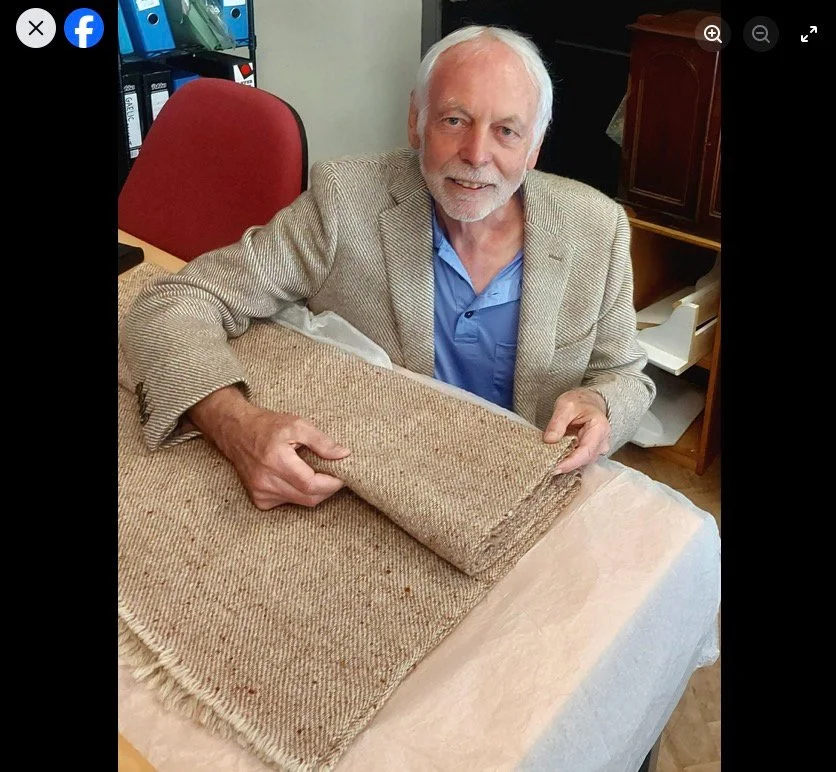
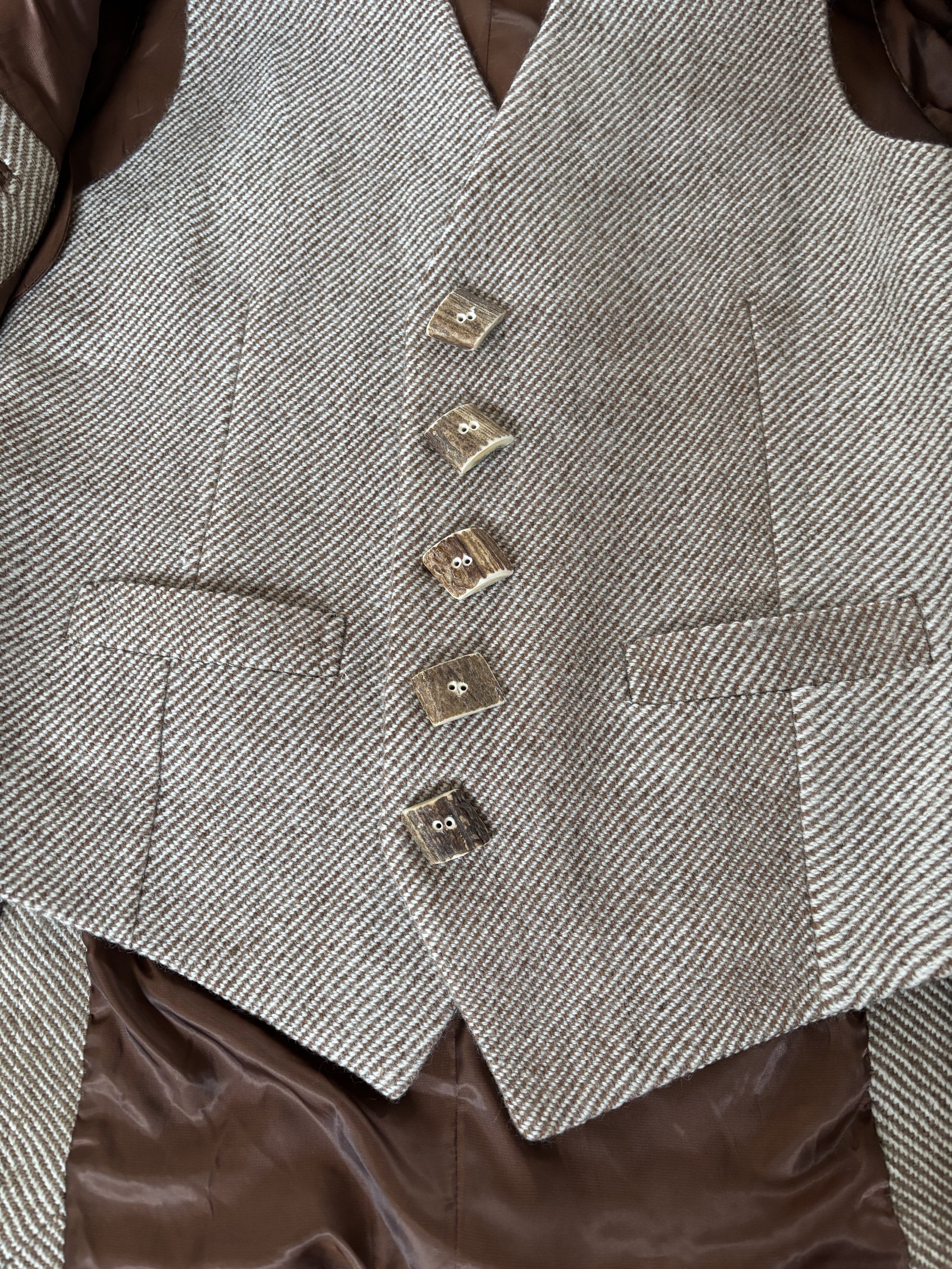
For months, I had been learning how to weave cloth inspired by the surviving examples of St Kilda tweed. But it was not until that cloth was cut, tailored and worn that I began to understand just how far I had come.
All my practice weaving St Kilda-style tweed on the Ashford loom had been carried out using machine-spun, four-ply Corriedale wool.
The cream yarn used for the warp came from the sheep of Ronelle’s Cloverleaf Corriedale Stud, near Bullengarook in Victoria. The fleece had been sent to New Zealand to be commercially spun. The light-brown yarn used for the weft came from Corriedale sheep belonging to one of Ronelle’s neighbours and was spun for me at the Fibre Art Shed in New South Wales.
The choice of brown was not accidental
Ronelle and I examined the photographs I had taken of the original St Kilda tweed held by the West Highland Museum in Fort William. Although Corriedale wool is quite different from the Soay and Boreray wool used in the historical cloth, we felt that the natural light-brown fleece provided a reasonable approximation of its overall colour.
At this stage, I was not attempting to reproduce the precise character of the original yarn. I was practising the things I would eventually need to do on St Kilda: preparing the loom, maintaining an even tension, weaving a consistent straight 2/2 twill and producing a substantial length of usable cloth.
The first piece I wove was approximately 2.5 metres long and was intended for a waistcoat.
I warped the loom to a width of about 78 centimetres, close to the width of the surviving pieces of St Kilda tweed I had examined in Scotland. After the fabric had been washed and steamed, it contracted to approximately 72 centimetres.
Warping the Ashford loom took me about three days. Unlike my floor loom, which has metal heddles, the Ashford uses Texsolv heddles. These are made from a durable, lightweight and flexible looped cord constructed from continuous filament. I found them a little slower to thread than the metal heddles to which I had become accustomed, although with practice I gradually became more confident and efficient.
The weaving itself took about three days, although I was certainly not working continuously throughout that time.
Once the cloth came off the loom, it was enormously satisfying to see several metres of straight twill lying before me. Yet it was still simply a length of fabric. I could inspect the selvedges, study the consistency of the twill and feel the change that washing had brought about, but I did not yet know how it would behave in the hands of a tailor.
I found Dylan, of The Tailors Lounge in Richmond, Victoria, through an online search. His remarkable reviews gave me the confidence to take my handwoven cloth to him.
Initially, I intended to have only a waistcoat made. Handwoven fabric represents many hours of work, and having someone cut into it for the first time is a slightly unnerving experience. Once the scissors touch the cloth, there is no going back.
But when I saw the completed waistcoat, I was astonished.
Dylan’s attention to detail was exceptional. He had treated my fabric with enormous care and transformed it into a beautifully fitted garment. The workmanship was remarkable, and the price was also extremely reasonable.
The waistcoat changed the way I saw the cloth
Until then, I had mainly viewed it as a weaving exercise—a way of testing the loom and developing the skills I would need on St Kilda. Dylan showed me that it was not merely practice fabric. It was cloth capable of becoming a finely tailored garment.
I immediately asked whether he could make me a matching jacket.
He told me that he would require another five metres of fabric.
By then, my departure for Scotland in July was rapidly approaching. I was determined to take both the waistcoat and jacket with me, so I returned home and began weaving with a new sense of urgency.
Once again, it took about three days to warp the loom. The longer piece then took approximately five days to weave, although—as with the first length—I was not working on it full-time.
Nevertheless, it was something of a marathon effort.
I completed the five metres and returned to Dylan with the fabric about a week after he had told me how much he needed. He must have been rather surprised to see me back so quickly.
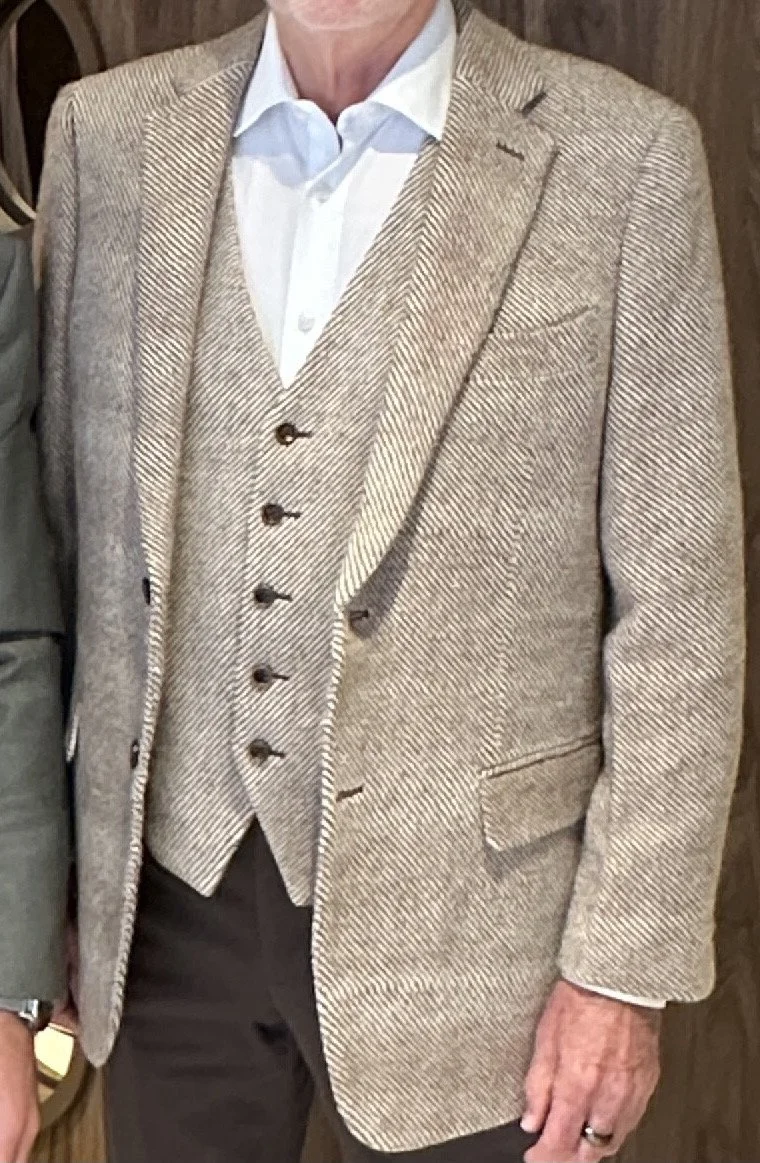
When choosing the finishing details, I asked whether he had any buttons resembling horn, but unfortunately he did not. We therefore selected a brownish button that complemented the natural colours of the cloth. We also chose a satin-finish lining that fitted comfortably with the overall design.
The jacket was finished only a few days before my flight to Scotland.
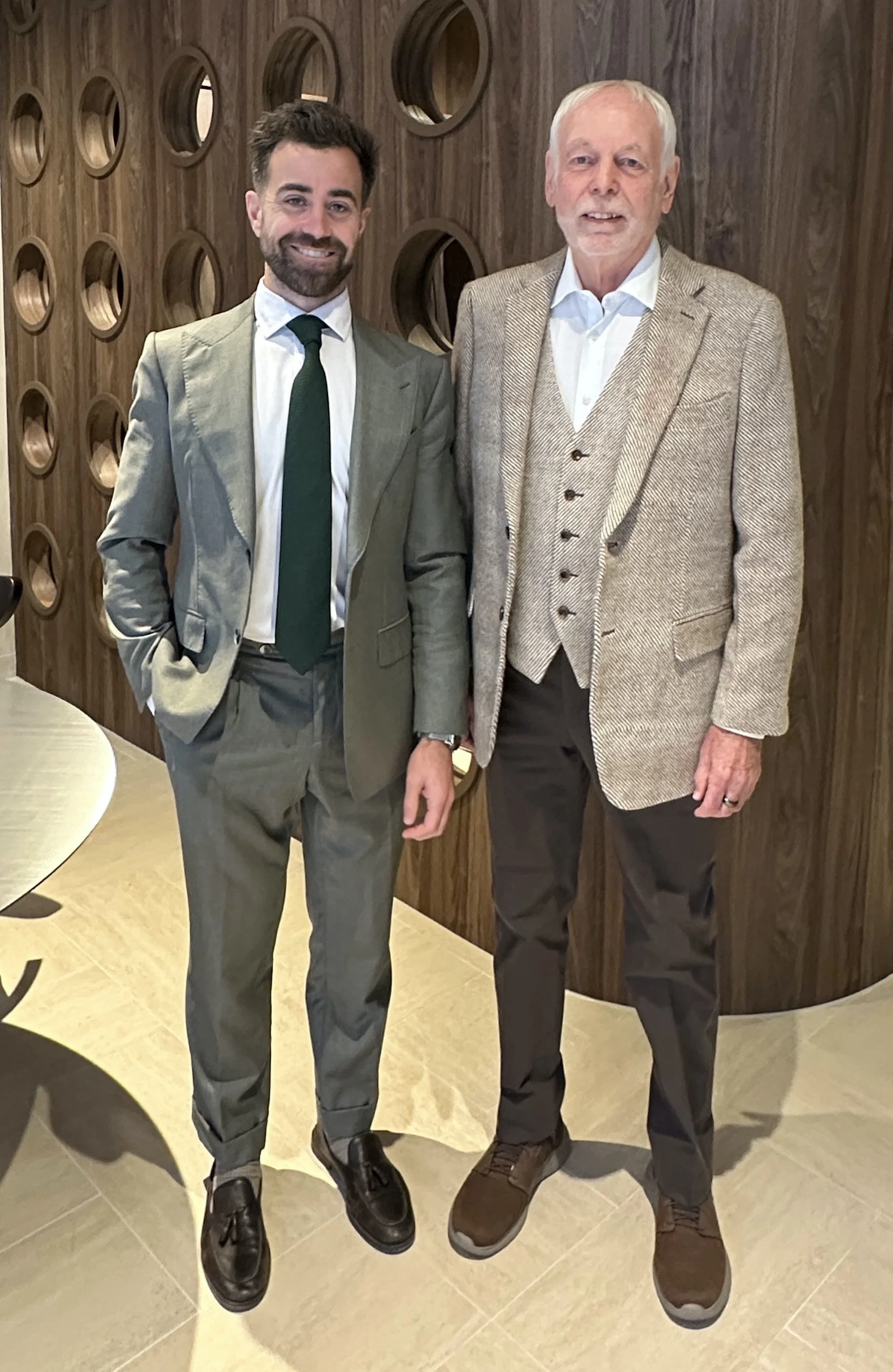
When I saw it together with the waistcoat, I was blown away by the quality of Dylan’s workmanship. The cloth I had watched growing slowly, line by line, across the loom had been transformed into something I could scarcely have imagined when I first began learning to weave.
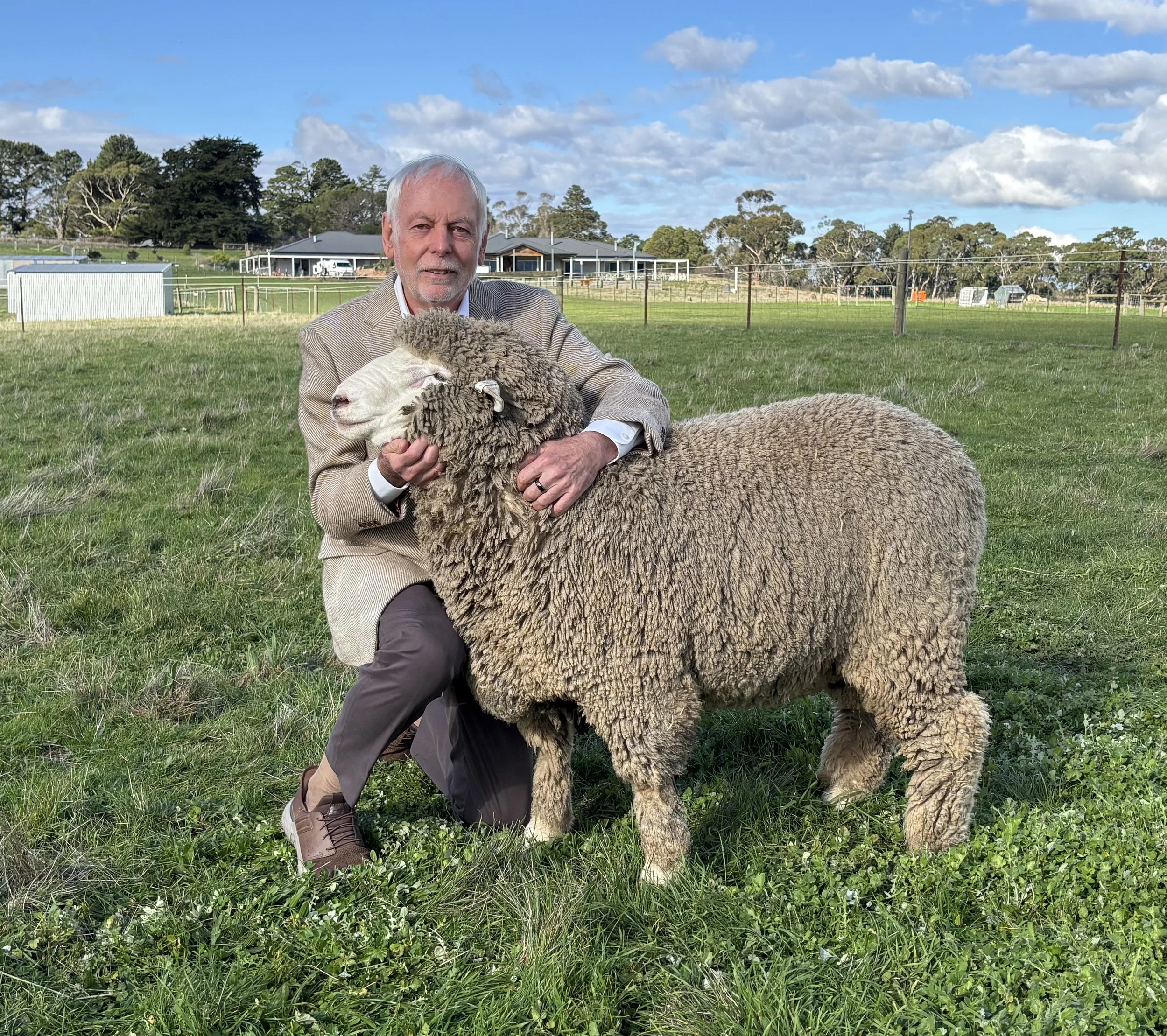
Before leaving Australia, I returned to Ronelle’s Cloverleaf Corriedale Stud wearing the completed garments.
There, we took a photograph of me kneeling beside and holding one of Ronelle’s many grand-champion Corriedale sheep—the very flock from which the cream fleece used in the warp had originated.
It seemed a fitting way to complete the circle: from the sheep, to the fleece, to the spinning mill, to my loom, and finally into the hands of the tailor.
Then the suit travelled with me to Scotland
I wore it on many occasions during that journey. I wore it when I visited Jimmy and Erika at the Newburgh Handloom Weavers workshop. I wore it when collecting the Soay fleeces from Cheryl and the Boreray fleeces from Hazel and Norman. I also wore it when visiting Vanessa at the West Highland Museum in Fort William and Helen at the Highland Folk Museum in Newtonmore.
On every occasion, it made an impact.
People were surprised not only that I was wearing a handwoven suit, but that I had woven the cloth myself. Their reactions gave me a new appreciation of what I had achieved. What had begun as an exercise in preparing for St Kilda had become a visible expression of the entire project.
The museum visits provided an even more important opportunity.
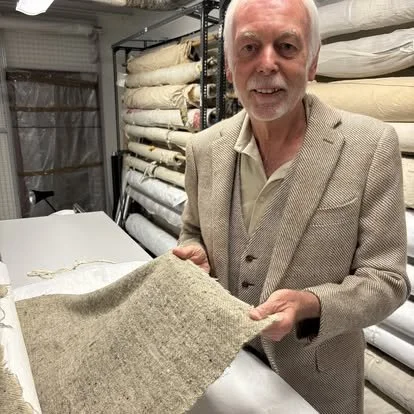
Whenever I was able to examine an original length of St Kilda tweed, I arranged to have a photograph taken with the sleeve of my jacket placed beside the historic fabric. These photographs allowed me to compare the two cloths directly—to see their similarities, but also their considerable differences.
My Corriedale cloth was never intended to be an exact reproduction. Its yarn was commercially spun, four-ply and comparatively regular. The original St Kilda tweed had been woven from very different wool, with handspun singles that gave the cloth a much rougher, hairier and more irregular character.
Nevertheless, seeing the two fabrics side by side was encouraging.
The natural cream and brown colours of my cloth echoed something of the appearance of the original. The straight twill structure was there, as was the relatively narrow width dictated by the loom. Most importantly, I had demonstrated that I could weave several metres of consistent cloth suitable for tailoring.
One of the most memorable reactions came only a few days before I returned to Australia on 1 August.
I had gone to the Pitlochry Festival Theatre to see Lear, a reimagining of Shakespeare’s great tragedy. Just as I was about to enter the theatre and take my seat, a gentleman approached me. He introduced himself as one of the stage and set managers and complimented me on my suit.
When I told him that I had woven the fabric myself, his jaw dropped.
I regarded that as an extraordinary compliment. First, the suit had attracted his attention strongly enough for him to make the effort to come over and speak to me. Then, when he discovered that the cloth was handwoven, his reaction revealed just how unexpected he found it.
That brief encounter has remained with me.
While weaving the two lengths of fabric, I had been pleased whenever people admired my workmanship. But it was only after Dylan had transformed the cloth into a waistcoat and jacket—and after I had worn them through Scotland—that I began to recognise how far I had progressed in such a short time.
The suit proved several things
It proved that I could prepare and operate the Ashford loom that will eventually travel with me to St Kilda. It proved that I could weave cloth close to the width of the surviving historical examples. It proved that I could maintain the straight twill over several metres, produce reasonably consistent selvedges and complete enough fabric for a tailor to construct substantial garments.
Perhaps most importantly, it proved that the plan was no longer merely an ambition.
I could weave the cloth.
But it did not prove that I had recreated St Kilda tweed.
Corriedale wool behaves very differently from the Soay and Boreray fibres historically associated with the island cloth. The four-ply machine-spun yarn I had used was stronger, smoother and more regular than the handspun singles visible in the original museum pieces.
The real test will come when I receive the Soay and Boreray yarn from the Border Mill.
Only when I warp the Ashford loom with Boreray yarn and begin weaving with Soay will I discover how those fibres behave together. Only then will I be able to judge how closely I can approach the colour, texture and character of the original St Kilda tweed—and what adjustments may still be required before the loom crosses the sea.
The suit did not prove that the journey was finished.
It proved that I was ready for its next stage.