The Journey Begins - Part 1
Over the past couple of years, I have shared many pieces of my journey towards weaving St Kilda tweed on St Kilda.But I have realised that many of you who have joined me more recently may have missed some of the earlier parts of the story.
So I thought it was time to go right back to the beginning.
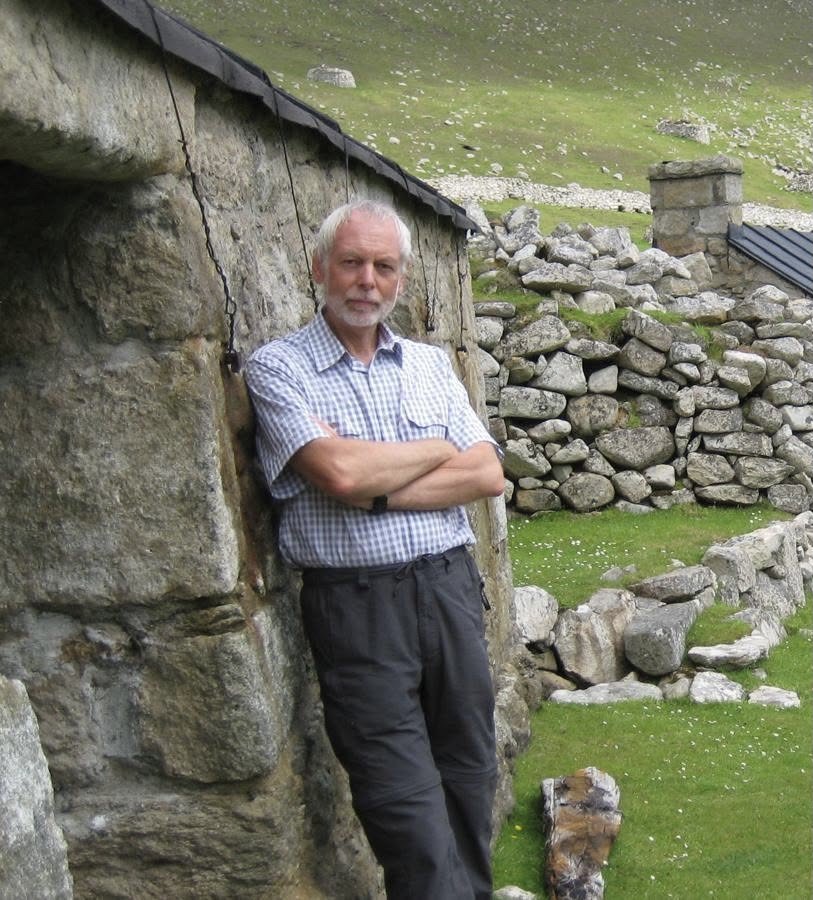
To the photograph that started it all.
To the idea that sat quietly in the back of my mind for fifteen years.
And, perhaps most remarkably, to the extraordinary sequence of events that eventually made that seemingly impossible idea become a reality.
This is Part One of the story of My St Kilda Tweed Project.
There is a great deal more to tell — about the people I have met, the sheep, the wool, the weaving, the discoveries, the unexpected connections and the many doors that seemed to open just when I needed them to.
So, rather than trying to tell the whole story in one enormous post, I thought I would tell it as it actually happened — one chapter at a time.
I hope you'll come along with me.
**The journey to weave St Kilda tweed on St Kilda began fifteen years ago.
But the most extraordinary part is that, in many ways, the journey has only just begun.**
Part Two will follow…
The Journey Begins — The Idea That Wouldn’t Go Away
It began, really, with a photograph.
Around fifteen years ago, during my first visit to St Kilda, I stood beside one of the old cottages on Hirta and had my photograph taken pretending to be a member of the famous St Kilda Parliament.
At the time, I had no idea that this rather whimsical moment would stay with me for so long, or that it would eventually lead to one of the most extraordinary and ambitious projects I have ever undertaken.
St Kilda has a way of doing that to people. You visit, you leave, but somehow a part of the island stays with you.
Over the years I became increasingly fascinated by the people who had lived there and by the remarkable community they had created in such an isolated and unforgiving place. They were farmers, fishermen, hunters, craftsmen and weavers, and they developed ways of living that were shaped almost entirely by the resources their island provided.
One of the things that particularly intrigued me was the famous St Kilda Parliament.
Most accounts of St Kilda tell us that the men of the village gathered outside each morning to discuss the affairs of the community. It is a wonderfully evocative image, and one that has become firmly established in the story of St Kilda.
But more recently I came across a rather different account in The Truth About St Kilda: An Islander's Memoir, based on the recollections of Donald John Gillies, a St Kildan who experienced the island community himself. He explained that although the men certainly gathered and discussed matters, the Parliament did not actually meet every morning as is so often stated. Rather, they came together when an important decision needed to be made.
That small distinction fascinated me.
It is a reminder that there can sometimes be a difference between the story that becomes established over time and the reality remembered by the people who actually lived it. For me, that makes the history of St Kilda even more interesting. The more I discover, the more I want to look beyond the familiar stories and understand what life there was really like.
And so, for many years, St Kilda remained somewhere in the back of my mind.
Then, about two years ago, the old idea came back.
I began to wonder whether it might actually be possible to return to St Kilda and, in some small way, experience something of the life and craftsmanship of the islanders. Not simply by visiting as a tourist, but by doing something there that had once been an important part of island life.
That something was weaving.
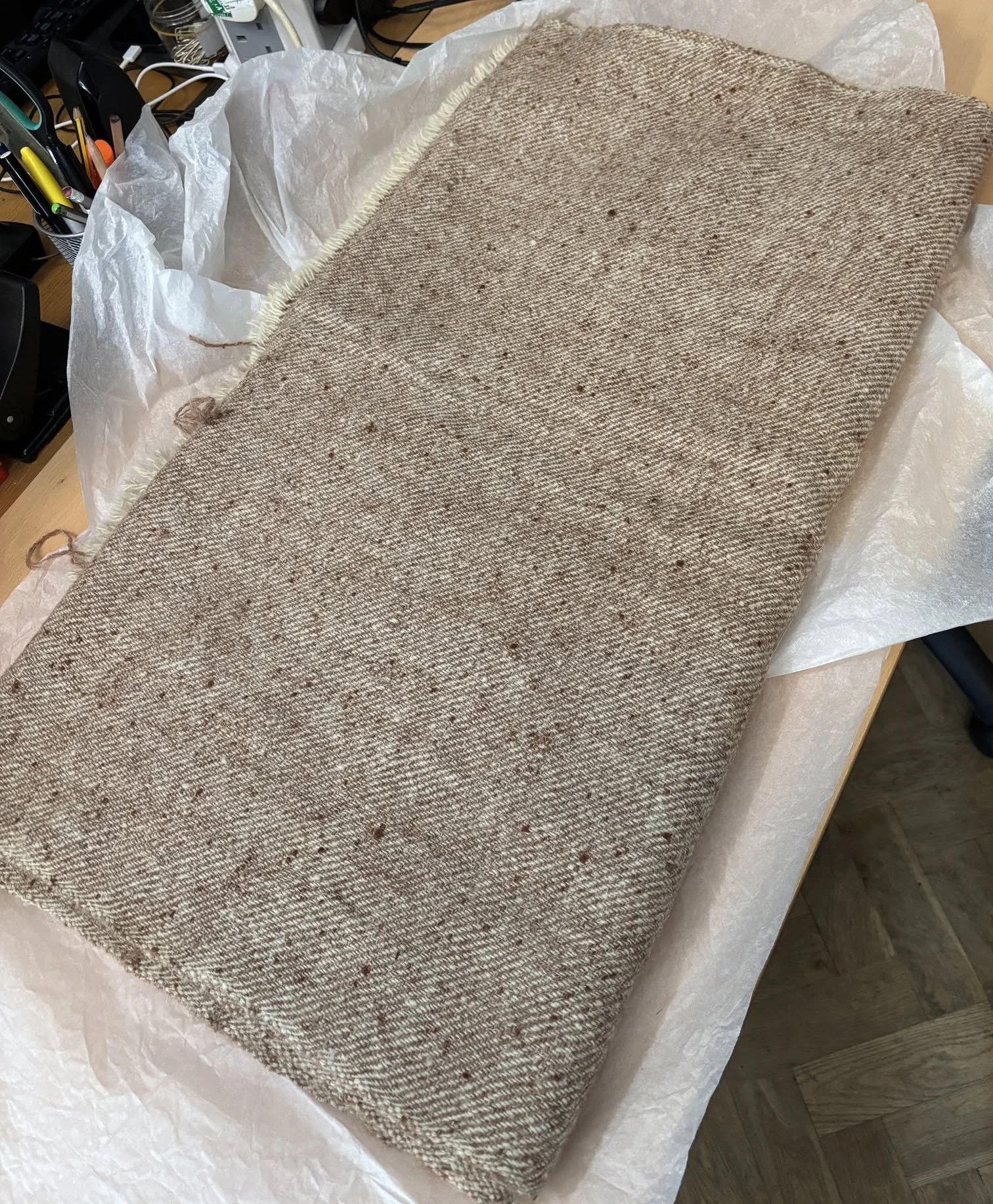
The St Kildans produced a distinctive tweed from the wool of their own sheep. It was practical cloth, made from the resources available to them and woven for clothing and other purposes. But the tradition disappeared with the evacuation of the last islanders in 1930.
What if it could be woven on St Kilda again?
At first it was little more than a thought. The practical difficulties seemed enormous. Permission would be needed to stay on the island, a suitable loom would have to be found, and somehow I would need to obtain the right wool, have it processed into yarn and then transport everything to one of the most remote places in Britain.
But the more I thought about it, the more determined I became.
And that is when something rather remarkable began to happen.
Looking back now, I find myself wondering whether the project could ever have happened if I had tried to pursue it fifteen years ago when the idea first entered my mind.
I don't think it could.
The extraordinary thing is that, once I finally began to pursue it, doors seemed to open one after another — and often in ways that were almost impossible to predict.
The timing of so many things was astonishing.
Take the wool, for example.
I needed Soay sheep.
When I eventually met Cheryl at Hilton Hill Farm near Dundee, she had only begun breeding Soay sheep about a year earlier. And there is an even more remarkable part to that story which I only discovered recently: Cheryl had visited Jimmy and Erika at Newburgh Handloom Weavers only two weeks before I visited them.
Before that meeting, Jimmy and Erika didn't even know Cheryl existed.
Yet that seemingly insignificant connection was to become part of my own journey.
Then there was weaving itself.
When I first conceived the idea, I didn't know how to weave.
The person who eventually taught me, Ilka, had not even begun teaching weaving at that time. She had not yet applied for the Churchill Fellowship that would later take her around the world studying weaving traditions in different countries.
Had I pursued the idea fifteen years ago, I would never have met her in the circumstances in which I eventually did.
And then there was Sandra.
I would never have met her when I did because she had not yet learned to weave and wasn't even living in Bendigo at the time.
Yet, later on, our paths crossed through weaving, and another unexpected connection was made.
Then somehow, almost unbelievably, I found the loom.
I needed something small enough to take to St Kilda on a boat, yet capable of producing cloth of the required width. Eventually I found the 80-centimetre Ashford table loom that I now intend to take with me.
One more door.
Then another.
And another.
The same thing happened with the Boreray wool, with the people who helped me find it, with the mill that is now preparing the fleeces, and with all the other people who have appeared along the way.
At every stage I seemed to reach a point where I needed something I didn't have — knowledge, a person, a contact, some particular wool, equipment or permission — and somehow the right person or the right opportunity appeared.
It is difficult not to look back at the sequence of events and feel that the timing has been extraordinary.
Even the timing of the project itself seems significant.
It will be almost one hundred years since the evacuation of the last St Kildans when I return to Hirta in 2027. I cannot help wondering whether the approaching centenary has helped create an openness to an undertaking such as mine that might not have existed at another time.
I will never know.
But I do know that when I finally applied to the National Trust for Scotland, they gave me permission to stay on St Kilda for four weeks and weave the tweed there.
Suddenly, the idea that had once seemed almost impossible became real.
And perhaps that is the part of this whole story that amazes me most.
The idea itself is not new. I had stood on St Kilda fifteen years ago and wondered about its people and their way of life.
What is new is that, fifteen years later, the world around that idea has somehow changed enough for it to become possible.
The sheep are there.
The wool is there.
The knowledge is there.
The people I needed have appeared.
The loom has been found.
The yarn is being prepared.
The permission has been granted.
And the opportunity is now only months away.
I don't pretend that I believe everything was somehow destined to happen. But when I look back at the extraordinary chain of coincidences, chance meetings and perfectly timed opportunities that have brought me to this point, it is difficult not to feel that I have been incredibly fortunate.
Perhaps the project simply had to wait until the right moment.
And perhaps that is why it could never have happened fifteen years ago.
The idea needed time.
So did I.
And so did all the people, circumstances and opportunities that would eventually come together to make it possible.
This isn't simply an attempt to reproduce an old piece of cloth.
For me, it is about reconnecting a material, a craft and a place.
It is about taking the wool of sheep that still survive today, spinning it into yarn, putting that yarn onto a loom and once again creating St Kilda tweed on St Kilda.
It is also about trying to understand the people who made that cloth in the first place — their resourcefulness, their craftsmanship and the extraordinary lives they lived in one of the most isolated communities in the British Isles.
And perhaps, most importantly, it is about the journey itself.
Because when I look back at that photograph from fifteen years ago, of me standing beside an old cottage and pretending to be part of the St Kilda Parliament, I can't help but smile.
I had absolutely no idea where that photograph would eventually lead.
What began as a visit became an interest.
The interest became an idea.
The idea waited.
And then, when the time was right, one door opened.
Then another.
And another.
Until, somehow, I found myself standing here — with a loom, with yarn, with a growing understanding of the craft, with an extraordinary group of people around me, and with permission to return to St Kilda and do something that has not been done there for almost a century.
In 2027, I hope to return to Hirta with my loom, my yarn and a very simple ambition:
to weave St Kilda tweed on St Kilda once again.
And perhaps the most remarkable part of the story is that the journey to get there has already become almost as important as the weaving itself.